
.jpg)

Bachelor of Science in Justice Investigation Services
Program Overview
Investigation services require a unique blend of intellectual rigor and practical technical skills. The Degree in Investigation Services is structured to transform academic interest into professional capability by merging theoretical frameworks with hands-on application. This dual-focus philosophy ensures that you do not just learn about the law or investigative procedures in a vacuum but understand how to apply those principles in high-pressure, real-world environments. By the end of this program, you will possess the specialized knowledge necessary to navigate the complexities of the justice system and the technical proficiency to manage physical and digital evidence.
Core Philosophy of Integrated Learning
The foundation of this degree rests on the belief that a modern investigator must be both a scholar and a practitioner. Theoretical knowledge provides the "why" behind every action—why a specific legal standard applies to a search warrant or why a certain psychological profile fits a behavioral pattern. Practical application provides the "how"—how to secure a scene without contaminating biological samples or how to trace a digital footprint through encrypted networks. This integration prevents the common disconnect between classroom learning and field realities.
You will engage with curriculum designed to mirror the actual lifecycle of an investigation. Instead of studying criminal law separately from evidence collection, the program weaves these threads together. For example, while studying the Fourth Amendment, you will simultaneously practice the physical techniques used to execute a search within those legal boundaries. This approach builds "muscle memory" for both the mind and the hands, preparing you for the multifaceted demands of law enforcement and private sector investigation.


Theoretical Pillars of Investigation
Theory in this program serves as the roadmap for professional conduct and decision-making. You will explore several critical academic areas that form the backbone of investigative work:
Jurisprudence and Criminal Law Understanding the legal landscape is non-negotiable. You will study the Texas Penal Code and federal statutes to recognize the specific elements of various crimes. This knowledge allows you to determine if a crime has actually been committed and what specific evidence is required to prove each element in a court of law. You will also focus heavily on Constitutional Law, particularly regarding the rights of the accused, to ensure that your future investigations are ethically sound and legally admissible.
Criminological Theory To catch a criminal, you must understand the motivations and patterns behind criminal behavior. This degree explores various schools of thought regarding why individuals commit crimes, from social disorganization theory to rational choice theory. By understanding the "why," you can better predict behavior, identify suspects, and develop effective interrogation or interview strategies.
Ethical Frameworks Investigators often operate in "gray areas" where the right course of action isn't immediately obvious. The program provides a rigorous grounding in ethics, teaching you how to maintain integrity under pressure. You will analyze case studies of investigative failures and successes to understand the long-term impact of ethical decision-making on public trust and the pursuit of justice.
Practical Application and Skill Development
While theories provide the framework, practical application provides the tools. The program transitions from the abstract to the concrete through simulated environments and technical training. You are expected to move beyond reading about techniques to demonstrating them in controlled settings.
Evidence Management and Chain of Custody One of the most critical practical skills you will acquire is the ability to handle evidence. You will learn the technical requirements for collecting different types of physical evidence, such as fingerprints, DNA, and ballistics. More importantly, you will practice the administrative rigor required to maintain a chain of custody. A single lapse in documentation can render the most damning evidence useless in court; therefore, the program emphasizes meticulous record-keeping as a core practical habit.
Investigative Interviewing and Interrogation Communication is an investigator's most frequently used tool. Through role-playing and video analysis, you will practice various interviewing techniques, such as the Cognitive Interview or the PEACE model. You will learn to read non-verbal cues, build rapport with witnesses, and apply psychological pressure appropriately during suspect interrogations, all within the bounds of legal and ethical standards.
Case Management and Report Writing In the professional world, an investigation is only as good as the report documenting it. Practical exercises include synthesizing complex sets of facts into clear, concise, and objective reports. You will learn how to organize a case file so that a prosecutor or supervisor can quickly understand the scope of the evidence and the logic behind your investigative leads. This skill is vital for both criminal justice and corporate investigative roles.
Bridging the Gap through Simulation
The program utilizes "bridge" activities that force you to use theoretical knowledge to solve practical problems. These often take the form of simulated crime scenes or "mock" investigations. You might be presented with a scenario—a simulated burglary or a corporate data breach—and tasked with managing the entire process from the initial response to the final report.
During these simulations, you will be evaluated on your ability to:
Identify the legal requirements for the specific scenario.
Apply the correct technical procedures for evidence collection.
Maintain ethical standards despite "distractions" or "temptations" built into the simulation.
Communicate your findings effectively to "superiors" or "legal counsel."
This holistic approach ensures that when you enter your 400-hour internship or your first professional role, you are not a novice. You are a trained professional who understands that justice is served through the careful, disciplined application of both knowledge and technique. This comprehensive degree path prepares you for the high-stakes environment of Texas investigation services, providing a competitive edge in the labor market and a solid foundation for those aiming for federal service in the future.
Year-Round Admission
The University of Justice operates on a continuous cycle to meet the mission-readiness of our students.
Submission Timeline: Applications are reviewed 365 days a year.
Document Tracking: Utilize our "Command Portal" to track transcripts, recruiter endorsements, and medical clearances in real-time.
Evaluation & Feedback Cycle: Applicants receive a decision and a personalized "Degree-to-Service" roadmap within 14 business days of file completion.
Strategic Planning: New cohorts launch every 8 weeks, allowing for rapid integration into the program.
Admission Requirements
The academic requirements for a Degree in Investigation Services serve as the primary filter to identify candidates capable of handling the rigorous cognitive and ethical demands of the field. Before you can engage with the practical or clinical components of the program, you must demonstrate a consistent level of academic performance and provide a comprehensive record of your previous educational history. This standard ensures that all students possess the writing, analytical, and critical thinking skills necessary for legal and investigative work.
Grade Point Average Standards
A minimum overall Grade Point Average (GPA) of 2.5 on a 4.0 scale is the baseline requirement for entry into this program. This cumulative GPA includes all college-level coursework completed prior to application. However, the program places a higher emphasis on your core coursework. You must maintain a 2.5 GPA specifically in subjects related to criminal justice, sociology, political science, or other foundational social sciences.
The 2.5 threshold is a non-negotiable standard for most Texas-based investigative programs. It reflects your ability to process complex information and meet deadlines, which are essential traits for an investigator. If your GPA falls slightly below this mark, some institutions may offer a probationary entry or require you to retake specific core classes to demonstrate competency before full matriculation into the investigation major.
Educational Foundation and Prerequisites
A high school diploma or a General Educational Development (GED) certificate is the mandatory prerequisite for all applicants. This serves as the legal and educational floor for higher education in Texas. If you are applying directly from high school, your final transcripts must show completion of the state’s recommended curriculum, including a focus on English, social studies, and basic sciences.
For transfer students or those returning to education, the program requires official transcripts from every post-secondary institution attended. These documents are used to verify that you have completed the necessary general education credits and to determine which previous credits may apply toward the Investigation Services degree. It is your responsibility to ensure these transcripts are sent directly from the issuing institution to the admissions office.
The Application Components
The application process is designed to evaluate more than just your grades; it serves as your first "case file." You are expected to submit a complete package that demonstrates attention to detail and professional communication. Missing documents or failure to follow specific submission instructions can be grounds for immediate disqualification, mirroring the strict procedural requirements of the investigative profession.
Official Transcripts: You must provide sealed or electronically verified records of all previous academic work.
Standardized Test Scores: While some institutions have moved toward test-optional policies, many still require SAT or ACT scores. These scores help the admissions committee gauge your readiness for the advanced reading and logic required in cyber and criminal investigation tracks.
Personal Statement: This is a critical narrative document where you outline your motivations for entering the field of justice.
Letters of Recommendation: Depending on the specific institution, you may be asked to provide references from instructors or professional supervisors who can speak to your integrity and work ethic.
The Personal Statement
The personal statement is your opportunity to distinguish yourself from other applicants by highlighting your commitment to justice and public service. In this document, you should clearly articulate why you have chosen Investigative Services and how your background aligns with the demands of the profession. Avoid broad, non-specific claims about wanting to "help people"; instead, focus on specific skills or experiences that demonstrate your suitability for investigative work.
Admissions committees look for evidence of critical thinking, resilience, and an understanding of the ethical weight of a career in justice. Your writing should be precise, objective, and free of grammatical errors. In the context of this degree, the personal statement also serves as a writing sample. Since investigators must produce clear, accurate, and legally defensible reports, your ability to communicate complex ideas in writing is evaluated throughout the admissions process.
Submission Timelines and Review
Texas institutions typically operate on a rolling or semester-based admission cycle. It is vital to submit all materials well in advance of the priority deadlines to ensure your file is reviewed for the upcoming cohort. Once your application is complete, it undergoes a holistic review process. The committee assesses the balance between your academic record, your standardized test performance, and the qualitative insights provided in your personal statement.
Successful applicants receive a formal letter of admission, which often includes a checklist for the next phase of the program: pre-clinical and training requirements. It is important to remember that admission to the university is the first step, but remaining in the Investigation Services program requires maintaining the GPA standards throughout your four years of study. Failure to maintain a 2.5 in core investigative courses can result in removal from the specialized tracks or the inability to secure a 400-hour internship placement later in the program.
Required Prerequisites
* BIOL 1306: Biology for Science Majors I & BIOL 1106: Biology for Science Majors Lab I
* BIOL 1307: Biology for Science Majors II & BIOL 1107: Biology for Science Majors Lab II
* ENGL 1301: First Year Writing I
* ENGL 1302: First Year Writing II
*CHEM 1311: Chemistry I & CHEM 1111: Chemistry I Lab
* CHEM 1312: Chemistry II & CHEM 1112: Chemistry II Lab
CHEM 2323: Organic Chemistry I & CHEM 2123: Organic Chemistry I Lab
* PHYS 1301: General Physics I & PHYS 1101: General Physics I Lab
* PHYS 1302: General Physics II & PHYS 1102: General Physics II Lab
* Core: HIST 1377-US History to 1877
BCHS 3304: Biochemistry*
CHEM 2325: Organic Chemistry II & CHEM 2125: Organic Chemistry II Lab
MATH 1342 or MATH 3339 or other Statistics*
The New Degree Plan
YEAR 1: FOUNDATIONS
Semester 1 (Fall)
JIS 1301: Intro to Justice Investigation Systems (3)
JIS 1302: Critical Thinking For Investigation (3)
ENGL 1301: First Year Writing I (3)
BIOL 1306/1106: Biology I + Lab (4)
CHEM 1311/1111: Chemistry I + Lab (4)
Semester 2 (Spring)
JIS 1304: Criminal Law (3)
JIS 1305: Data Literacy for Investigators (3)
ENGL 1302: First Year Writing II (3)
BIOL 1307/1107: Biology II + Lab (4)
CHEM 1312/1112: Chemistry II + Lab (4)
SUMMER I: TACTICAL CORE
JIS 1025: Tactical Fitness Training (Strength & Survivability)
HIST 1377: US History to 1877
YEAR 2: ADVANCED SCIENCES & CORE CRIMES
Semester 3 (Fall)
JIS 2340: Criminal Investigations I / CSI I (3)
JIS 1303: Criminal Psychology (3)
CHEM 2323/2123: Organic Chemistry I + Lab (4)
BIOL 2401: Anatomy & Physiology I + Lab (4)
JIS 2350: Property Damage & Vandalism (3)
Semester 4 (Spring)
JIS 3310: Crime Scene Analysis II (3)
JIS 2310: Digital Forensics & Data Breach (3)
CHEM 2325/2125: Organic Chemistry II + Lab (4)
BIOL 2402: Anatomy & Physiology II + Lab (4)
MATH 1342: Statistics (3)
SUMMER II: OPERATIONAL SKILLS
JUST 2047: Tactical Combat & Defensive Tactics
JIS 2406: Constitutional Search & Seizure (4)
YEAR 3: SPECIALIZED FORENSICS & PHYSICS
Semester Fall
JIS 3380: Interrogation Techniques (3)
JIS 3325: Cybersecurity & Fraud Prevention (4)
PHYS 1301/1101: General Physics I + Lab (4)
BIOL 4320: Immunology (3)
JIS 4385: Criminal Investigation Law (3)
Semester 6 (Spring)
JIS BFP: Basic Firearms Proficiency (4)
PHYS 1302/1102: General Physics II + Lab (4)
BIOL 2321/2121: Microbiology + Lab (4)
BIOL 3301: Genetics (3)
BCHS 3304: Biochemistry (3)
YEAR 4: GLOBAL TACTICS & ADVANCED PATHOLOGY
Semester 7 (Fall)
JIS 4319: Capstone in Justice Policy (3)
JIS 4360: Global Crime Investigation Techniques (3)
BIOL 4330: Pathology (3)
NURS 3310: Adult & Pediatric Health (3)
BIOL 4340: Hematology (3)
Semester 8 (Spring)
JIS 4450: Forensic Crime Scene Reconstruction (4)
JUST 4323: Capstone: Justice Investigative Practicum (3)
JIS 4233: Tactical Firearms (TF-CQB) (3)
JUST 4424: Justice Investigation Ethics Seminar (4)
JUST 4322: Professional Transition as JIS (3)
Old Degree Plan still Current till 2030
Freshman Year
Fall Semester
JIS 1301: Introduction to Justice Systems (3)
Transfer Equivalent: UH CRIM 2310 (Intro to Criminal Justice)
Overview of legal frameworks, justice philosophies, and the role of investigative services.
JIS 1302: Foundations of Critical Thinking for Justice (3)
Transfer Equivalent: UH PSYC 2301 (General Psychology)
Logical reasoning and problem-solving for evidence-based decision-making.
JIS 1403: Ethics & Justice in Modern Society (4)
Transfer Equivalent: UH SOCI 1301 (Intro to Sociology)
JIS 1303 – Criminology and Criminal Behavior (3)
Transfer Equivalence: CRIM 1302 – Principles of Criminology (UH)
Analyzes root causes of crime, including socioeconomic and psychological factors.
Spring Semester
JIS 1304: Criminal Law & Procedure (3)
Transfer Equivalent: UH CRIM 3302 (Criminal Law)
Focus on statutory obligations, constitutional rights, and procedural justice.
JIS 1305: Data Literacy for Investigators (3)
Transfer Equivalent: UH MATH 2311 (Intro to Statistics)
Analyzing demographics, crime trends, and statistical disparities.
JIS 2406: Constitutional Search & Seizure (4)
Transfer Equivalent: UH CRIM 3320 (Criminal Procedure)
Legal standards for warrants, Miranda rights, and evidence collection.
SUMMER:
JIS 1025: Tactical Fitness Training
Strength. Speed. Survivability.
Overview:This is the engine of FBI physical readiness—a high-octane fusion of strength, endurance, and explosive agility designed to mirror the unpredictable bursts of energy required in field operations. JUST-1025 is not a gym class; it’s a tactical forge.
Sophomore Year
Fall Semester
JIS 2340 – Criminal Investigations I (3)
Transfer Equivalence: CRIM 3336 – Crime Scene Investigation (UH)
JIS 2307: Police Investigations & Arrest Practices (3)
Transfer Equivalent: UH CRIM 3340 (Police Administration)
Techniques for interrogations, crime scene preservation, and arrest protocols.
JIS 2308: International Crime & Foreign Jurisdiction (3)
Transfer Equivalent: UH POLS 2301 (Intro to Political Science)
Cross-border crime, extradition, and global counter-terrorism strategies.
JIS 2409: Corporate & Financial Crimes (4)
Transfer Equivalent: UH ACCT 2301 (Principles of Accounting)
Investigating fraud, embezzlement, and white-collar crime.
Spring Semester
JIS 3310 – Criminal Investigations II (3)
Transfer Equivalence: CRIM 3310 – Advanced Investigative Techniques (UH)
Topics include bomb disposal, interrogation methods, and terrorism profiling.
JIS 2310: Digital Forensics & Data Breach Crimes (3)
Transfer Equivalent: UH CRIJ 3355 (Cybercrime)
Tools for tracing cyberattacks, data recovery, and legal protections.
JIS 2311: Racial Disparities in Justice (3)
Transfer Equivalent: UH SOCI 3330 (Race & Ethnicity)
Statistical analysis of incarceration rates, policing, and systemic bias.
JIS 2412: Crisis Management & Bombing Investigations (4)
Transfer Equivalent: UH CRIM 4325 (Emergency Management)
Response protocols for terrorism, explosive devices, and mass casualties.
SUMMER:
JUST-2047: Defensive Tactics and Hand-to-Hand Combat
Control. Confidence. Command.
When firearms are not an option, your hands are your last line of defense. This course blends martial discipline with real-world control tactics, teaching agents how to neutralize threats safely and legally.
Junior Year
Fall Semester
JIS 3380 – Interrogation and Interviewing Techniques (3)
Transfer Equivalence: PSYC 4386 – Interrogation Psychology (UH)
Studies ethical and coercive methods for extracting confessions.
JIS 3313: Advanced Interrogation & Propaganda (3)
Transfer Equivalent: UH CRIJ 4346 (Intelligence Analysis)
Psychological tactics, misinformation warfare, and counter-terror communication.
JIS 3314: Human Trafficking & Transnational Crime (3)
Transfer Equivalent: UH WMST 3331 (Global Gender Issues)
Investigating sex trafficking, labor exploitation, and victim advocacy.
JIS 3415: Crime Statistics & Demographics (4)
Transfer Equivalent: UH CRIM 4313 (Criminological Theory)
Correlating socioeconomic factors, disease outbreaks, and crime hotspots.
Spring Semester
JIS Basic Firearms Proficiency (BFP)
Weapon safety & handling (Glock 19 & SIG Sauer P229), Zeroing, sight alignment, trigger control, Ballistics basics & ammunition types, Legal framework: constitutional limits, state‑federal statutes.
JIS 3316: Federal Investigations (FBI & DEA) (3)
Transfer Equivalent: UH CRIM 4328 (Federal Criminal Justice)
Case studies in drug trafficking, organized crime, and national security.
JIS 3317: Civil Rights Law & Investigation (3)
Transfer Equivalent: UH CRIM 3307 (Civil Liberties)
Protecting individual rights during arrests, trials, and surveillance.
JIS 3418: Capital Systems & Economic Justice (4)
Transfer Equivalent: UH ECON 2301 (Principles of Macroeconomics)
Analyzing inflation, capital deficits, and their impact on justice funding.
Senior Year
Fall Semester
JIS 4319: Capstone in Justice Policy (3)
Transfer Equivalent: UH CRIM 4390 (Seminar in Criminal Justice)
Drafting policy proposals to address prison overpopulation and reform.
JIS 4320: Fraud Investigations & Corporate Transparency (3)
Transfer Equivalent: UH ACCT 3312 (Auditing)
Forensic accounting techniques to expose scams and financial corruption.
JIS 4340 – Crisis Negotiation and Hostage Situations (3)
Transfer Equivalence: POLS 4340 – Crisis Management (UH)
JIS 4421: Global Anti-Corruption Strategies (4)
Transfer Equivalent: UH_POLS 4373 (Comparative Politics)
Combating political graft, money laundering, and international fraud.
Spring Semester
JIS 4233: Tactical Firearms and Close‑Quarters Combat (TF‑CQB)
Tactical movement & room‑entry techniques, Integrated use of pistols, rifles (AR‑15 platform), and shotguns, Cover, concealment, and “dead‑man’s switch” concepts, Decision cycles: OODA (Observe‑Orient‑Decide‑Act).
22. JUST 4322: Employment Justice & Reintegration (3)
Transfer Equivalent: UH SOCI 3355 (Labor & Employment Relations)
Employment barriers for ex-offenders and workforce equity programs.
JUST 4323: Practicum in Justice Investigation Services (3)
Transfer Equivalent: UH CRIM 4395 (Internship in Criminal Justice)
Fieldwork with FBI, local police, or NGOs to apply investigative skills.
JUST 4424: Future of Justice: Tech & Ethics (4)
Transfer Equivalent: UH CRIJ 4368 (Emerging Trends in Justice)
AI in policing, data privacy laws, and ethical challenges in justice tech.
Electives
JIS 4320 – WMD and Bombing Investigations (3)
Transfer Equivalence: CRIM 4356 – WMD Threats (UH)
JIS 4355 – Ethics of Surveillance & Data Privacy (3)
JIS 4360 – Advocacy Strategies for Policy Change (3)
JIS 4350 – Capital Funds, Deficits, & Fiscal Policy (3)
JIS 4403 Advanced Ballistics & Weapon Systems (ABWS)
Topics include bomb disposal, interrogation methods, and terrorism profiling.
Internal, external, and terminal ballistics, Firearm mechanics, maintenance, and modification limits, Forensic analysis: toolmarks, trajectory reconstruction, bullet recovery, Emerging systems: suppressed weapons, non‑lethal options, smart‑gun tech.
6) JIS 3068: Operational Movement and Obstacle Course Training
7) JIS 3068 hones agility, spatial awareness, and confidence in extreme environments through purpose-built obstacle systems.
Itemized Tuition Rates
The USJ employs a residency-based tuition model. The annual base rate of $45,717.44 assumes a full-time course load of 15 credits per semester.
In-State/Resident Tuition: $1,523.91 per credit hour ($22,858.72 per semester).
Out-of-State/Non-Resident Tuition: $2,285.87 per credit hour ($34,288.05 per semester). Note: Non-residents are subject to a 1.5x multiplier on base tuition.
International Student Rates: $2,500.00 surcharge per semester added to the Non-Resident rate to cover SEVIS compliance and international student support services.
Differential Tuition: As the BS-JIS program requires specialized simulation technology and forensic lab facilities, a differential surcharge of $1,200 per semester is applied to all declared majors within this department.
Mandatory Fees
Fees are assessed to support the infrastructure required for law enforcement training and general student welfare.
Technology Fee: $450/semester – Covers high-speed campus Wi-Fi, LMS (Canvas/Blackboard) access, and cybersecurity protections.
Student Activity/Facility Fee: $650/semester – Funds access to the University Recreation Center, library databases, and student government initiatives.
Registration/Enrollment Fee: $150 (One-time, payable upon initial matriculation).
Health Services Fee: $300/semester – Provides access to the on-campus health clinic, mental health counseling, and preventative care resources.
Additional Program-Specific Costs
Students must account for variable expenses related to the technical competencies required in the field.
Lab/Course Fees: $350 per semester for access to the Law Enforcement Simulation Lab (Use of force simulators, tactical gear, and forensic analysis tools).
Books and Supplies: Estimated $1,200 per academic year.
Program-Specific Software: $200 per year (Licensing for SPSS for criminal statistics and specialized police report writing/docket software).
Graduation Fee: $250 (Assessed during the final semester of the senior year).
Payment and Financial Policies
The Bursar’s Office enforces the following fiscal regulations:
Payment Plans: Students may enroll in a 4-month installment plan per semester with a 1.5% administrative processing fee.
Refund Policy: A 100% tuition refund (minus a $100 processing fee) is available if courses are dropped within the first 10 days of the semester. Refund eligibility decreases by 25% for every subsequent week.
Third-Party Billing: USJ accepts employer reimbursement and departmental sponsorship. Official letters of credit must be filed with the Bursar by the first day of instruction each term.
Financial Aid & Savings Opportunities
To mitigate the cost of attendance, the University of Justice facilitates various support mechanisms:
Institutional Scholarships: Merit-based awards ranging from $5,000 to $20,000 annually, determined at the time of admission.
Public Service Scholarships: Dedicated funds for students who demonstrate a commitment to community policing or public safety internships.
Tuition Waivers: Limited waivers for dependents of active-duty law enforcement personnel and veterans.
Work-Study: Eligibility for federal and institutional work-study positions within campus law enforcement or administrative offices.
Pre-Clinical Training
Pre-clinical training serves as the mandatory bridge between classroom theory and field-based application. This phase ensures that every student entering a sensitive investigative environment meets the high legal, ethical, and physical standards required by Texas justice institutions. You must complete these requirements before participating in any crime scene simulations, laboratory work, or external internships.
Substance Screening and Drug Policy
The University of Justice maintains a zero-tolerance policy regarding illegal substance use to mirror the standards of federal and state law enforcement agencies. You are required to undergo a comprehensive 10-panel drug screen. This test identifies the presence of controlled substances, including but not limited to amphetamines, cocaine, opiates, and THC. Because investigative roles often require handling evidence and testifying in court, your credibility is paramount. Any positive result for substances without a valid, pre-disclosed medical prescription will result in immediate disqualification from the clinical phase of the program.
Maintaining a clean record is not merely a program requirement but a career necessity. Future employers, specifically the FBI and local police departments, conduct their own rigorous drug history reviews. By adhering to these standards now, you establish the professional discipline required for a career in public service. All testing must be conducted at university-approved facilities to ensure the chain of custody for the samples remains intact.
Identity Verification and Fingerprinting
Biometric verification is a standard procedure for anyone accessing sensitive criminal justice databases or secure facilities. You must submit a complete set of fingerprints through the Texas Department of Public Safety (DPS) or an authorized vendor like IdentoGO. These prints are used to conduct a Live Scan background check, verifying your identity against state and federal records.
This process ensures that you do not have any disqualifying criminal history that would prevent you from holding a position of trust. In Texas, certain misdemeanor and all felony convictions can permanently bar an individual from being licensed as an investigator or peace officer. Completing this step early allows the university to confirm your eligibility for the 400-hour internship and future employment in the justice sector.
Comprehensive Background Investigations
Beyond fingerprinting, you will undergo a multi-layered background investigation. This review examines your public records, including driving history, credit reports, and any past legal involvements. Investigative agencies prioritize financial responsibility; significant outstanding debt or a history of collections can be viewed as a vulnerability, potentially impacting your ability to obtain a Top Secret SCI Clearance later in your career.
You must provide a full history of your residences and employment for the past seven to ten years. Accuracy is critical. Discrepancies between your self-reported history and the findings of the background investigator are often viewed as a lack of integrity. In the field of investigation, your honesty is your most valuable asset. Treat the program's background check as a practice run for the intensive vetting you will experience if you pursue the FBI Academy path.
Medical Clearance and Physical Examinations
Investigative work is often physically demanding, requiring long hours on your feet, the ability to navigate uneven terrain at crime scenes, and the stamina to handle high-stress situations. You are required to submit a physical examination report signed by a licensed physician. This exam confirms that you are physically capable of performing the essential functions of an investigator without posing a risk to yourself or others.
The physician will review your cardiovascular health, respiratory function, and musculoskeletal integrity. While the university requirements are less stringent than the FBI’s Physical Fitness Test (PFT), they establish a baseline of health. If you have pre-existing conditions, work with your healthcare provider to ensure they are managed effectively so they do not hinder your participation in the on-site, hands-on portions of the curriculum.
Immunization and TB Testing
Clinical environments, especially forensic laboratories and medical examiner offices, expose you to biological hazards and pathogens. To protect your health and the safety of your colleagues, you must provide proof of up-to-date immunizations. The required vaccinations typically include:
Hepatitis B: A three-dose series is highly recommended due to the risk of bloodborne pathogen exposure during evidence collection.
MMR (Measles, Mumps, Rubella): Proof of immunity through vaccination or positive titers.
Varicella (Chickenpox): Proof of vaccination or a documented history of the disease.
Tetanus/Diphtheria/Pertussis (Tdap): A booster within the last ten years.
Meningococcal: Required for students under a certain age or those in specific laboratory settings.
In addition to vaccinations, a Tuberculosis (TB) skin test or blood test (IGRA) is mandatory. A negative result must be on file before you can enter any clinical or laboratory site. If you have a history of a positive TB test, you must provide documentation of a clear chest X-ray and any follow-up treatment. These health protocols are non-negotiable and follow the standards set by the Centers for Disease Control and Prevention (CDC) for healthcare and public safety workers.
Documentation and Compliance Management
You are responsible for maintaining your own compliance folder. All results from drug tests, physicals, and background checks must be uploaded to the university's secure student portal by the specified deadline. Failure to maintain an "In Compliance" status will result in a lockout from the hybrid learning model's on-site sessions. This means you will be unable to complete the 20% hands-on requirement, which is a prerequisite for graduation.
Start gathering your immunization records and scheduling your appointments as soon as you receive your acceptance letter. Delays in processing fingerprints or waiting for lab results can take several weeks. Proactive management of these requirements demonstrates the organizational skills and attention to detail that are vital for a successful investigator. Consider this administrative phase the first test of your professional readiness.
Hybrid Learning Model
The University of Justice adopts a hybrid instructional design to balance academic rigor with the practical demands of investigative training. This model acknowledges that while much of the theoretical framework of justice can be absorbed through digital platforms, the physical skills required for evidence collection, scene processing, and tactical communication require face-to-face interaction. You will complete 80% of your coursework through a sophisticated online environment, while the remaining 20% is dedicated to intensive, on-site laboratory and field sessions.
Digital Coursework Management
The 80% online component serves as the intellectual engine of the program. This phase is designed to provide the flexibility needed to manage professional or personal commitments while maintaining a full-time academic load. You are responsible for engaging with digital lectures, interactive case studies, and legal research modules. This format does not imply a reduction in difficulty; rather, it demands high levels of self-regulation and time management. You will analyze statutory law, study the history of criminal justice systems, and master the documentation standards required for modern investigators.
Online modules are structured to be asynchronous, allowing you to review complex material at your own pace. However, you must adhere to strict weekly deadlines for forum contributions, peer reviews, and examinations. This phase ensures that when you arrive for on-site training, you possess a comprehensive understanding of the legal and procedural theories that govern the physical application of investigative techniques.
On-Site Practical Application
The 20% on-site requirement is the bridge between theory and practice. These sessions are held at designated campus facilities or partner laboratories in Texas. During this time, the focus shifts entirely to kinesthetic learning and direct observation. You will transition from reading about forensic procedures to physically securing a perimeter, documenting a simulated crime scene, and using laboratory equipment to analyze physical samples. These sessions are often scheduled in intensive blocks (such as weekends or specific week-long residencies) to accommodate the needs of distance learners.
Direct interaction with faculty during these sessions is a critical component of your professional development. Instructors are often veteran investigators who provide immediate, real-time feedback on your technique. This direct mentorship is difficult to replicate in a purely digital environment. You will be evaluated on your ability to work within a team, your physical attention to detail, and your adherence to safety protocols in a controlled laboratory setting.
Integration of Modalities
The transition between online learning and on-site practice is seamless. For example, you may spend four weeks online studying the chemical properties of latent fingerprints and the legal requirements for their collection (the "why" and "what"). During the subsequent on-site session, you will physically apply powders and chemicals to various surfaces to lift those prints (the "how"). This reinforcement loop ensures that information is not just memorized for an exam but integrated into your muscle memory and professional intuition.
This integrated approach also mirrors the modern investigative career. Contemporary investigators spend a significant portion of their time on digital documentation, database research, and administrative reporting—tasks that align with online learning. Conversely, the field work and courtroom testimony aspects of the job require the interpersonal and physical presence developed during the on-site sessions. By succeeding in this hybrid model, you demonstrate the adaptability required for the investigative profession.
Technical and Physical Requirements
To succeed in the online portion, you must maintain a reliable high-speed internet connection and a workstation capable of running specialized investigative software and database simulation tools. Proficiency with learning management systems (LMS) is expected. You will need to navigate digital libraries, submit encrypted files, and participate in video conferencing with professional decorum.
For the on-site sessions, you are required to meet specific physical and logistical standards. This includes complying with the health and safety protocols—such as background checks and drug testing—covered in the preliminary requirements of this program. Attendance at on-site sessions is mandatory. Because these sessions involve specialized equipment and limited-time access to laboratory facilities, missed hours cannot typically be made up through digital assignments. You must plan your travel and schedule well in advance to ensure full participation in these high-stakes training blocks.
Collaborative Learning Environment
Despite the physical distance inherent in the 80% online split, the program emphasizes collaboration. Online forums and group projects require you to communicate effectively with peers across the state. These digital interactions build the foundation for the team-based exercises you will perform during on-site sessions. In the field of investigation, clear communication between lab technicians, lead investigators, and digital forensic experts is vital. The hybrid model forces you to develop these communication channels across both digital and physical mediums.
The 20% on-site sessions also serve as networking opportunities. You will work alongside other aspiring investigators, sharing insights and building a professional cohort. These relationships often prove invaluable during the 400-hour internship phase and subsequent career placement. The hybrid model ensures that while you benefit from the efficiency of remote learning, you remain deeply connected to the human element of justice services.
Clinical & Laboratory Standards
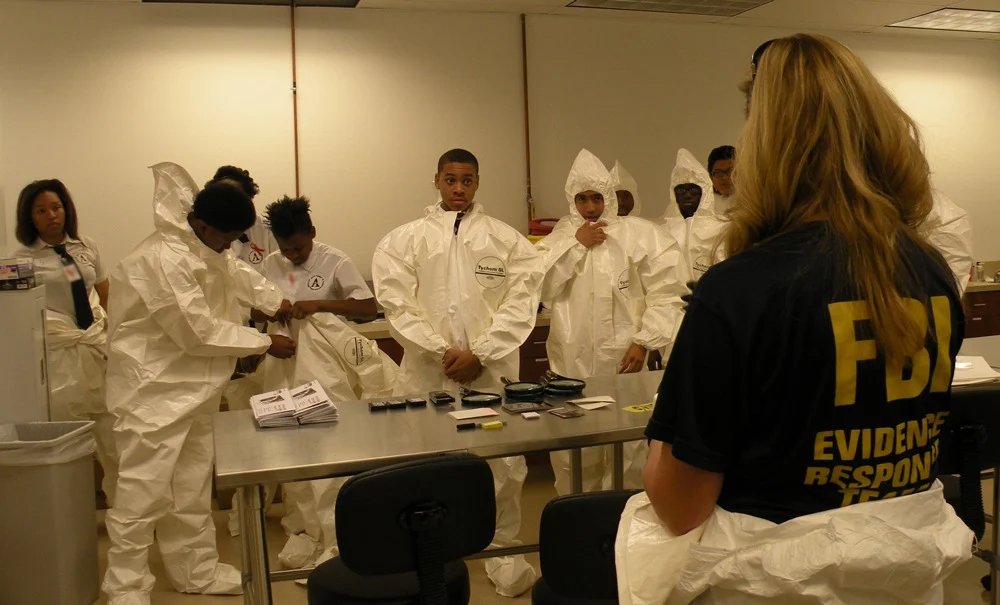
The clinical and laboratory phase of the Investigation Services degree represents the transition from theoretical concepts to applied forensic science. In these environments, you move beyond the textbook to engage with the physical realities of evidence recovery, preservation, and analysis. This stage focuses on developing the muscle memory and technical precision required to process a crime scene without compromising the integrity of the legal chain of custody.

Simulated Crime Scene Operations
Simulated crime scenes serve as your primary training ground for field investigations. These environments are designed to mimic real-world scenarios, ranging from residential burglaries to complex outdoor scenes. You are expected to approach these simulations with the same professional rigor as an active duty investigator, as these sessions evaluate your ability to remain systematic under pressure.
Scene Security and Perimeter Establishment Your first priority in any clinical simulation is the preservation of the scene. You will practice identifying the "point of entry" and "point of exit" to establish a secure perimeter. You must demonstrate the ability to document everyone who enters or leaves the scene using a crime scene log. Failure to secure the area in a simulated environment serves as a critical lesson in how easily evidence can be contaminated or lost in the real world.
Systematic Search Patterns Clinical training introduces you to various search methodologies, such as the grid, spiral, or zone search patterns. You will learn to determine which pattern is most effective based on the size of the area and the nature of the evidence. For example, a grid search is often utilized for large outdoor areas to ensure total coverage, while a zone search might be more appropriate for a multi-room indoor facility. Mastery of these patterns ensures that minute items, such as shell casings or biological trace materials, are not overlooked.
Evidence Collection and Documentation
Documentation is the most labor-intensive aspect of laboratory and clinical work. A forensic finding is only as valuable as the documentation supporting its discovery. During your lab sessions, you will be required to utilize three primary methods of documentation: sketching, photography, and written logs.
Forensic Photography Standards You will practice the "three-step" approach to photography: overall, mid-range, and close-up views. Overall shots provide the context of the entire room or area. Mid-range shots show the relationship between different pieces of evidence. Close-up shots, often taken with and without a measurement scale, provide the detail necessary for laboratory analysis. You must learn to manage lighting and angles to avoid shadows that could obscure identifying marks on evidence.
Evidence Packaging and Sealing The laboratory environment teaches you the specific physical requirements for different types of evidence. You will learn why biological evidence, like blood-stained clothing, must be stored in breathable paper bags to prevent mold, while arson evidence requires airtight metal containers to preserve volatile accelerants. Clinical instructors will evaluate your ability to apply evidence tape correctly and sign across the seal, ensuring that any tampering would be immediately evident to a laboratory technician or a court of law.
Laboratory Technical Procedures
Once evidence is "collected" in a simulation, the focus shifts to the forensic laboratory. Here, the emphasis is on the scientific instruments and chemical processes used to extract information from physical items. This work requires a high degree of manual dexterity and strict adherence to safety protocols.
Latent Print Development You will spend significant time mastering the development of latent fingerprints. This involves using varying powders (black, magnetic, or fluorescent) on non-porous surfaces and chemical reagents like ninhydrin or cyanoacrylate (superglue) fuming for porous or difficult surfaces. You must demonstrate the ability to "lift" a print using adhesive tape and transfer it to a backing card without creating air bubbles or distorting the ridge detail.
Trace Evidence Analysis The laboratory portion of the curriculum introduces you to the use of comparison microscopes and basic chemical testing. You will analyze fibers, hair, and soil samples to determine their origin. This process teaches you the difference between "class characteristics" (features that group an item with others, like a specific brand of tire) and "individual characteristics" (unique marks that link an item to a specific source, like a unique nick in that tire's tread).
Ethical and Legal Compliance in the Lab
Every action taken in a clinical or laboratory setting is governed by legal standards, specifically the Fourth Amendment regarding search and seizure and the rules of evidence. Clinical training reinforces the reality that a technical success in the lab is a failure if the legal procedure was flawed.
Chain of Custody Maintenance The chain of custody is a chronological documentation of every person who handled a piece of evidence. In your lab work, you will practice filling out property tags and transfer logs with absolute accuracy. You must account for every minute the evidence was in your possession. In the professional world, a single gap in this chain can lead to evidence being ruled inadmissible, potentially compromising an entire criminal case.
Safety and Biohazard Protocols Working in a forensic lab involves exposure to chemicals and potentially infectious biological materials. You are required to maintain a clean workspace and utilize Personal Protective Equipment (PPE), including gloves, masks, and eye protection. Clinical standards dictate that you treat every simulated biological sample as a genuine hazard. This discipline protects both the investigator and the integrity of the evidence by preventing cross-contamination between different samples or scenes.
Evaluation of Practical Competency
Your performance in these clinical and laboratory sessions is graded based on your adherence to established protocols rather than the "success" of finding a suspect in a mock scenario. Instructors look for a methodical approach, attention to detail, and the ability to justify every action taken based on investigative theory.
By the end of this training, you should be able to process a mock scene from the initial arrival to the final laboratory report. This practical foundation is what allows you to transition into the 400-hour internship with the confidence to handle real-world physical evidence. See the section on the 400-Hour Internship for how these laboratory skills are applied in a professional agency setting.
400-Hour Internship
Professional investigative training requires a transition from classroom theory to operational reality. The 400-hour internship serves as this bridge, functioning as a mandatory, high-stakes component of the Degree in Investigation Services. This period is not merely a graduation requirement but a professional audition where you apply criminal justice principles under the supervision of seasoned practitioners. By immersing yourself in a professional investigative setting, you move beyond simulated crime scenes to engage with active cases, real evidence, and complex legal environments.
Internship Structure and Duration
The 400-hour requirement is designed to provide sustained exposure to the investigative lifecycle. Most students complete these hours over the course of a single semester, averaging approximately 25 to 30 hours per week. This intensity ensures that you are present for the progression of investigations, which often take weeks or months to develop. A shorter duration would only offer a superficial glance at administrative tasks; 400 hours allows you to witness the evolution of a case from the initial report through evidence processing and into the reporting or legal phase.
Scheduling is typically coordinated between the university’s internship director and the host agency. While the 80/20 hybrid model of the degree provides flexibility, the internship requires a physical presence at the agency’s headquarters, laboratory, or field sites. You are expected to maintain a rigorous log of your hours and activities, which must be verified by an on-site supervisor. This documentation serves as a formal record of your practical training and is often reviewed during subsequent background investigations for employment in state or federal agencies.
Professional Investigative Settings
Internship placements are diverse, reflecting the various specializations within the degree program. You may be placed in a municipal police department’s detective bureau, a county medical examiner’s office, or a state-level agency like the Texas Department of Public Safety. For those focusing on cyber investigation, placements often include corporate security departments or digital forensics units within law enforcement agencies. Each setting offers a unique perspective on the justice system.
In a law enforcement setting, you might assist with witness interviews, observe the execution of search warrants, or help organize case files for prosecution. In a forensic laboratory, your work will focus on the technical side of investigation, such as maintaining the chain of custody for physical evidence or observing the analysis of biological samples. Regardless of the specific venue, the objective remains the same: to understand how individual investigative actions contribute to the broader pursuit of justice and the rule of law.
Practical Application of Skills
The internship demands the immediate application of the investigative techniques covered in your online and on-site coursework. One of the most critical skills you will practice is evidence collection and preservation. While you may have practiced this in a simulated environment, the internship introduces the pressure of real-world variables, such as weather conditions at a scene or the need to manage bystanders. You will learn the meticulous nature of maintaining a "clean" chain of custody, ensuring that every piece of evidence is documented so it remains admissible in court.
Beyond physical evidence, the internship hones your investigative writing. Professional reports must be objective, precise, and free of jargon or personal bias. During your 400 hours, you will likely draft internal memos, incident reports, and case summaries. These documents are often critiqued by supervisors who demand the highest standards of clarity. This feedback loop is essential for developing the professional voice required of a criminal investigator or forensic technician.
Observation and Mentorship
A significant portion of your time will be spent in a "shadowing" capacity. By observing experienced investigators, you gain insight into the "soft skills" that cannot be fully taught in a classroom, such as de-escalation techniques, interview psychology, and the ability to read non-verbal cues. You will see how professionals navigate the ethical dilemmas that frequently arise in the field, such as balancing the need for information with the protection of individual civil liberties.
This mentorship provides a window into the daily realities of the profession. You will observe the administrative burdens, the necessity of teamwork, and the persistence required to solve cold cases. Use this time to ask questions about career trajectories and specialization. The relationships you build with your supervisors can lead to formal mentorships that extend well beyond the 400-hour requirement, providing guidance as you navigate the transition from student to professional.
Evaluation and Accountability
Your performance during the internship is formally evaluated by your on-site supervisor and your academic advisor. Evaluation criteria typically include punctuality, reliability, adherence to agency protocols, and the ability to apply theoretical knowledge to practical tasks. You are held to the same ethical and behavioral standards as full-time employees of the host agency. Any breach of confidentiality or failure to follow safety protocols can result in immediate dismissal from the internship and potentially the degree program.
Accountability also extends to your self-reflection. Many programs require a weekly journal or a final capstone report detailing how your experiences aligned with your learning objectives. This reflective practice helps you identify your strengths and areas for improvement. If you find that you excel in the meticulous environment of the lab but struggle with the unpredictability of field interviews, this 400-hour window provides the data you need to choose the correct career path within the investigative field.
Integration with Future Career Goals
The 400-hour internship is often the first entry on a professional resume for an aspiring investigator. For those targeting the FBI, this experience is invaluable. The Bureau looks for candidates who have demonstrated the ability to work within a structured, high-integrity environment. Successfully completing an internship at a recognized investigative agency proves that you can handle the responsibility of sensitive information and the rigors of professional service.
The internship also serves as a networking platform. Many students receive job offers from their internship sites or receive recommendations that lead to employment elsewhere. In the close-knit community of Texas law enforcement and investigation services, a strong reputation established during these 400 hours can significantly accelerate your career. It is your opportunity to prove that you possess the integrity, work ethic, and technical competence required to serve the public and uphold the law.
Focus Area in Investigation
The Investigation Services degree offers specialized pathways designed to align your academic focus with specific career trajectories in the justice sector. By selecting a focus area, you transition from general criminal justice theory to the technical mastery required for specific investigative roles. These paths—Criminal Investigation, Forensic Laboratory/Technician, Cyber Investigation, and Advanced Investigative Studies—represent the primary pillars of modern law enforcement and private security sectors.
Criminal Investigation
Criminal Investigation serves as the cornerstone of traditional detective work. This pathway focuses on the systematic process of searching for, collecting, and analyzing information to determine the facts of a specific incident. You learn the methodology behind case management, where the objective is to identify suspects, locate evidence, and present a coherent narrative for legal prosecution.
The curriculum emphasizes the mechanics of the investigative process. You will study interview and interrogation techniques, focusing on the legal boundaries established by constitutional law. This includes learning how to build rapport with witnesses while maintaining the integrity of a statement. Furthermore, this path covers the management of crime scenes, teaching you how to prioritize evidence collection and maintain a chronological log of events to ensure that no details are overlooked or contaminated during the initial response.
Surveillance and undercover operations also form a significant part of this specialization. You will examine the ethics and tactics of monitoring suspect activity, utilizing both physical observation and technological aids. The goal is to produce investigators who can balance the urgent need for information with the rigorous standards of the judicial system, ensuring that every piece of evidence gathered is admissible in a court of law.
Forensic Laboratory and Technician focus
The Forensic Laboratory pathway shifts the focus from the field to the scientific environment. This specialization is designed for those who prefer the analytical aspect of investigation, where physical evidence is processed using chemistry, biology, and physics. As a technician, your role is to act as a bridge between the crime scene and the courtroom, providing objective scientific data that can confirm or refute investigative theories.
Students in this track engage deeply with the chain of custody. You learn the precise protocols for handling biological samples, such as DNA or blood spatter, as well as non-biological evidence like ballistics, fibers, and latent fingerprints. The training involves the use of specialized laboratory equipment, including microscopes and spectrometers, to identify substances and link suspects to specific locations or objects.
A critical component of this path is the development of technical reporting skills. A forensic technician must be able to translate complex scientific findings into clear, concise reports that a jury or a judge can understand. You will practice documenting your findings with extreme precision, as even a minor clerical error in a lab report can lead to the dismissal of vital evidence. This focus area prepares you for roles in municipal crime labs, state toxicology departments, or private forensic firms.
Cyber Investigation
As criminal activity increasingly migrates to digital platforms, the Cyber Investigation pathway addresses the need for specialists who can navigate the complexities of the internet and computer systems. This focus area is not merely about IT; it is about applying investigative logic to digital footprints to solve crimes such as identity theft, financial fraud, and network intrusions.
The coursework covers the fundamentals of digital forensics, which involves the recovery and investigation of material found on digital devices. You will learn how to image hard drives, bypass encryption, and recover deleted files without altering the original data. This requires a strict adherence to forensic imaging standards to ensure that the digital evidence remains untainted for trial. You will also study the architecture of the internet, including the dark web, to understand how illicit marketplaces operate and how to track anonymous transactions.
Beyond technical recovery, Cyber Investigation focuses on the legalities of digital privacy. You will study the Electronic Communications Privacy Act and other relevant statutes to understand when and how a search warrant is required for digital data. This specialization is increasingly vital for both public law enforcement and corporate security teams tasked with defending against data breaches and internal intellectual property theft.
Advanced Investigative Studies
The Advanced Investigative Studies pathway is designed for students seeking a broader, strategic view of the investigative field. This track often serves as a preparation for management roles or specialized federal positions. It moves beyond the "how" of investigation to explore the "why" and the "what next," focusing on intelligence gathering, threat assessment, and the coordination of multi-jurisdictional task forces.
In this focus area, you will study white-collar crime and organized criminal structures. This involves learning how to track complex financial trails, understand money laundering schemes, and dismantle sophisticated criminal enterprises. The curriculum places a heavy emphasis on investigative ethics and policy, training you to lead teams while maintaining high standards of accountability and transparency.
Strategic planning is a key element of this path. You will analyze case studies of large-scale investigations to understand how different agencies—such as local police, state investigators, and federal bureaus—collaborate. This focus area prepares you for high-level decision-making roles where you must manage resources, oversee long-term operations, and ensure that investigative strategies align with broader public safety or national security goals.
Selecting Your Path
Choosing a focus area requires an honest assessment of your professional interests and strengths. If you are drawn to the interpersonal dynamics of interviewing and the physical activity of field work, Criminal Investigation is the natural choice. If you possess a meticulous eye for detail and a passion for science, the Forensic Laboratory path offers a structured, technical environment. Those with an interest in technology and data analysis will find the Cyber Investigation track most rewarding, while those aiming for leadership and complex case management should pursue Advanced Investigative Studies.
Regardless of the path chosen, each specialization is integrated into the 80/20 hybrid model. While you will master the theoretical frameworks of these focus areas through online modules, your on-site sessions will be tailored to your specific path. This ensures that a forensic student spends time in a lab, while a criminal investigation student practices scene processing in a simulated environment. This alignment of theory and practice ensures that you graduate with a specific, marketable skillset in the justice industry.
The FBI Mission and Core Values
The Federal Bureau of Investigation (FBI) operates as a unique intelligence-led security organization that carries both law enforcement and intelligence functions. As you transition from investigative studies into the professional sphere, understanding the FBI mission provides the necessary context for the rigorous selection standards you will face. The Bureau is not merely a domestic police force; it is the primary arm of the U.S. Department of Justice responsible for protecting the Constitution and defending the United States against foreign and domestic threats.
Constitutional Protection and National Security
The primary mandate of the FBI is to uphold the Constitution of the United States. This means every investigation, surveillance operation, and enforcement action must balance the preservation of national security with the protection of individual civil liberties. Unlike local law enforcement, which focuses on municipal or state statutes, the FBI operates under federal jurisdiction, addressing crimes that cross state lines or threaten the stability of the federal government.
The Bureau functions within a dual role. First, it is a member of the U.S. Intelligence Community, working alongside agencies like the CIA and NSA to identify and neutralize threats before they manifest. Second, it is the premier federal law enforcement agency, tasked with investigating violations of more than 200 categories of federal law. This dual nature requires Special Agents to be as proficient in analytical intelligence gathering as they are in tactical execution and criminal prosecution.
Counterterrorism and Counterintelligence
Counterterrorism remains the FBI’s top priority. The Bureau works to prevent terrorist attacks by identifying radicalized individuals and dismantling domestic and international networks. You will find that this involves extensive collaboration with the Joint Terrorism Task Forces (JTTFs), which pool resources from various local, state, and federal agencies. The focus here is proactive: disrupting financing, communication, and logistical support for extremist groups.
Counterintelligence is equally critical. This priority involves protecting the nation's secrets and sensitive technologies from foreign intelligence services. In an era of global competition, foreign adversaries frequently target U.S. government agencies and private corporations to steal classified information or intellectual property. FBI agents in this sector work to identify, neutralize, and exploit the activities of foreign operatives working within the United States. This work often requires a deep understanding of foreign languages, cultural nuances, and advanced surveillance techniques.
Cybercrime and Digital Threats
As criminal activity increasingly migrates to the digital space, the FBI has moved cybercrime to the forefront of its mission. The Bureau investigates high-level intrusions, including state-sponsored hacking, major data breaches, and ransomware attacks targeting critical infrastructure. This mission area requires agents to bridge the gap between technical computer science and traditional investigative methodology.
Beyond corporate and state-level threats, the cyber mission encompasses the protection of children from online exploitation and the disruption of dark-web marketplaces. Because digital evidence is volatile and often resides on servers located outside the U.S., these investigations frequently involve international cooperation and complex legal maneuvering to secure digital forensics while maintaining the chain of custody.
Public Corruption and Civil Rights
The FBI is the lead agency for investigating public corruption at all levels of government. This includes bribery, election fraud, and the misappropriation of public funds by elected or appointed officials. Because local agencies may face conflicts of interest when investigating their own government structures, the FBI provides an independent, objective investigative body to ensure that no official is above the law.
Simultaneously, the Bureau is the primary federal agency responsible for investigating civil rights violations. This priority includes hate crimes, human trafficking, and "color of law" abuses, where individuals in positions of authority use their power to deprive others of their constitutional rights. These investigations are often high-stakes and socially sensitive, requiring agents to demonstrate extreme objectivity and a commitment to justice for all citizens regardless of status.
Organized Crime and White-Collar Crime
While the classic image of organized crime often involves historical syndicates, the modern FBI mission focuses on Transnational Organized Crime (TOC). These are global networks involved in drug trafficking, money laundering, and human smuggling. The Bureau uses the Racketeer Influenced and Corrupt Organizations (RICO) Act to dismantle entire organizations rather than just arresting individual low-level operatives.
White-collar crime investigations target sophisticated financial fraud that can destabilize the economy. This includes securities fraud, mortgage fraud, and multi-million dollar Ponzi schemes. Agents working these cases often have backgrounds in accounting or finance, as the "paper trail" is the primary source of evidence. The goal is to protect the integrity of the U.S. financial system and ensure that corporate entities operate within legal boundaries.
Core Values: The Ethical Framework
The FBI’s mission is supported by a set of core values that every applicant must embody. These are not merely suggestions; they are the standards by which your performance and lifestyle will be judged throughout the selection process and your career.
Integrity. This is the bedrock of the Bureau. As an agent, your word must be beyond reproach. In the courtroom, your testimony is only as strong as your reputation for honesty. Any history of deception or lack of candor is typically a permanent disqualifier for service.
Accountability. You are responsible for your actions and the consequences they produce. The FBI operates under intense public and judicial scrutiny. Admitting mistakes and taking ownership of outcomes is essential for maintaining the Bureau’s credibility with the public.
Leadership. Regardless of your rank, you are expected to lead by example. This involves showing initiative in investigations and mentoring others. Leadership in the FBI is about service to the mission and the team rather than personal advancement.
Compassion. Investigative work often brings you into contact with victims of traumatic crimes. Treating victims, witnesses, and even subjects with human dignity is a requirement. Compassion ensures that the pursuit of justice does not lose sight of the people it is meant to serve.
Fairness and Respect. Every individual encountered during an investigation is entitled to their constitutional rights. You must demonstrate respect for the law and for the diversity of the communities you serve. Bias has no place in federal investigations; decisions must be based on facts and evidence alone.
National Security and Violent Crime
While specialized squads handle intelligence and cyber threats, the FBI also maintains a significant presence in combating violent crime. This includes fugitive apprehension, the recovery of kidnapped children, and addressing gang violence that crosses state lines. The Bureau provides specialized resources, such as the Behavioral Analysis Unit (BAU) and the Evidence Response Teams (ERT), to assist local law enforcement in complex violent crime cases.
The FBI’s involvement in violent crime often centers on its "Force Multiplier" strategy. By providing laboratory services, fingerprint identification through the Integrated Automated Fingerprint Identification System (IAFIS), and advanced training to local police, the FBI strengthens the entire American justice system. This collaborative approach ensures that even the smallest jurisdictions have access to world-class forensic and investigative support.
Global Impact and Legal Attaché
The FBI mission extends far beyond U.S. borders. Through the Legal Attaché (Legat) program, the Bureau maintains offices in U.S. embassies around the world. These agents work with foreign law enforcement and intelligence agencies to coordinate international investigations. Whether it is tracking a cybercriminal in Eastern Europe or a terrorist cell in North Africa, the FBI’s global presence is essential for protecting domestic interests in a connected world.
As you prepare for the Special Agent Selection System (SASS), remember that the Bureau is looking for individuals who view this mission not just as a job, but as a calling. The dedication to protecting the American people and upholding the Constitution requires a lifelong commitment to the core values of integrity and service. Your academic background in Texas investigative services has provided the technical foundation, but your alignment with these mission priorities will determine your success in the FBI.
Special Agent Eligibility Foundations
Federal law enforcement mandates specific entry requirements that differ significantly from civilian career paths. To qualify as an FBI Special Agent, you must meet rigorous statutory and agency-defined criteria before your application can even be processed. These standards cover citizenship, age, education, professional experience, and physical capability. Understanding these thresholds is the first step in determining your viability for a career in national security.
Citizenship and Age Requirements
U.S. citizenship is a non-negotiable prerequisite for all Special Agent positions. You must be a citizen of the United States at the time of application. While the FBI employs individuals from diverse backgrounds, including those with dual citizenship, you may be required to renounce foreign citizenship to obtain the necessary security clearances.
The FBI enforces strict age limits to ensure agents can complete a full 20-year career before the mandatory retirement age of 57. You must apply before your 36th birthday. This timeline allows for the lengthy selection process, which often exceeds one year, and ensures you can enter on duty at the FBI Academy in Quantico no later than your 37th birthday.
Exceptions to the age limit are narrow. Preference-eligible veterans may qualify for a waiver, and individuals currently serving in certain federal law enforcement positions covered by the same retirement system may also be eligible for age adjustments. If you do not fall into these specific categories, the 37th birthday remains a hard deadline for appointment.
Education and Professional Work Experience
The FBI requires a high level of academic achievement combined with practical professional experience. The baseline requirement is a bachelor’s degree from a college or university accredited by one of the regional or national institutional accrediting agencies recognized by the United States Department of Education. While your degree in Investigation Services provides an excellent foundation, the FBI accepts degrees in any major, ranging from accounting and computer science to law and world languages.
The amount of professional work experience required depends on your highest level of education:
Bachelor’s Degree Holders. You must complete at least two years of full-time professional work experience. The FBI defines professional work experience as occupations that require a college degree and involve significant responsibility and complexity.
Advanced Degree Holders. If you have earned a master’s degree or higher (such as a JD or PhD), the professional work experience requirement is reduced to one year of full-time employment.
Definition of Professional Experience. Not all work experience qualifies. The FBI looks for "professional" roles where you have exercised independent judgment and applied specialized knowledge. For example, working as a police officer, an investigator, a software engineer, or a certified public accountant typically meets these criteria. Internships, volunteer positions, and part-time roles generally do not count toward the two-year or one-year requirements. However, certain high-demand skills, such as fluency in a critical foreign language or specialized cyber skills, may occasionally be subject to specific recruitment waivers or expedited consideration.
Physical Fitness Standards
Special Agents must be prepared for the physical demands of arrests, searches, and tactical operations. Before you are appointed, you must pass the FBI Physical Fitness Test (PFT). This is a standardized battery of exercises designed to measure your strength, agility, and aerobic capacity. The PFT consists of four mandatory events, administered in a specific order with limited rest periods:
Sit-ups. You must complete as many sit-ups as possible in one minute. This measures core strength and endurance.
Timed Sprint. A 300-meter sprint tests anaerobic power and speed.
Push-ups. You must complete as many continuous push-ups as possible. There is no time limit, but the movement must be uninterrupted to count.
Timed Run. A 1.5-mile run measures aerobic capacity and cardiovascular health.
Candidates who are pursuing a tactical role within the FBI, such as the Hostage Rescue Team (HRT), are required to complete a fifth event: pull-ups. Each event is scored on a point system. You must achieve a minimum cumulative score to pass, and failing even one event can result in disqualification from the selection process. Maintaining a high level of fitness throughout the application period is essential, as you will be tested multiple times, including during your training at the FBI Academy.
Operational and Legal Requirements
Beyond education and fitness, you must meet several operational standards that facilitate the daily work of an agent. A valid U.S. driver’s license is mandatory, as Special Agents are frequently required to operate government vehicles during investigations and surveillance operations.
Furthermore, you must be able to obtain a Top Secret Sensitive Compartmented Information (SCI) Clearance. This is one of the highest levels of security clearance in the federal government. The process involves an exhaustive investigation into your life, including your loyalty to the United States, your character, and your financial and criminal history.
Mobility Agreement. Upon appointment, you must sign a mobility agreement. This document states that you are willing and able to be assigned to any of the FBI’s 56 field offices or various satellite offices across the country. While the Bureau considers your geographic preferences, the needs of the FBI take precedence. You must be prepared to relocate based on the mission requirements of the agency.
Aligning Your Background with FBI Needs
While the Investigating Services degree program in Texas prepares you with technical skills in evidence collection and criminal law, the FBI evaluates how you have applied these skills in a professional setting. They seek candidates who demonstrate specific core competencies, such as leadership and problem-solving.
If you are currently a student or a recent graduate, focus on securing a professional role that builds your "investigative mindset." This might involve working as a local law enforcement officer, a corporate compliance officer, or a digital forensics analyst. These roles fulfill the professional experience requirement while sharpening the interpersonal and analytical skills necessary for the Special Agent Selection System.
Success in the application process requires a proactive approach to these eligibility foundations. If you are approaching the age limit or lack the required years of professional experience, you should adjust your career timeline immediately to ensure all criteria are met before you submit your formal application through the FBI’s online portal.
Background Integrity and Suitability
Maintaining high standards of personal integrity is a non-negotiable requirement for anyone seeking a career with the Federal Bureau of Investigation. While academic qualifications and physical fitness are critical, your background and personal conduct serve as the ultimate gatekeeper. The Bureau conducts an exhaustive investigation into your past to ensure that you are suitable for a Top Secret Sensitive Compartmented Information (SCI) Clearance. This process focuses heavily on your adherence to drug policies, your financial stability, and your overall character.
FBI Drug Policy Standards
The FBI maintains a strict drug policy to ensure the safety, reliability, and integrity of its workforce. Adherence to these standards is mandatory for all applicants, regardless of the legality of certain substances in specific states. The Bureau evaluates your history of drug use based on specific timeframes and the types of substances involved.
Marijuana Usage You are disqualified if you have used marijuana or cannabis in any form (including THC products, edibles, or oils) within the one-year period preceding the date of your application. This includes usage for medicinal purposes, even if prescribed by a physician in a state where it is legal. The Bureau views marijuana use through the lens of federal law, where it remains a controlled substance.
Illegal Drug Usage The policy regarding other illegal drugs is more stringent. You will be disqualified if you have used any illegal drug other than marijuana within the ten years preceding your application. This includes but is not limited to cocaine, MDMA (ecstasy), heroin, or methamphetamine. Furthermore, the use of any illegal drug while in a position of public trust (such as law enforcement or military service) is generally an automatic disqualifier.
Prescription Medication Misuse Misusing prescription drugs—defined as using a medication not prescribed to you or using your own prescription in a manner inconsistent with medical advice—is also scrutinized. While a single instance of misuse years ago may not be an automatic bar, a pattern of misuse or recent occurrence will likely result in disqualification. The sale, manufacture, or distribution of any illegal drug or the illegal sale of prescription drugs at any point in your life will permanently disqualify you from FBI employment.
Financial Responsibility and Stability
Your financial history is a primary indicator of your judgment and susceptibility to external pressure. The FBI views significant financial distress or irresponsible behavior as a potential security risk, as individuals with high debt or poor financial management may be more vulnerable to bribery or coercion.
Student Loan and Child Support Compliance You must be in good standing with all federally backed student loans. If your loans are in default, you must provide documentation showing that you have entered into a repayment agreement and are consistently making payments. Similarly, if you are under a court order to pay child support, you must be current on all payments. Failure to meet these legal and financial obligations is viewed as a lack of accountability and can lead to immediate disqualification.
Credit History and Debt-to-Income Ratio During the background investigation, specialists review your credit reports from all major bureaus. They look for patterns of late payments, foreclosures, bankruptcies, or high levels of unsecured debt. While having debt is not disqualifying in itself, the Bureau assesses whether you live within your means. A history of financial insolvency or a failure to resolve outstanding debts suggests a lack of the organizational and planning skills required for a Special Agent.
Top Secret SCI Clearance Process
The Top Secret Sensitive Compartmented Information (SCI) Clearance is the highest level of security clearance granted by the federal government. Obtaining this clearance is a prerequisite for "Entrance on Duty." The investigation is comprehensive and covers every aspect of your adult life, typically going back ten years or more.
The Scope of Investigation Background investigators will interview former employers, neighbors, professors, and personal references. They do not just speak to the references you provide; they use those contacts to find "developed references"—people who knew you but were not listed on your application. They verify your residency, employment history, and education to ensure there are no gaps or fabrications. Any discrepancy between your application and the investigator's findings is treated as a potential integrity issue.
Polygraph Examination As part of the clearance process, you must pass a polygraph examination. This session focuses specifically on the information provided in your security forms, including drug use, criminal history, and any potential ties to foreign interests or subversive organizations. The polygraph is used to verify the truthfulness of your statements and to identify any "hidden" background issues that were not disclosed during the initial application phase.
Public Record and Legal Standing
Your public record must reflect a life of law-abiding behavior. While minor traffic violations are generally not an issue, more serious legal encounters can end your candidacy. Any felony conviction is an absolute bar to employment. Misdemeanor convictions, particularly those involving domestic violence, theft, or "moral turpitude," are also typically disqualifying.
Loyalty and Selective Service The FBI requires absolute loyalty to the United States. You must not have been a member of any organization dedicated to the overthrow of the U.S. government or any group that advocates for the use of force or violence to deny others their rights under the Constitution. Additionally, male applicants born after December 31, 1959, must be registered with the Selective Service System. If you failed to register, you must provide a "Status Information Letter" from the Selective Service and demonstrate that the failure to register was not willful or knowing.
The Role of Candidacy and Disclosure
The single most important factor during the background investigation is total transparency. The FBI values integrity above almost all else. If you have a past indiscretion—such as a remote instance of drug use or a period of financial difficulty—disclosing it fully and honestly is your best course of action. The Bureau often views the attempt to conceal information as a greater character flaw than the original act itself. Discovery of an undisclosed issue during the background check or polygraph will result in permanent disqualification for lack of candor.
Maintaining Suitability Throughout the Process
Suitability is not a one-time check but a continuous requirement. Once you receive a Conditional Job Offer (CJO), you are expected to maintain the same high standards of conduct that made you a viable candidate. Any new drug use, legal issues, or major financial changes (like a new bankruptcy filing) must be reported to your Applicant Coordinator immediately. The FBI reserves the right to rescind an offer at any point if new information surfaces that calls your integrity or suitability into question.
By understanding these rigorous standards early in your academic career, you can make lifestyle choices that preserve your eligibility. Whether you are currently pursuing your investigative degree in Texas or preparing for the 400-hour internship, your daily conduct builds the record that the FBI will eventually scrutinize. Character is not built during the selection process; it is evidenced by it.
Career Paths & Salary Outlook
The transition from an academic environment to the professional workforce requires a clear understanding of the financial and structural realities of the investigative field. As you complete your studies in Texas, you will find a diverse range of roles across law enforcement, corporate security, and specialized forensic services. Each of these paths offers distinct compensation structures and growth trajectories based on the complexity of the work and the level of technical expertise required.
Law Enforcement Investigative Salaries
Detectives and criminal investigators within municipal, county, and state agencies represent a significant portion of the workforce. As of 2025, the median annual salary for a Law Enforcement Investigator or Detective is approximately $47,101. This figure serves as a baseline for entry-level to mid-career professionals in the public sector. Salaries often vary based on the size of the jurisdiction; larger metropolitan areas in Texas, such as Houston, Dallas, or Austin, frequently offer higher starting pay to accommodate the cost of living and the higher volume of complex cases.
Compensation in law enforcement is frequently structured around "step" plans, where pay increases are guaranteed based on years of service and the attainment of specialized certifications. Beyond the base salary, investigators often have access to comprehensive benefits packages, including defined-benefit pensions, paid overtime, and shift differentials. It is common for investigators to supplement their base income through on-call pay or specialized task force assignments. While the starting salary may appear modest compared to some private-sector roles, the long-term stability and retirement benefits provided by government agencies remain a primary draw for many graduates.
Crime Scene Technology and Laboratory Roles
Specializing in the technical aspects of investigation leads to roles within crime laboratories or field-based evidence collection units. These positions require high levels of precision and adherence to scientific protocols. For 2025, the median annual salary for a Crime Scene Technician is estimated at $44,825. This role involves the meticulous collection, preservation, and documentation of physical evidence at various scenes. Many technicians work for police departments, though some are employed by independent medical examiner offices or state-run bureaus.
For those who move from the field into the lab, Forensic Laboratory Technicians earn a comparable median salary of $44,793. These professionals focus on the analysis of evidence, such as DNA, ballistics, or toxicology, in a controlled environment. Entry-level salaries in these roles are often influenced by the specific niche of forensics; for instance, those specialized in digital forensics or complex chemical analysis may command higher starting wages due to the technical nature of the equipment they operate. In Texas, the growth of regional crime labs has increased the demand for these specialists, providing a steady career path for those who prefer the scientific side of justice.
Corporate Security and Private Investigation
The private sector offers a different compensation model, often prioritizing specialized skills in risk mitigation, internal theft, and fraud. Corporate Security Investigators work for large entities—such as banks, retail chains, or insurance companies—to protect assets and investigate internal policy violations or external threats. In these roles, salaries are frequently more fluid than in government positions, with potential for performance-based bonuses and rapid advancement into management.
Private investigation firms also provide opportunities for those interested in civil litigation support, background screening, and insurance fraud. While some private investigators work as independent contractors with varying income, those employed by established firms often see salaries that align with or exceed the law enforcement medians, particularly when they possess niche skills like cyber investigation or financial auditing. The flexibility of the private sector allows you to leverage your degree to find a specialty that matches your financial goals and investigative interests.
Factors Influencing Earning Potential
Several variables will dictate where your specific salary falls within the industry medians. Location is a primary driver; Texas's vast geography means that an investigator in a rural county will face a different economic reality than one in a tech-heavy urban center. Furthermore, your educational background—specifically the hybrid degree and internship experience you have completed—serves as a differentiator during the hiring process. Employers often offer higher starting pay to candidates who can demonstrate immediate proficiency in evidence collection or digital tools, reducing the time needed for initial training.
Professional certifications also play a significant role in salary growth. Obtaining credentials such as the Certified Fraud Examiner (CFE) or specialized law enforcement proficiencies can trigger automatic pay bumps in many organizations. As you progress through your career, moving into supervisory or management roles (such as a Sergeant of Detectives or a Lab Director) will lead to significantly higher compensation levels, often exceeding the $70,000 to $90,000 range depending on the agency or corporation.
Long-Term Financial Planning in Justice Careers
When evaluating job offers, it is essential to look beyond the "sticker price" of the annual salary. Public sector roles in Texas often include participation in the Texas Municipal Retirement System (TMRS) or similar programs, which can provide a more secure financial future than a traditional 401(k) alone. Additionally, many investigative roles offer tuition reimbursement programs, allowing you to pursue an advanced degree—a necessary step for those aiming for the FBI or high-level federal positions—at a reduced cost.
The investigative field is one of service, but it is also a professional career with a clear economic structure. By understanding these 2025 salary benchmarks, you can better navigate your initial job search and set realistic expectations for your financial growth as you move from a student of justice to a practicing professional in the field.
FBI Academy at Quantico
The FBI Academy at Quantico represents the transition from a qualified applicant to a federal law enforcement professional. Located within a 547-acre marine base in Virginia, the Academy provides the rigorous environment necessary to prepare New Agent Trainees (NATs) for the complexities of modern investigative work. This 20-week residency program is one of the most demanding law enforcement training curricula in the world, combining academic rigor, tactical proficiency, and high-level physical conditioning.
Academic Instruction and Legal Fundamentals
The academic component of the Academy ensures that every agent possesses a standardized understanding of the law and the Bureau's operational procedures. You spend hundreds of hours in the classroom covering subjects that form the legal basis for all investigative actions. A primary focus is the U.S. Constitution, specifically the Fourth Amendment, which governs search and seizure, and the Fifth Amendment, regarding self-incrimination. Mastery of these legal principles is mandatory; agents must know the exact boundaries of their authority to ensure evidence remains admissible in court.
Beyond constitutional law, the curriculum includes intensive study of federal statutes, the Federal Rules of Criminal Procedure, and the Privacy Act. You also receive training in the Bureau's specific investigative priorities, such as counterintelligence, cybercrime, and civil rights violations. Periodic examinations test your retention of this material. Failure to maintain a passing average in academic testing can result in dismissal from the Academy, regardless of your performance in other areas.
Investigative Techniques and Case Management
Theoretical knowledge is applied through practical exercises in investigative methodology. You learn the mechanics of managing a case from the initial lead through to prosecution. This includes interviewing and interrogation techniques, where you practice building rapport with witnesses and employing ethical strategies to elicit information from suspects. You are trained to differentiate between a non-confrontational interview and a structured interrogation, understanding the psychological and legal nuances of each.
Surveillance training is another core pillar of the investigative curriculum. You learn how to conduct both stationary and mobile surveillance without detection. This involves using advanced communication equipment and coordinating with a team to track subjects in various environments. Additionally, you receive instruction on drafting affidavits for search warrants and the technical aspects of evidence collection, ensuring that the chain of custody remains unbroken from the crime scene to the forensic laboratory.
Tactical Training and Firearms Proficiency
Tactical training at Quantico is designed to prepare you for high-risk situations where split-second decision-making is critical. This training takes place in diverse environments, including "Hogan’s Alley," a realistic mock town populated by actors playing criminals and innocent bystanders. Here, you participate in simulated arrests, bank robberies, and searches. These scenarios are designed to test your tactical mindset, your ability to clear rooms safely, and your judgment regarding the use of force.
Firearms proficiency is a non-negotiable requirement. You receive intensive instruction on the FBI’s standard-issue handgun and other tactical weapons. Training begins with the fundamentals of marksmanship—grip, stance, sight alignment, and trigger control—and progresses to combat shooting. You must pass rigorous qualification courses under various conditions, including low-light environments and timed stressors. Safety is paramount; any violation of firearms safety protocols is grounds for immediate review of your suitability for the role.
Physical Fitness Requirements
Physical conditioning at the Academy is intended to build the stamina and strength necessary for the demands of field work. You participate in regular group fitness sessions that include strength training, aerobic conditioning, and circuit training. The goal is not just general fitness, but the ability to perform under physical duress. You are required to pass the Physical Fitness Test (PFT) multiple times during your 20-week stay.
The PFT consists of four scored events: sit-ups in one minute, a 300-meter sprint, push-ups to exhaustion, and a 1.5-mile run. There are also specific standards for tactical recruits who may be pursuing specialized roles. You must meet the minimum scoring thresholds for your age and gender to graduate. Consistent failure to meet these fitness benchmarks can result in your removal from the program, as physical readiness is viewed as a core component of officer safety and operational effectiveness.
Ethics and Behavioral Standards
The FBI places a heavy emphasis on the "Core Values" introduced in previous sections. At the Academy, these values are integrated into every exercise. You are evaluated on your integrity, accountability, and leadership throughout the 20 weeks. The Academy environment is intentionally stressful to observe how you react under pressure and how you interact with your peers. Collaboration is essential; agents rarely work in isolation, and the ability to function as part of a cohesive unit is a key metric for success.
Behavioral standards extend beyond the training exercises. As a trainee, you are a representative of the Bureau. Any lapse in judgment, ethical breach, or failure to follow Academy regulations can lead to a suitability review. The instructors, who are experienced Special Agents, mentor trainees but also serve as evaluators, constantly assessing whether each individual possesses the temperament and character required for a lifetime of service.
Graduation and Field Assignment
The culmination of the 20-week program is the graduation ceremony, where trainees are sworn in and receive their credentials and badges. Upon graduation, you are no longer a trainee but a Special Agent on probation. This transition marks the beginning of your two-year probationary period in the field.
Your initial field office assignment is determined by the needs of the Bureau, though your background and specialized skills (such as cyber expertise or foreign language proficiency) are taken into account. You will be assigned to one of the 56 field offices across the United States. In your new office, you will be paired with a Field Training Leader (FTL)—an experienced agent who guides you through your first months of actual investigative work, ensuring that the lessons learned at Quantico are successfully applied in real-world environments.
Congratulation!
Institutional Protocols for Academic Progression and Professional Placement: The University of Justice (USJ) Justice Investigation Services (JIS) Framework
The Quantico Milestone
The University of Justice extends its highest commendations to students who have successfully navigated the rigorous academic and physical requirements necessary to secure an appointment at the FBI Academy at Quantico. Completion of the JIS curriculum represents a significant achievement in investigative intelligence, forensic application, and legal ethics. Whether the degree is conferred prior to or following the Academy training, the student remains an embodiment of the University’s commitment to justice and public integrity.
Academic Sequencing: Degree Conferral Policy
The USJ recognizes the non-linear path of modern federal service. Consequently, the University maintains a flexible degree conferral policy:
Pre-Training Conferral: Students may elect to complete all credit hours and receive their Bachelor of Science in Justice Investigation Services prior to reporting to Quantico. This provides the candidate with a secondary credential, enhancing their internal profile during federal background investigations.
Post-Training Conferral: Students who enter the Academy prior to their final semester may petition for credit equivalency for specific training modules conducted at Quantico. Upon submission of official transcripts from the FBI, the University will evaluate the transfer credits against the JIS degree requirements to expedite graduation.
Contingency Protocols for Non-Admission
The competitive nature of the FBI recruitment process necessitates a robust alternative path for those who are not selected for the Academy. Admission denial is not a reflection of academic failure but rather a byproduct of the extreme selectivity of federal service.
Utilization of the JIS Degree
The JIS degree is fundamentally interdisciplinary, grounding students in constitutional law, forensic science, and administrative procedure. This curriculum is designed to be highly portable. Candidates who do not proceed to Quantico are encouraged to leverage their degree for admission into:
Juris Doctor (JD) Programs: The analytical rigor required for JIS coursework provides a distinct advantage in law school admissions. Students are trained in evidence chain-of-custody and criminal procedure, both of which are foundational to advanced legal studies.
Medical School (MD/DO Programs): With the growth of forensic medicine and forensic pathology, students with a background in investigative services are highly sought after. Students transitioning to this path must coordinate with their academic advisors to ensure completion of prerequisite STEM coursework (Biology, Chemistry, Physics) that may fall outside the standard JIS core but remain available within USJ’s elective framework.
Advisory Intervention and Transition Support
The University of Justice mandates a proactive approach to degree-path transitions. Students who receive notification of non-selection by the Bureau are required to:
Initiate an Exit Audit: Schedule a formal consultation with a Faculty Advisor within ten (10) business days of receiving notification.
Transcript Realignment: During the audit, advisors will determine which credits satisfy requirements for pre-law or pre-med paths, minimizing "wasted" time and tuition.
Credential Repurposing: The Office of Career Services will assist in reframing the JIS experience—emphasizing proficiency in report writing, ethical oversight, and systemic analysis—to satisfy the holistic admissions criteria of graduate professional schools.
The University of Justice views the JIS degree not merely as a precursor to law enforcement, but as a robust platform for leadership in multiple sectors of society. While the FBI Academy at Quantico represents a pinnacle of achievement for many, the versatility of the JIS degree ensures that every student maintains a viable professional trajectory. Whether entering the federal service, the courtroom, or the hospital, our graduates are equipped with the foundational ethics and investigative precision necessary to uphold the standards of justice in any field.
Pathways to Public Service: Scholarships for Aspiring Law Enforcement Professionals
FBI-LEEDA College Scholarship Program
Offers five $1,000 scholarships annually.
Awarded at the Annual Executive Training Conference.
Applications for the 2025-2026 academic year are accepted until March 29, 2025.
Eligibility: Enrolled in an undergraduate program, maintain a 3.0 GPA for three years, and graduated from high school.
Former Agents of the FBI Foundation: Investing in the Next Generation
2026 Scholarship Program: Opens December 20, 2025, closes February 28, 2026.
For graduating high school seniors and full-time undergraduate students.
Requires a cumulative GPA of 3.5 or higher.
Eligibility: Child or grandchild of an active member of the Society of Former Special Agents of the FBI, or child of an active member of the FBI National Academy Associates (NAA).
FBI Cleveland Citizens Academy Alumni Association (FBICLECAAA) Scholarships
Collegiate Scholarship: For students in Northeast Ohio whose family members are in law enforcement.
Police & Dispatch Academy Scholarship: Partial scholarships for cadets in partnership with Cuyahoga Community College and Kent State.
Joe Russ Memorial Scholarship: Up to $2,500 for students pursuing law enforcement or supporting careers, aiming for diversity and skill gaps.
Application window: January 1 - June 1.
FBI National Academy Associates (FBINAA) Charitable Foundation
Offers five $1,000 scholarships annually for high school seniors.
Eligibility: Child, step-child, or grandchild of an active member of the FBINAA or Society of Former Special Agents of the FBI.
Promotes youth development, community involvement, leadership, and active membership in the FBINAA.
FBIJOBS: Internships and Early Career Opportunities
Honors Internship Program (HIP): Paid internship for undergraduate (junior/senior) and graduate students.
A potential pipeline to full-time employment after graduation.
Application cycles vary; set up job alerts for notifications.
Offers valuable work experience and professional networking.
FBI Washington: Future Agents in Training (FAIT) Program
Week-long program for high school students (ages 16-18).
Provides a comprehensive look into FBI operations, investigative tactics, and daily functions.
Includes presentations on terrorism, cybercrime, SWAT, and more.
Application deadline: March 31, 2025 (for July 2025 program).
Broader Support for Law Enforcement Careers
Many organizations offer scholarships for criminal justice programs.
Look for opportunities supporting STEM, cybersecurity, and other specialized fields relevant to modern law enforcement.
Consider local and state law enforcement associations for additional resources.
Your Future in Law Enforcement Starts Now
Explore these opportunities and take the first step towards a rewarding career.
Invest in your education and demonstrate your commitment to public service.
The FBI and its partners are invested in cultivating the next generation of leaders.
Authorized by: The Office of the admission University of Justice Division of Criminal Justice Studies