
.jpg)

STUDY ABROAD PROGRAM
Welcome to your gateway to the world: our Study Abroad department offers a wide range of services designed to help University of Justice students navigate the application, travel, and academic processes of studying in a foreign country.

coming soon
coming soon!

coming soon
coming soon
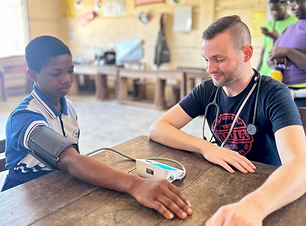
coming soon
coming soon
Operational Framework and Student Preparedness
Program in Ghana
I. Academic Eligibility and Institutional Standing To maintain the academic integrity of the University of Justice (UJ) global outreach initiatives, students must meet foundational scholastic requirements prior to application. Participation is open to students across all degree programs, reflecting the interdisciplinary nature of the Ghana experience. However, candidates must demonstrate a level of academic maturity and commitment to their studies.
Credit Hour Requirement: Students must have completed at least 12 credit hours or be currently enrolled in the courses necessary to reach this threshold.
GPA Standards: A minimum cumulative Grade Point Average (GPA) of 2.5 is mandatory for all applicants.
Disciplinary Record: Students must be in good standing with the university’s Dean of Students office.
II. Statutory Legal Clearances and Background Verification As the program operates under the auspices of the University of Justice, rigorous legal vetting is required to ensure the safety of the cohort and the host community. This process involves professional biometric verifications and a thorough review of the student’s legal history.
Fingerprinting: Candidates are required to schedule and complete fingerprinting sessions through IdentoGO to facilitate federal database checks.
Criminal Background Check: A comprehensive criminal background check must be cleared before the visa application process begins.
Compliance: All documentation must be submitted to the Program Coordinator at least 60 days prior to departure.
III. Medical Readiness and Health Certification Health security is a primary concern for international travel to West Africa. Students are required to undergo a series of medical evaluations to ensure they are physically capable of participating in the rigors of an overseas semester while minimizing public health risks.
Physical Examinations: A comprehensive physical exam signed by a licensed physician is required.
Immunization: Proof of Yellow Fever vaccination is mandatory for entry into Ghana; Malaria prophylaxis and Hepatitis vaccinations are highly recommended.
CPR Certification: In line with the University of Justice’s safety protocols, all students must hold a current CPR certification prior to departure to ensure peer-to-peer safety.
IV. Comprehensive Welfare and Insurance Coverage The University of Justice mandates a multi-layered insurance and communication strategy to manage risk during the duration of the Ghana program. This ensures that students have access to high-quality care and that university administrators can reach necessary parties during a crisis.
International Insurance: Students must enroll in the university-sanctioned international health and travel insurance plan, covering medical evacuation and repatriation.
Emergency Contacts: Students must provide three secondary emergency contacts, including mobile numbers and verified email addresses.
Notification Protocols: All students must register their travel with the university’s 24/7 Global Emergency Desk.
V. Financial Structures and Work-Study Availability Understanding the cost of attendance is vital for student budgeting. While the program encompasses core institutional costs, students have the opportunity to offset expenses through campus-based employment within the university’s Ghanaian administrative office.
Room and Board: Estimated at $2,500–$3,500 depending on the length of the stay.
Transportation: Local on-ground transportation for university-sanctioned events is included in the program fee.
Work-Study Opportunities: Students may apply for work-study positions at the University of Justice Ghana Satellite Office or the local library to assist with administrative tasks.
VI. Transatlantic Transit and Documentation Management The logistics of traveling to Accra require careful planning regarding airfare and legal documentation. The University of Justice partners with specific carriers to provide flexible financial arrangements for students, ensuring that the cost of flight is not a barrier to participation.
Airfare and Payment Plans: Round-trip flight costs generally range from $1,200 to $1,800; students may opt for the university’s installment payment plan to spread costs over six months.
Required Documents: A valid passport (with at least six months' validity) and a Ghanaian student visa are mandatory.
Flight Coordination: All students are encouraged to travel on the university-assigned group flight for synchronized arrival.
VII. Sustenance and Provisioning through Global Partnerships To ease the transition into the local environment, the program offers a unique provisioning service. This allows students to secure familiar essential items and specialty dietary needs through a pre-ordering system that bridges the gap between their home country and Ghana.
Pre-Departure Ordering: Students can place grocery orders at affiliated African Shops in the United States prior to their flight.
Arrival Pickup: These orders are processed and prepared for convenient pickup at the University of Justice’s Ghanaian campus upon arrival.
Local Market Guidance: Additionally, student leaders provide weekly tours of local markets for fresh produce.
VIII. Arrival Procedures and On-Site Integration The transition from Kotoka International Airport (ACC) to the university residence is strictly monitored to ensure student safety. A formal protocol is in place for the "meet and greet" phase, ensuring no student is left unescorted upon entering the country.
Airport Greeting: University of Justice personnel will meet students at the arrivals hall with official university identification.
Administrative Check-in: Upon arrival at the residence, students must check in with the resident School Representative to confirm their room assignment and receive their local orientation packets.
Orientation Social: A mandatory welcome briefing is held within 24 hours of landing.
IX. Program Duration and Cultural Immersion The University of Justice offers two distinct temporal tracks for the Ghana program: an accelerated 8-week course track or a full 5-month traditional semester. During either duration, students are encouraged to visit historic landmarks to understand the cultural and historical context of West Africa.
Cape Coast Castle: A historic site related to the Trans-Atlantic slave trade; entry fees are approximately $15 for students.
Kakum National Park: Featuring a famous canopy walkway; the cost for students is roughly $10.
Wli Waterfalls: The highest waterfall in West Africa; guided tours cost approximately $20 per person.
X. Diplomatic Safety and Risk Mitigation Student safety is the university’s highest priority. Maintaining a direct line with diplomatic missions and staying informed on local security trends is a core requirement for all participants throughout their 8-week or 5-month stay.
Embassy Registration: All students must check in with the Nearest Embassy in Accra (for U.S. citizens, the U.S. Embassy in Cantonments) upon arrival for safety registration.
Crime Monitoring: Students receive weekly crime reports and safety briefings from local university security.
Personal Funds: It is recommended that students carry at least $500–$800 in "out-of-pocket" personal funds for souvenirs, independent meals, and emergency incidental costs.