
.jpg)
NMN (ß-Nicotinamide Mononucleotide 500mg) @ 30 Capsules by Justice Care


Background Information:
Modern economic and social environments place an unprecedented premium on cognitive performance. As the global workforce shifts further toward knowledge-based roles, your mental capacity—specifically your ability to process information, maintain focus, and recall data—becomes your most significant asset. The pressure to remain productive during back-to-back meetings, academic examinations, or complex problem-solving sessions has created a widespread demand for tools that mitigate mental fatigue and cognitive decline. In this context, the brain is no longer viewed merely as a biological organ but as a critical piece of infrastructure that requires specific maintenance and optimization to meet the rigors of contemporary life.
The prevalence of "brain fog" represents a common obstacle in this high-demand setting. Brain fog is not a clinical diagnosis but a descriptive term for a collection of symptoms including reduced mental clarity, inability to concentrate, and a general sense of cognitive lethargy. For many, this manifests as a struggle to find the right words, a lag in decision-making, or a persistent feeling of being "spaced out" despite adequate rest. These issues often stem from a combination of environmental stressors, nutritional gaps, and the cognitive load of constant digital multitasking. Addressing these symptoms requires more than just temporary stimulants like caffeine; it necessitates a foundational approach to neurological support.
Cognitive Demands in a Knowledge Economy
The modern professional and academic environment operates on a cycle of continuous output. Unlike physical labor, where exhaustion is easily identified by muscle fatigue, cognitive exhaustion is more subtle. It appears as a diminishing return on time spent working—where tasks that once took an hour now stretch into three. The brain consumes approximately 20% of the body's total energy despite making up only 2% of its mass. When the metabolic demands of the brain are not met by sufficient nutritional precursors, performance plateaus. This creates a gap between your potential and your actual output.
This gap has led to a significant shift in how individuals approach supplementation. There is a moving trend away from general "one-a-day" multivitamins toward targeted cognitive toolkits. These formulations are designed to provide the specific raw materials the brain needs to synthesize neurotransmitters, protect neural membranes from oxidative stress, and maintain steady energy levels. The objective is to move beyond simple survival and toward a state of sustained mental alertness that allows for high-level performance throughout the duration of a workday or study session.
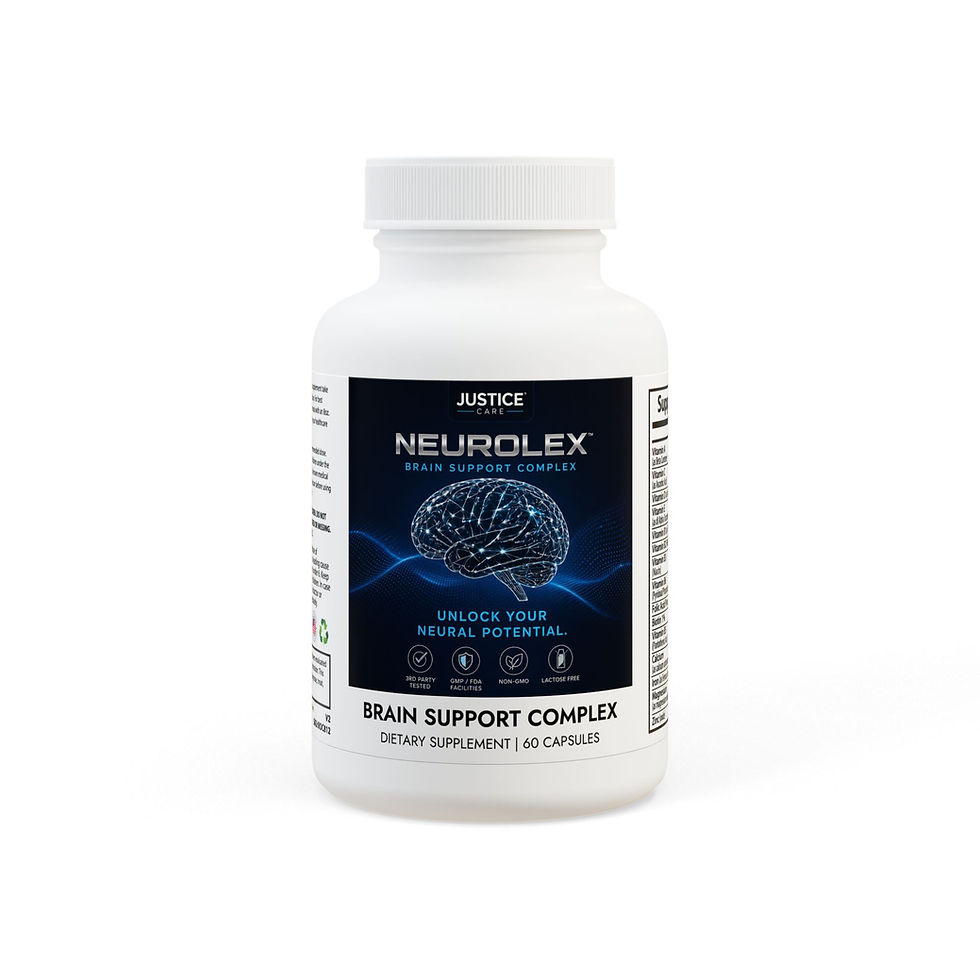
Neurolex as a Comprehensive Cognitive Toolkit
Justice Care developed the Neurolex Brain Support Complex as a direct response to these modern cognitive challenges. Rather than focusing on a single "miracle" ingredient, the formula is built as a multi-dimensional system. It acknowledges that cognitive health is the result of several intersecting biological processes, including neurotransmitter balance, cerebral blood flow, and cellular energy production. By positioning the product as a "cognitive toolkit," the focus shifts to providing a broad spectrum of support that addresses the brain's multifaceted needs.
The Neurolex approach combines traditional nutritional science with botanical research. It integrates essential vitamins and minerals that act as cofactors in enzymatic reactions with specialized amino acids and plant extracts known for their neuroprotective or cognitive-enhancing properties. This comprehensive strategy aims to provide the foundational support necessary for memory function while simultaneously offering components that help "lock in" focus for immediate productivity needs. It is designed for those who recognize that their cognitive output is the primary driver of their success and require a reliable method to maintain their mental edge.
Addressing Mental Alertness and Focus
Sustained mental alertness is often the first casualty of a high-stress lifestyle. The ability to stay "sharp" involves the complex regulation of the central nervous system, particularly the balance between excitatory and inhibitory neurotransmitters. Neurolex incorporates ingredients like Green Tea Extract and N-Acetyl L-Tyrosine to help manage this balance. These components are selected for their roles in supporting the production of dopamine and norepinephrine—chemicals that are essential for motivation, drive, and the ability to ignore distractions.
Focus is not just about the presence of energy; it is about the direction of that energy. Many people experience "wired but tired" sensations from excessive caffeine, where the heart rate is high but the mind remains scattered. True focus requires a calm, steady state of alertness. The inclusion of GABA (Gamma-Aminobutyric Acid) in the Neurolex formula reflects a design intended to provide this stability. By supporting the brain's natural inhibitory pathways, the formula helps mitigate the "noise" of modern life, allowing you to focus on the task at hand without the jittery side effects common in low-quality stimulants.
Purity and Manufacturing Standards
In the supplement industry, the efficacy of a formula is only as reliable as its manufacturing standards. Justice Care emphasizes a "Purity You Can Trust" model to differentiate Neurolex from products that may contain hidden fillers or inconsistent dosages. The complex is capsuled in the United States at facilities that are both FDA-registered and GMP-certified (Good Manufacturing Practices). These certifications are critical because they indicate a commitment to rigorous quality control, ensuring that what is listed on the label matches what is in the capsule.
The use of third-party laboratory testing serves as an additional layer of verification. In a market where many products are marketed with vague claims, third-party testing provides an objective analysis of purity and potency. For the consumer, this means the product is free from contaminants and meets the specified concentrations of active ingredients like Bacopa and Huperzine A. Furthermore, the formula is Non-GMO and lactose-free, catering to a broad range of dietary requirements and sensitivities. These standards are not just about safety; they are about ensuring the metabolic bio-availability of the nutrients, which is essential for achieving the claimed cognitive benefits.
The Role of Essential Nutrients in Brain Health
While botanicals often receive the most attention in cognitive supplements, the foundation of the Neurolex formula rests on a potent spectrum of vitamins and minerals. Vitamins such as B1, B2, B3, B5, and B6 are integral to the Krebs cycle, the process by which your cells create energy. The brain is highly sensitive to deficiencies in these B-vitamins, which can result in symptoms of fatigue and confusion. By providing these in a high-quality complex, the formula ensures that the basic metabolic machinery of the brain is functioning optimally before layering on more specialized cognitive enhancers.
Minerals such as Zinc, Magnesium, and Selenium also play vital roles in neurological health. Magnesium, for example, is involved in over 300 biochemical reactions in the body and is crucial for synaptic plasticity—the ability of the brain to form new connections. This is the biological basis for learning and memory. By combining these essential minerals with antioxidants like Vitamin C and Vitamin E, Neurolex helps protect brain cells from the oxidative damage that occurs during periods of high stress or aging. This dual-action approach—providing both the fuel for immediate performance and the protection for long-term health—is what defines the Neurolex methodology.
Navigating the Supplement Landscape
Choosing a cognitive supplement requires an understanding of how different ingredients interact. The Neurolex formula is designed to be synergistic, meaning the ingredients work together to produce a result greater than the sum of their parts. For instance, the combination of Choline Bitartrate and Huperzine A focuses on the acetylcholine system, which is the primary neurotransmitter pathway for memory and learning. Choline provides the precursor, while Huperzine A helps prevent the breakdown of the resulting neurotransmitter.
This level of formulation detail is what separates a professional-grade cognitive toolkit from a basic vitamin. As you navigate the demands of a fast-paced world, understanding these nuances allows you to make informed decisions about your health. The Neurolex Brain Support Complex aims to provide a reliable, science-backed option for those looking to clear the mental fog and regain their competitive edge. By focusing on purity, synergy, and comprehensive nutritional support, it addresses the fundamental needs of the modern mind.

Research problem or question
Identifying a research problem requires moving beyond marketing claims to isolate a specific, measurable inquiry. In the context of the Neurolex Brain Support Complex, the primary scholarly focus centers on the efficacy of a multi-ingredient "stack." You must determine if the specific combination of vitamins, minerals, amino acids, and botanicals provides a statistically significant advantage in mental energy and focus compared to standard multivitamins or a placebo. This problem is rooted in the "synergy hypothesis," which suggests that the interaction between these components creates a benefit greater than the sum of their individual parts.
Defining the Scholarly Focus
The central research question must address the complexity of the Neurolex formula. Unlike a single-ingredient study, this analysis looks at a broad spectrum of 40+ ingredients, ranging from Vitamin B1 to Huperzine A. You are investigating whether this specific ratio of cognitive enhancers—often called nootropics—actually results in a measurable "edge." An "edge" in this context is defined as a quantifiable improvement in cognitive processing speed, task endurance, or executive function. The problem lies in the gap between the perceived benefit described in consumer marketing and the verified physiological outcomes of such a dense formulation.
Synergistic Interaction vs. Ingredient Density A major component of the research problem is the interaction between different classes of nutrients. For instance, Neurolex combines GABA (an inhibitory neurotransmitter) with Green Tea Extract (which contains L-theanine and caffeine). The scholarly question asks how these disparate pathways—calming the nervous system while simultaneously stimulating it—converge to produce "Total Mental Clarity." You must explore whether the presence of high-quality botanicals like Bacopa and Huperzine A effectively modifies the baseline metabolic support provided by the included vitamins (A, C, D, E, and B-complex).
The Threshold of Statistical Significance To move the analysis from a product review to a formal research paper, you must establish what constitutes a "significant" result. In cognitive science, this often involves measuring reaction times, error rates in memory tasks, or subjective scales of "brain fog" reduction. The research problem asks: if a user experiences a 5% increase in focus, is that a result of the Neurolex formula, or is it a placebo effect? By framing the question around statistical significance, you shift the focus to the reliability and repeatability of the product’s claims.
Quantitative and Qualitative Metrics
The research question must be broken down into specific variables that can be analyzed. Mental energy and focus are broad terms that require precise definitions within your study. By narrowing these terms, you create a framework for evaluating the "cognitive toolkit" mentioned in the Justice Care materials. This approach allows you to analyze high-level data regarding ingredient bioavailability and metabolic pathways.
Analyzing Mental Energy Mental energy is often linked to the presence of B-vitamins and amino acids like N-Acetyl L-Tyrosine. The research problem investigates the duration of this energy. Does the supplement provide a "sustained" alertness as claimed, or does it lead to a metabolic spike followed by a crash? You are looking for evidence of cellular energy support (ATP production) versus temporary central nervous system stimulation. This distinction is vital for determining the long-term utility of the supplement for professionals navigating back-to-back meetings or students in long study sessions.
Measuring Focus and Concentration Focus is the ability to maintain attention on a single task while ignoring distractions. The inclusion of Huperzine A and Phosphatidylserine in the Neurolex formula points toward a focus on neurotransmitter health—specifically the acetylcholine system. Your research question should ask whether these specific dosages are sufficient to cross the blood-brain barrier and influence synaptic plasticity. The problem is not just whether the ingredients are "good" for the brain, but whether they are present in a form and quantity that creates a noticeable difference in daily productivity.
The Challenge of Multi-Ingredient Formulations
One of the most complex aspects of your research problem is the "shotgun approach" to supplementation. Because Neurolex contains a diverse array of ingredients—from minerals like Vanadyl Sulfate to extracts like Cinnamon Bark—it is difficult to attribute success to any single component. The scholarly focus must therefore be on the formulation as a whole. You are investigating the validity of "comprehensive" support versus targeted, single-ingredient supplementation.
Isolating the Impact of Specialized Blends The research problem must address why Justice Care chose this specific blend over more simplified versions. For example, the formula includes both DMAE Bitartrate and Choline Bitartrate. Both are precursors to acetylcholine, a critical neurotransmitter for memory. The research question asks if this redundancy is beneficial for "foundational memory support" or if it represents an unnecessary overlap. By questioning the necessity of each component, you provide a deeper analysis of the product's design and intent.
Addressing the "Brain Fog" Variable "Brain fog" is a common consumer complaint, but it is not a clinical diagnosis. The research problem must translate this subjective experience into objective data points. You should look at how the antioxidant properties of Bilberry Fruit Extract and Grape Seed Extract might reduce oxidative stress in the brain, thereby clearing the "fog." This allows you to ground the research in biological reality rather than marketing terminology.
The Regulatory and Safety Context
Finally, the research problem is inextricably linked to the regulatory environment. Because the FDA does not evaluate dietary supplements for efficacy before they hit the market, the burden of proof falls on independent analysis. Your research question should acknowledge this: in the absence of FDA-mandated clinical trials, what evidence exists to support the efficacy of this specific combination?
Efficacy vs. Safety While Justice Care ensures the product is manufactured in GMP-certified facilities and is third-party tested, these certifications primarily focus on purity and safety (e.g., being non-GMO and lactose-free). They do not guarantee that the product will "sharpen concentration." The research problem, therefore, explores the gap between a "safe" product and an "effective" one. You are evaluating whether the transparency of the manufacturing process correlates with the actual cognitive performance of the end user.
The Role of Professional Consultation The Justice Care policy emphasizes that users should consult with healthcare professionals. This adds a layer to your research question: how does the supplement interact with existing medical conditions or medications? The scholarly focus includes the responsibility of the consumer to validate the supplement's role within their personal health profile. This ensures the research is not just about the chemistry of the pill, but the practical, legal, and medical reality of its use.
By clearly defining the research problem as an investigation into the statistical significance of the Neurolex formula's cognitive claims, you set a rigorous standard for the rest of your paper. You move beyond the "what" of the ingredients to the "how" and "why" of their performance, providing a comprehensive analysis that serves both academic and professional interests.

Significance of the Research
The modern cognitive environment demands a level of mental endurance that exceeds traditional nutritional support. As professionals navigate back-to-back meetings and students face increasingly complex examinations, the "brain fog" resulting from cognitive fatigue has become a significant barrier to productivity. Analyzing a cognitive toolkit like Neurolex is essential because it represents a shift from simple supplementation to integrated neuro-support. By examining the significance of this research, you can better understand how specific nutrient complexes aim to maintain the brain as a primary professional and academic asset.
Cognitive Demands in High-Stakes Environments
The contemporary workforce operates in a state of perpetual connectivity, requiring rapid task-switching and sustained concentration. For professionals, the significance of cognitive research lies in the ability to mitigate the "afternoon slump" or the mental exhaustion that follows intense periods of focus. When you analyze a formula like Neurolex, you are not merely looking at a vitamin; you are evaluating a mechanism designed to support the biological infrastructure of focus. Research into these formulations provides a baseline for understanding how amino acids like N-Acetyl L-Tyrosine and GABA might interact with the stress of a high-pressure career.
Academic environments present a different but equally rigorous set of demands. Students must manage high volumes of information retention while maintaining clarity during long testing cycles. The research into Bacopa and Huperzine A is significant here because it addresses the foundational needs of memory function. By validating the efficacy of these ingredients, researchers help clarify whether these "toolkits" offer a genuine edge or merely a placebo effect in academic settings. This distinction is vital for individuals who rely on their cognitive output for their livelihoods and future success.
Multi-Ingredient Complex Validation
The supplement industry has evolved from selling isolated vitamins to marketing sophisticated "complexes." Validating these multi-ingredient formulations is critical because the interaction between various botanicals, minerals, and vitamins is more complex than the sum of their parts. In the case of Neurolex, the formula combines a broad spectrum of vitamins (A through B5) with specialized extracts like Green Tea and Bilberry Fruit. Research serves to identify if these ingredients work synergistically or if certain components are redundant.
Synergistic Potency. Understanding how DMAE Bitartrate interacts with Phosphatidylserine is a key objective of modern nutritional science. Research determines if these combinations successfully cross the blood-brain barrier and provide the advertised "total mental clarity." Without rigorous analysis, the consumer is left with a list of ingredients but no clear understanding of their combined metabolic pathway.
Purity and Standardization. The significance of researching manufacturing standards—such as GMP (Good Manufacturing Practice) certification and FDA-registered facilities—cannot be overstated. In an industry where "purity" is often a marketing term rather than a verified fact, investigating Justice Care’s commitment to third-party laboratory testing provides a blueprint for consumer safety. This research highlights the importance of verifying that a product is non-GMO and lactose-free, ensuring that the cognitive "edge" does not come at the cost of systemic inflammation or allergic reactions.
Regulatory and Safety Frameworks
Investigating the legal and regulatory landscape of cognitive supplements is a cornerstone of this research. Because the Food and Drug Administration (FDA) does not approve dietary supplements for efficacy before they reach the market, the burden of proof falls on the manufacturer and the scrutiny of the researcher. You must recognize that the Dietary Supplement Health and Education Act (DSHEA) of 1994 creates a specific environment where safety is the manufacturer's responsibility, but claims regarding "curing" or "treating" diseases are strictly prohibited.
Consumer Protection. Research into these products often intersects with consumer law, such as the Texas Deceptive Trade Practices Act (DTPA). Understanding the significance of these legal frameworks helps you evaluate the transparency of a product’s marketing. When a product like Neurolex includes a mandatory medical disclaimer, it is a legal acknowledgment of the boundary between nutritional support and medical intervention. Analyzing these boundaries ensures that users maintain realistic expectations and prioritize professional medical consultation.
Risk Mitigation. The significance of this study extends to identifying who should avoid these complexes. By researching the contraindications of ingredients like Huperzine A or the potential for over-stimulation from Green Tea Extract, the research provides a safety manual for the end-user. This proactive approach to adverse effect management is what differentiates a responsible academic analysis from a standard product review. It empowers you to make informed decisions based on clinical data rather than anecdotal evidence of "mental energy."
Industry Transparency and Innovation
The cognitive supplement market is currently saturated with products promising "sustained mental alertness." Research is significant because it forces a higher level of transparency across the industry. When a specific formula like Neurolex is subjected to an academic framework, it sets a precedent for how other "brain boosters" should be evaluated. This encourages manufacturers to move away from proprietary blends—where ingredient amounts are hidden—toward transparent labeling and verified sourcing.
By focusing on the "comprehensive cognitive toolkit" aspect, this research addresses the modern preference for all-in-one solutions. Instead of taking ten different pills, consumers prefer a single, potent spectrum. Investigating the stability of these ingredients within a single capsule—such as how Vitamin B6 (Pyridoxal Phosphate) maintains its integrity alongside Cinnamon Bark Extract—is essential for ensuring the product remains effective throughout its shelf life. This technical validation is a service to both the scientific community and the general public, as it bridges the gap between raw nutritional science and everyday application.

Product Specifications & Regulatory Compliance
Formula Overview: Ingredients and Net Weight
The composition of Neurolex Brain Support Complex necessitates a granular examination of its multi-tiered nutritional profile. Unlike basic multivitamins that focus primarily on general metabolic health, this formula integrates a pure vitamin spectrum with targeted botanical extracts and amino acids. Understanding the specific components and their manufacturing standards is the first step in verifying the product’s role as a comprehensive cognitive toolkit.
Micronutrient Spectrum: Vitamins and Minerals
The primary layer of the Neurolex formula consists of an extensive array of essential vitamins and minerals. These serve as the biological precursors required for neurotransmitter synthesis and cellular energy production. The inclusion of Vitamin A (as Beta Carotene) and Vitamin C (as Ascorbic Acid) provides the antioxidant base necessary to protect neural tissues from oxidative stress.
The B-vitamin complex within the formula is particularly robust, featuring B1 (Thiamine), B2 (Riboflavin), B3 (Niacin), B5 (Pantothenic Acid), and B6 (Pyridoxal Phosphate). These specific iterations of B vitamins are vital for the conversion of glucose into fuel and the maintenance of the myelin sheath that insulates nerve fibers. Additionally, the formula includes Folic Acid and Biotin, which play supporting roles in DNA repair and cellular signaling.
Mineral content in the formula includes a balanced selection of macro-minerals and trace elements. Calcium carbonate and Magnesium oxide provide structural and enzymatic support, while Zinc, Selenium, Copper, and Manganese are delivered in chelated or oxide forms to ensure stability within the capsule. The presence of Chromium (Polynicotinate) and Molybdenum (Amino Chelate) indicates a focus on metabolic regulation, which is often a secondary but necessary factor in maintaining consistent mental energy levels.
Botanical Extracts and Cognitive Compounds
Beyond the vitamin base, the formula utilizes high-quality botanicals and specialized compounds designed to cross the blood-brain barrier or influence cognitive pathways directly. Key among these are Bacopa Extract and Green Tea Extract. Bacopa is historically recognized for its potential to support memory retention and reduce the cognitive impact of stress, while Green Tea Extract provides a source of polyphenols that may assist in mental alertness.
Specialized cognitive agents in the Neurolex blend include:
DMAE Bitartrate: A precursor to acetylcholine, a neurotransmitter essential for memory and learning.
Huperzine A: An alkaloid derived from firmoss, often researched for its role in inhibiting the breakdown of acetylcholine.
Phosphatidylserine 20%: A phospholipid that is a primary component of internal cell membranes, particularly those in the brain.
L-Glutamine and Glutamic Acid: Amino acids that serve as building blocks for proteins and act as neurotransmitters in the central nervous system.
GABA (Gamma Aminobutyric Acid): An inhibitory neurotransmitter that helps regulate neuronal excitability throughout the nervous system.
The inclusion of N-Acetyl L-Tyrosine further supports this cognitive focus. This specific form of the amino acid Tyrosine is often utilized for its superior bioavailability, assisting the body in producing dopamine and norepinephrine during periods of high demand or stress.
Secondary Botanical Support and Trace Elements
The formula is rounded out by a "supportive botanical complex" which includes Bilberry Fruit Extract, Grape Seed Extract, Olive Leaf, Cinnamon Bark, and Licorice Root. These ingredients are rich in flavonoids and secondary metabolites that support systemic vascular health, which is indirectly beneficial for cerebral blood flow.
Trace elements like Vanadyl Sulfate (19%) and Boron (Citrate) are included in precise amounts. Vanadyl sulfate is often studied for its role in blood sugar management, while Boron is linked to the metabolism of minerals like calcium and magnesium, as well as general brain function. The presence of DHA (Docosahexaenoic Acid) at 14% provides essential omega-3 fatty acids, which are critical structural components of the cerebral cortex.
Manufacturing Standards and Purity
The physical production of Neurolex occurs within the United States at facilities that are both FDA-registered and GMP-certified (Good Manufacturing Practices). This ensures that the transition from raw powder to finished capsule follows strict hygiene and quality control protocols.
Purity is a central metric for this formulation. The product is labeled as Non-GMO and Lactose-Free, addressing common dietary sensitivities and consumer preferences for clean-label supplements. Third-party laboratory testing is implemented for every batch to verify that the ingredients listed on the label match the contents of the capsules and to ensure the absence of contaminants. This level of verification is a standard requirement for maintaining the "Purity You Can Trust" designation associated with Justice Care products.
Labeling and Physical Specifications
Justice Care provides clear labeling regarding the net weight and quantity of the product. Each bottle typically provides a standardized count of capsules, formulated to deliver the specific ratios of vitamins and botanicals discussed. Precise net weight labeling is mandatory for compliance with trade standards and allows users to understand the exact dosage of the complex they are consuming.
The use of globally sourced ingredients reflects a strategy of selecting specific raw materials based on their potency and form (such as using Pyridoxal Phosphate for B6 or Selenium Amino Acid Chelate). By sourcing globally but capsuling in the USA, the manufacturer maintains control over the final assembly and safety testing of the product while utilizing the highest grade of raw materials available in the international market.
Usage Guidelines: Suggested Use and Storage
Adherence to specific intake protocols and storage standards determines the efficacy of the Neurolex Brain Support Complex. As a multi-ingredient cognitive toolkit, this formula relies on the biochemical stability of its vitamins, minerals, and botanical extracts. Proper usage ensures that the active compounds, such as DMAE Bitartrate and the Vitamin B complex, reach systemic circulation in their most potent form, while correct storage prevents the premature degradation of these sensitive molecules.
Optimal Intake Schedules
To achieve sustained mental alertness and clear the cognitive state often referred to as "brain fog," you must integrate the supplement into a consistent daily routine. The timing of consumption significantly influences the absorption rates of both water-soluble and fat-soluble components within the formula. Because the Neurolex complex contains a broad spectrum of vitamins (A, C, D, E, and the B-group), taking the capsules alongside a meal is the recommended standard.
Fat-soluble vitamins such as Vitamin A (Beta Carotene), Vitamin D (cholecalciferol), and Vitamin E require dietary lipids for transport across the intestinal lining. Consuming the supplement on an empty stomach may result in suboptimal absorption of these specific nutrients. Furthermore, botanical extracts like Bacopa and Green Tea Extract contain polyphenols and bacosides that are better tolerated by the digestive system when paired with food, reducing the likelihood of gastrointestinal discomfort.
Consistency serves as the foundation for the cumulative effects of nootropics like Huperzine A and Bacopa. These ingredients often require a steady plasma concentration to support long-term memory function and focus. You should aim to take the dosage at the same time each day to maintain this equilibrium. If you are using the complex to manage productivity during back-to-back meetings or intensive study sessions, morning administration is typically preferred to align the peak metabolic activity of the B-vitamins with your highest cognitive demands.
Hydration and Metabolic Transport
Water serves as the primary vehicle for the water-soluble elements of the formula, including Vitamin C and the entire B-vitamin spectrum (B1, B2, B3, B5, B6, and Folic Acid). These nutrients are not stored in the body to a significant degree and are rapidly processed and excreted. Adequate hydration—specifically consuming at least eight ounces of water with your dose—facilitates the dissolution of the capsule and the subsequent transit of these micronutrients into the bloodstream.
Beyond simple transport, hydration supports the neurological environment where amino acids like N-Acetyl L-Tyrosine and GABA operate. Cognitive clarity is often a byproduct of both nutrient availability and cellular hydration. When you use the Neurolex complex, maintaining a high daily water intake supports the kidneys in processing the mineral load, including Magnesium, Zinc, and Selenium, which are essential for foundational brain health and antioxidant protection.
Environmental Factors and Storage Standards
The molecular integrity of the Neurolex formula is sensitive to three primary environmental stressors: heat, light, and moisture. Justice Care capsules are manufactured in GMP-certified facilities to ensure initial purity, but the responsibility for maintaining that purity shifts to you once the seal is broken. To prevent the oxidation of delicate ingredients like DHA and Phosphatidylserine, you must store the container in a cool, dry environment, ideally between 60°F and 75°F (15°C to 24°C).
Humidity is perhaps the most significant threat to the "Brain Support Complex." Many of the minerals, such as Calcium Carbonate and Magnesium Oxide, are hygroscopic, meaning they naturally attract moisture from the air. If the internal environment of the bottle becomes humid, the capsules may undergo "clumping" or softening. This moisture can also trigger the degradation of DMAE Bitartrate and the B-vitamin complex, leading to a loss of potency or changes in the physical appearance and scent of the capsules. Avoid storing the product in bathrooms or near kitchen appliances that generate steam or heat.
Vitamin B Complex Stability
The Vitamin B vitamins in Neurolex, specifically Pyridoxal Phosphate (B6) and Riboflavin (B2), are notoriously light-sensitive (photolabile). Exposure to direct sunlight or even intense indoor UV light can cause these vitamins to break down into inactive metabolites. This is why the product is packaged in opaque or tinted containers designed to block light penetration.
To maintain the "Total Mental Clarity" promised by the formula, you must keep the lid tightly secured after every use. B-vitamins are also susceptible to oxidation when exposed to air for prolonged periods. The distinct yellowish hue of some cognitive supplements is often due to Riboflavin; if you notice a significant darkening or spotting on the capsules, it may indicate that the B-vitamins have been compromised by improper storage or excessive air exposure.
Preservation of Botanical Extracts and Amino Acids
The botanical components of the Neurolex formula, including Bilberry Fruit, Grape Seed, and Olive Leaf extracts, are rich in antioxidants. Paradoxically, these antioxidants are themselves prone to oxidation. When exposed to high temperatures, the delicate chemical bonds in Huperzine A and Green Tea Extract can weaken, rendering the "cognitive toolkit" less effective for sharpening concentration.
Amino acids such as L-Glutamine and N-Acetyl L-Tyrosine are relatively stable at room temperature but can become reactive if the product is stored in a fluctuating thermal environment, such as a car dashboard or a windowsill. The goal of storage is to create a static environment. Rapid changes in temperature can cause condensation inside the bottle, which provides a medium for microbial growth, even in third-party laboratory-tested, non-GMO products. By keeping the bottle in a dark pantry or a dedicated supplement cabinet, you preserve the synergistic effects of the 40+ ingredients.
Safety Protocols and Handling
Proper storage also includes safety considerations regarding the accessibility of the product. The Neurolex formula contains potent minerals like Iron (Ferrous Fumarate) and Selenium. While these are essential for cognitive function in specific doses, accidental ingestion by children can be hazardous. Always ensure the child-resistant cap is fully engaged and storage is out of reach of minors.
Before each use, inspect the capsules for any signs of contamination or structural failure. Because the product is lactose-free and avoids many common fillers, the internal powder relies on the integrity of the capsule shell. If you notice a broken capsule, do not consume the loose powder, as the exposure to air may have already initiated the degradation process of the more sensitive ingredients like Vanadyl Sulfate or Potassium Citrate. Stick to the suggested use guidelines provided on the label to ensure you are receiving the intended nutritional support without exceeding the daily recommended values of minerals like Zinc and Chromium.
Long-term Potency Maintenance
Every batch of Neurolex is third-party laboratory tested to confirm that it meets label claims at the time of manufacturing. However, cognitive supplements have a finite shelf life. Over time, even under perfect storage conditions, the biological activity of enzymes and certain vitamins will naturally decline. You should check the expiration or "best by" date located on the bottom or side of the packaging.
Using the product beyond its expiration date is not recommended, as the foundational support for memory function may be diminished. To maximize the value of your investment in your cognitive health, use the product within the timeframe suggested by the serving size—typically 30 to 60 days of consistent use. This ensures that you are consuming the nutrients while they are at their peak physiological utility, providing the mental energy and focus required for a high-performance lifestyle.
Safety Protocols: Contraindications and Adverse Effects
Evaluating the safety profile of a complex cognitive supplement like Neurolex Brain Support Complex requires a systematic analysis of its constituent parts. Because this formula integrates a broad spectrum of vitamins, minerals, and potent botanical extracts, you must understand how these ingredients interact with the human body and with each other. While the product is manufactured in GMP-certified facilities to maintain purity and high quality, the physiological activity of neuro-active compounds necessitates a cautious approach to consumption.
Botanical and Amino Acid Contraindications
Specific botanical extracts in the Neurolex formula, such as Bacopa and Huperzine A, possess significant biological activity that may not be suitable for all users. Bacopa Monnieri is known for its ability to support memory, but it can also influence the cholinergic system. Individuals with bradycardia (slow heart rate) or gastrointestinal obstructions should exercise caution, as Bacopa may increase secretions in the stomach and intestines. Similarly, Huperzine A acts as an acetylcholinesterase inhibitor. This mechanism increases levels of acetylcholine in the brain, which is beneficial for focus but can pose risks for individuals with epilepsy, asthma, or certain cardiac arrhythmias.
Licorice Root Extract and Cinnamon Bark Extract introduce further considerations. Licorice contains glycyrrhizin, which, if consumed in excessive amounts, can affect blood pressure and potassium levels. While the amount in a cognitive complex is typically balanced, individuals with hypertension or kidney disease must monitor their intake. Cinnamon bark can influence blood sugar levels; therefore, users with diabetes or those taking glucose-lowering medications should consult a healthcare professional to avoid potential hypoglycemic events.
Amino Acid Sensitivity The inclusion of L-Glutamine and Glutamic Acid requires attention for those with specific metabolic sensitivities. While these amino acids are foundational for neurotransmitter synthesis, individuals with liver disease or those sensitive to monosodium glutamate (MSG) might experience adverse reactions. Furthermore, N-Acetyl L-Tyrosine (NALT) is a precursor to dopamine and norepinephrine. If you are taking Monoamine Oxidase Inhibitors (MAOIs) or have a history of melanoma, NALT should be avoided due to its role in catecholamine and melanin production.
GABA and Huperzine A Synergy
The combination of Gamma-Aminobutyric Acid (GABA) and Huperzine A represents a sophisticated approach to neurotransmitter modulation, but it also creates a unique safety profile. GABA is the primary inhibitory neurotransmitter in the brain, often used to promote a sense of calm and mitigate the "jittery" side effects sometimes associated with stimulants like Green Tea Extract. Huperzine A, conversely, works to prevent the breakdown of acetylcholine, a neurotransmitter essential for learning and memory.
Cholinergic Overstimulation When you use inhibitors like Huperzine A, you are effectively keeping more acetylcholine available in the synaptic cleft. If combined with other cholinergic agents or if the dosage exceeds personal tolerance, there is a risk of cholinergic syndrome. Symptoms of this include excessive salivation, lacrimation (tearing), and muscle twitching. The presence of GABA in the Neurolex formula acts as a balancing agent, potentially smoothing out the cognitive "load" placed on the nervous system by Huperzine A. However, this synergy means that you must not combine this supplement with pharmaceutical-grade acetylcholinesterase inhibitors used for cognitive decline without strict medical supervision.
Inhibitory Balance GABA's role in the formula is to support mental clarity without over-excitation. Because GABA can influence muscle tone and sleep-wake cycles, first-time users should observe how the supplement affects their coordination and alertness before engaging in tasks that require high motor precision, such as driving or operating heavy machinery. Although the oral bioavailability of GABA is a subject of ongoing research, its presence in a blend with Huperzine A suggests a targeted effort to maintain a "flow state" rather than pure stimulation.
Micronutrient Tolerability and Toxicity
The Neurolex formula provides a "pure spectrum" of vitamins and minerals, including fat-soluble vitamins (A, D, E) and trace minerals like Selenium and Vanadyl Sulfate. Unlike water-soluble vitamins, fat-soluble vitamins are stored in the body's adipose tissue. You must ensure that your total daily intake from all food and supplement sources does not exceed the Tolerable Upper Intake Levels (UL) to avoid toxicity. Vitamin A, included as Beta Carotene, is generally safer, but chronic over-consumption of preformed Vitamin A can lead to bone density issues or liver stress.
Mineral Interactions Trace minerals such as Vanadyl Sulfate and Molybdenum are included for their roles in metabolic and enzymatic processes. Vanadyl Sulfate, in particular, is often studied for its insulin-mimetic properties. Users with metabolic disorders must be aware that supplemental vanadium can alter how the body processes carbohydrates. Furthermore, the inclusion of Iron (as Ferrous Fumarate) is a critical safety point. Iron is a leading cause of accidental poisoning in children; therefore, the supplement must be stored in a secure location. For adults, excessive iron can cause gastrointestinal distress, including constipation or nausea, particularly when taken on an empty stomach.
Zinc and Copper Balance The formula includes both Zinc and Copper. This is a deliberate formulation choice to prevent the copper deficiency that can sometimes occur with high-dose zinc supplementation. However, individuals with Wilson’s disease or other copper-processing disorders should avoid this complex due to the supplemental copper content. The balance of these minerals is essential for neurological health, but it remains a point of medical contraindication for specific genetic conditions.
High-Risk Populations and General Advisories
Justice Care explicitly states that certain populations should refrain from using the Neurolex Brain Support Complex unless directed by a physician. This is not merely a legal disclaimer but a safety necessity based on the physiological demands of these life stages and conditions.
Pregnancy and Nursing During pregnancy and lactation, the nutritional requirements and metabolic pathways of the body change significantly. Ingredients like DMAE (Dimethylaminoethanol) and Huperzine A have not been sufficiently studied for safety in developing fetuses or infants. DMAE, in particular, has been flagged in some animal studies for potential teratogenic effects. Consequently, pregnant or nursing individuals should treat this supplement as contraindicated.
Pre-existing Medical Conditions If you have a history of the following conditions, a medical consultation is required before use:
Cardiovascular Issues: Ingredients like Green Tea Extract contain caffeine, which can increase heart rate or blood pressure in sensitive individuals.
Neurological Disorders: The modulation of acetylcholine and GABA can interfere with treatments for Parkinson’s disease, Alzheimer’s, or epilepsy.
Renal and Hepatic Disease: The liver and kidneys are responsible for processing and excreting the metabolic byproducts of botanical extracts and concentrated minerals. Impaired organ function can lead to the accumulation of these substances.
Surgery and Anticoagulation Several ingredients in the formula, including Grape Seed Extract, Bilberry Fruit Extract, and Vitamin E, have mild anti-platelet or blood-thinning properties. If you are scheduled for surgery, you should discontinue use of the Neurolex Brain Support Complex at least two weeks prior to the procedure. This precaution minimizes the risk of excessive bleeding during and after surgery. Similarly, users on anticoagulant medications like Warfarin or Aspirin must monitor for increased bruising or bleeding tendency.
Adverse Reaction Monitoring
While most users tolerate the Neurolex formula well, you should be vigilant for signs of adverse reactions. These reactions can range from mild digestive changes to more serious systemic responses. Identifying these early allows you to adjust your usage or seek medical attention if necessary.
Gastrointestinal and Neurological Symptoms The most common side effects of multi-ingredient cognitive supplements are nausea, stomach cramps, or diarrhea. These are often caused by the concentrated minerals (like Magnesium Oxide) or botanical extracts. Taking the capsules with a full meal can often mitigate these issues. Neurologically, some users may experience "brain over-stimulation," manifested as restlessness, insomnia, or mild headaches. If these symptoms persist, it suggests that the neuro-active components are exceeding your current physiological threshold.
Allergic Reactions Although the formula is non-GMO and lactose-free, it contains a variety of plant-derived extracts. If you have known allergies to plants in the Asteraceae family (like daisies or ragweed) or specific fruits, you should review the ingredient list carefully. Signs of an allergic reaction include hives, swelling of the face or throat, and difficulty breathing. In the event of these symptoms, discontinue use immediately and seek emergency medical care.
Storage and Stability Protocols
The safety and efficacy of the Neurolex Brain Support Complex are dependent on proper storage. The chemical stability of DMAE, Vitamin B complexes, and unsaturated fatty acids like DHA (Docosahexaenoic Acid) can be compromised by environmental factors. Exposure to high heat, humidity, or direct sunlight can lead to the oxidation of fats and the degradation of vitamins, potentially creating harmful byproducts or reducing the potency of the formula.
You should store the bottle in a cool, dry place, ideally at room temperature (around 68-77°F). Ensure the lid is tightly sealed after each use to prevent moisture from entering the bottle, which can cause the capsules to soften or the powdered ingredients to clump. Keeping the product in its original container ensures that the light-resistant packaging continues to protect the sensitive botanical extracts. Following these storage guidelines preserves the integrity of the "cognitive toolkit" and ensures that the safety profile remains consistent throughout the life of the product.
Legal Foundation: Disclaimer and Regulatory Notice
The legal classification of Neurolex Brain Support Complex is defined by the Dietary Supplement Health and Education Act of 1994 (DSHEA). Under this federal statute, the product is categorized as a dietary supplement rather than a drug. This distinction is fundamental to how the product is marketed, labeled, and regulated within the United States. Unlike pharmaceutical drugs, which require pre-market approval by the Food and Drug Administration (FDA) to prove safety and efficacy for specific medical conditions, dietary supplements are regulated as a category of food. The responsibility for ensuring the safety and truthfulness of claims rests primarily with the manufacturer, Justice Care, rather than the federal government.
Statutory Framework of DSHEA 1994
The Dietary Supplement Health and Education Act serves as the primary governing legislation for products like Neurolex. This act amended the Federal Food, Drug, and Cosmetic Act to establish specific labeling and manufacturing requirements. One of the most critical aspects of DSHEA is the limitation it places on the FDA’s authority to regulate supplements before they reach the consumer. Justice Care is required to ensure that the Neurolex formula—comprised of vitamins, minerals, and botanicals like Bacopa and Green Tea Extract—is safe before it is marketed. However, the FDA does not "approve" the product for its intended use in sharpening concentration or clearing brain fog prior to sale.
Manufacturer Responsibility involves conducting internal or third-party testing to verify the identity, purity, and composition of the ingredients. Justice Care utilizes GMP-certified (Good Manufacturing Practice) facilities and third-party laboratory testing to meet these statutory obligations. This ensures that the capsules contain exactly what is listed on the label without contaminants, fulfilling the safety mandates of the 1994 Act.
Burden of Proof under DSHEA rests with the FDA if the agency wishes to remove a product from the market. Unlike drugs, where the manufacturer must prove a product is safe and effective before launch, the FDA must prove that a dietary supplement is unsafe or misbranded after it has entered the marketplace. This regulatory environment allows for the rapid availability of cognitive toolkits but places a higher burden of discernment on the consumer.
Mandatory FDA Compliance Disclaimers
Every bottle and marketing material for Neurolex must prominently feature the standard FDA disclaimer. This statement is a legal requirement for any supplement making "structure or function" claims. The disclaimer states: "These statements have not been evaluated by the Food and Drug Administration. This product is not intended to diagnose, treat, cure, or prevent any disease." This language serves as a legal shield and a consumer notice, clarifying that the product lacks the clinical validation required for medical interventions.
Structure and Function Claims are the specific type of promotional statements permitted under federal law. Justice Care claims that Neurolex supports "mental energy," "sustained mental alertness," and "optimal memory function." These are considered structure/function claims because they describe the product's impact on the normal operation of the human body. Because these claims do not suggest the product can fix a pathological state, they are legal under DSHEA, provided they are truthful and non-misleading.
Disease Claim Prohibitions prevent Justice Care from stating that Neurolex can treat Alzheimer’s disease, clinical depression, or ADHD. If the marketing materials moved from "enhancing focus" to "treating attention deficit disorders," the product would legally be reclassified as an unapproved new drug. Such a reclassification would subject the manufacturer to severe legal penalties and immediate product seizure, as it would be bypassing the rigorous New Drug Application (NDA) process.
Legal Classification and Ingredient Integrity
The legal status of Neurolex is also tied to the classification of its individual components. The formula includes a "pure spectrum" of vitamins (A, C, D, E, and B-complex), minerals (Zinc, Magnesium, Selenium), and specialized botanical extracts. Each of these must be a recognized dietary ingredient that was marketed in the United States before October 15, 1994, or must have a "New Dietary Ingredient" (NDI) notification on file with the FDA.
Botanical and Amino Acid Standards apply to ingredients like Huperzine A, DMAE Bitartrate, and L-Glutamine. These substances are legally permitted in supplements because they are naturally occurring or have a history of use in the food supply. By adhering to these ingredient standards, Justice Care maintains the product's status as a supplement. The inclusion of these ingredients is intended to provide nutritional support for cognitive pathways rather than pharmacological alteration of brain chemistry for medical purposes.
Purity and Manufacturing Origin are secondary but vital legal descriptors. The product is "Capsuled in the USA" from "globally sourced ingredients." This phrasing is legally significant under Federal Trade Commission (FTC) guidelines regarding "Made in USA" claims. Justice Care must ensure that the processing and encapsulation occur within domestic borders to use this labeling, even while acknowledging that raw materials like Bacopa may be sourced from international suppliers.
Compliance with GMP and Third-Party Testing
While the FDA does not approve the efficacy of Neurolex, it does mandate compliance with Current Good Manufacturing Practices (cGMP). These regulations are found in 21 CFR Part 111. Justice Care’s use of FDA-registered and GMP-certified facilities is a legal commitment to quality control. These facilities are subject to periodic inspections by the FDA to ensure that the manufacturing process prevents cross-contamination and ensures consistency across batches.
Third-Party Laboratory Testing acts as a voluntary but essential layer of legal protection and consumer transparency. By verifying the non-GMO and lactose-free status of the formula through independent labs, the manufacturer provides evidence that the product meets the descriptive claims made on the label. This reduces the risk of litigation under state-level consumer protection laws, such as the Texas Deceptive Trade Practices Act, by ensuring the physical product matches the advertised specifications.
Record Keeping is a statutory requirement under cGMP. The manufacturer must maintain records of all raw material lots, production batches, and distribution chains. In the event of an adverse reaction or a product recall, these records allow for precise tracking. This logistical transparency is a cornerstone of the legal framework governing dietary supplements, ensuring that accountability is maintained even without pre-market government testing.
Jurisdictional and Regulatory Oversight
The regulation of Neurolex involves a dual-agency approach. While the FDA oversees the safety, labeling, and manufacturing of the supplement, the Federal Trade Commission (FTC) regulates the advertising of the product. Both agencies require that claims be substantiated by competent and reliable scientific evidence. Justice Care’s marketing of Neurolex as a "comprehensive cognitive toolkit" must be supported by the known nutritional profiles of its ingredients to avoid charges of deceptive advertising.
State vs. Federal Compliance adds another layer of complexity. While DSHEA is a federal law that provides a uniform standard for supplement labeling, state laws can impose additional requirements or provide different avenues for consumer redress. In Texas, the Deceptive Trade Practices Act (DTPA) allows consumers to seek triple damages for "unconscionable actions" or "misleading representations." Justice Care’s terms of service and legal disclaimers are designed to align with these state-specific statutes while maintaining federal compliance.
Mandatory Binding Arbitration is a common legal provision included in the terms of service to manage the risks associated with these varied jurisdictions. By requiring that disputes be settled via arbitration in Houston, Texas, Justice Care establishes a predictable legal environment for addressing claims related to the product’s efficacy or safety. This does not waive the manufacturer's requirement to follow FDA or DSHEA guidelines but dictates the venue and method for resolving conflicts arising from those regulations.
Risk Management: Consumer and Emergency Responsibility
Risk management in the context of dietary supplements involves a clear division of responsibility between the manufacturer and the end consumer. For a product like Neurolex Brain Support Complex, which contains a dense array of bioactive ingredients such as Huperzine A and DMAE Bitartrate, the legal and safety framework is designed to mitigate the risks associated with physiological variability. You must understand that while the manufacturer maintains quality control standards, the ultimate responsibility for medical safety rests with the user and their healthcare provider.
Liability Limitations and Financial Caps
The terms of service established by Justice Care delineate specific boundaries regarding financial and legal liability. These clauses are standard in the supplement industry but carry significant weight in risk management. The limitation of liability clause explicitly states that Justice Care, including its officers and agents, cannot be held responsible for indirect, incidental, or punitive damages. This includes potential loss of profits or revenues that a user might attribute to the product’s performance or lack thereof.
In the event of a legal claim, the manufacturer’s total liability is capped at the specific amount paid by the consumer for the product in question. This "price-point cap" serves as a critical shield for the institution, ensuring that the financial risk of a single adverse event does not escalate into catastrophic litigation costs. By purchasing the product, you enter into a contract that accepts this financial ceiling, shifting the burden of potential long-term medical costs or systemic losses onto the user’s insurance or personal resources.
Jurisdictional Obligations and Arbitration
Dispute resolution for Neurolex is governed by strict jurisdictional requirements that centralize all legal actions in Houston, Texas. This geographic concentration is a strategic risk management tool for the manufacturer, as it ensures all cases are handled under the laws of the State of Texas and within a familiar court system. For a consumer located in a different state or country, this creates a significant barrier to litigation, as they must navigate the logistical and financial challenges of pursuing a claim in a distant jurisdiction.
The requirement for Mandatory Binding Arbitration further complicates the legal path for consumers. Instead of a public jury trial, disputes are settled through the American Arbitration Association (AAA) under its Consumer Arbitration Rules. Arbitration is a private process where an impartial third party makes a final, binding decision. This process generally limits the discovery phase—where evidence is gathered—and removes the possibility of an appeal. For the institution, this reduces the risk of large, unpredictable jury awards and keeps sensitive product data out of the public record.
Class Action Waivers A vital component of the Neurolex risk framework is the waiver of class action rights. You agree to resolve disputes solely on an individual basis. This prevents "aggregate litigation," where multiple consumers with similar complaints join together to sue the company. By preventing class actions, the manufacturer mitigates the risk of massive, multi-million dollar settlements that often arise when small individual claims are bundled into a single powerful lawsuit.
Consumer Medical Responsibility
The safety protocol for Neurolex shifts the primary burden of "fitness for use" to the consumer. The product documentation emphasizes that these capsules are dietary supplements, not medical treatments. Consequently, the manufacturer does not provide medical advice or guarantee that the formula is safe for your specific biological profile. Risk management here is defined by the "Consultation Mandate."
The Consultation Mandate You are responsible for consulting a qualified healthcare professional before starting the Neurolex regimen. This is particularly critical for specific demographics:
Individuals with pre-existing medical conditions.
Women who are pregnant or nursing.
Users currently taking prescription medications, especially those affecting the central nervous system.
Individuals sensitive to stimulants or cholinergic compounds.
By placing this requirement on the consumer, the manufacturer creates a legal "buffer." If an adverse reaction occurs because the supplement interacted with a prescription drug, the liability rests with the consumer for failing to seek professional medical clearance. This structure recognizes that the manufacturer cannot know the individual medical history of every purchaser.
Emergency Protocols and Adverse Reactions
In the event of a physiological crisis or an adverse reaction to ingredients like GABA or Bacopa Extract, the responsibility for emergency management is immediate and personal. The manufacturer’s role is limited to providing the ingredient list and manufacturing transparency; they do not provide emergency medical support.
Immediate Action Requirements If you experience symptoms such as heart palpitations, severe dizziness, or allergic reactions, the protocol dictates an immediate cessation of use and contact with emergency services or a poison control center. The manufacturer’s disclaimer clarifies that the product is not intended to treat or cure any condition, which includes the treatment of its own side effects. High-quality risk management requires that you maintain a record of the batch number and ingredient list to provide to medical personnel in an emergency, as this information is vital for clinical toxicology assessments.
Reporting and Documentation While Justice Care operates in FDA-registered and GMP-certified facilities, third-party laboratory testing is the primary method for ensuring batch purity. If an adverse reaction is suspected to be the result of a manufacturing defect rather than a personal sensitivity, the consumer’s responsibility is to preserve the remaining product and the original packaging. This evidence is necessary for any subsequent investigation into whether the batch met the "Non-GMO" and "Lactose-Free" standards advertised.
Texas Deceptive Trade Practices Act (DTPA)
Despite the heavy limitations of liability and the arbitration requirements, Texas law provides a specific layer of consumer protection through the Deceptive Trade Practices Act (DTPA). The Neurolex terms of service acknowledge that they cannot waive non-waivable rights granted under this act. If a manufacturer engages in "false, misleading, or deceptive" acts, the DTPA can sometimes override standard liability waivers.
For instance, if the product was marketed with specific efficacy claims that were known to be false, or if the "third-party testing" was non-existent, the consumer might have grounds for a claim regardless of the arbitration clause. However, the burden of proof under the DTPA is high, and the manufacturer’s consistent use of FDA-mandated disclaimers (stating the product is not intended to diagnose or treat disease) serves as a robust defense against "deceptive" marketing claims. The interplay between the DTPA and the Terms of Service creates a balanced, albeit complex, legal environment where the consumer must be highly informed and proactive in their own defense.
Literature Review
Overview of relevant literature
The neurological performance of modern cognitive supplements relies on a foundation of specific nutrients that interact with neurotransmitter synthesis, cellular membrane integrity, and metabolic efficiency. In the Neurolex formula, the inclusion of Choline Bitartrate, Phosphatidylserine, and DMAE Bitartrate represents a targeted approach to supporting brain health. Understanding the existing literature on these substances is necessary to evaluate their potential impact on mental clarity and focus.
Choline Bitartrate and Neurotransmitter Synthesis
Choline is an essential nutrient that serves as a precursor to acetylcholine, a primary neurotransmitter involved in memory, mood, and muscle control. Research indicates that maintaining adequate choline levels is vital for the structural integrity of cell membranes and for signaling between neurons. While the body can produce small amounts of choline in the liver, the majority must be obtained through diet or supplementation to meet physiological demands.
Clinical studies often examine choline’s role in cognitive maintenance across different age groups. In the context of performance-focused supplementation, Choline Bitartrate is frequently utilized because it provides a stable, supplemental form of this nutrient. Literature suggests that increasing the availability of choline may support the brain’s ability to synthesize acetylcholine, which is particularly relevant during tasks requiring high levels of concentration or during periods of cognitive fatigue. By ensuring a steady supply of this building block, the Neurolex formula aims to support the foundational pathways necessary for communication within the nervous system.
Phosphatidylserine and Membrane Fluidity
Phosphatidylserine (PS) is a phospholipid that is highly concentrated in the brain, where it plays a critical role in maintaining the fluidity and permeability of neuronal membranes. This fluidity is essential for the proper functioning of protein receptors and ion channels, which facilitate the transport of nutrients and signals into and out of brain cells. As individuals age, the natural concentrations of PS in the brain may decline, leading researchers to investigate the benefits of exogenous supplementation.
The literature regarding Phosphatidylserine highlights its potential for supporting memory and cognitive processing. Multiple trials have demonstrated that PS supplementation can improve attention and executive function by protecting the integrity of cell membranes against oxidative stress. Furthermore, PS is involved in the activation of protein kinase C (PKC), an enzyme that influences memory formation. In the Neurolex complex, Phosphatidylserine is included to provide structural support to neurons, potentially slowing the "brain fog" associated with cellular stagnation and promoting more efficient signal transmission.
DMAE Bitartrate and Cognitive Efficiency
Dimethylaminoethanol (DMAE) is a compound naturally produced in the body and found in fatty fish. It is widely recognized in the supplement industry for its perceived ability to enhance mental alertness and mood. The primary mechanism proposed in scientific literature is that DMAE acts as a precursor to choline, which in turn supports acetylcholine production. However, DMAE is also thought to cross the blood-brain barrier more efficiently than some other choline sources, making it a valuable component in nootropic formulations.
Studies on DMAE have focused on its ability to stabilize cell membranes and its potential role as an antioxidant. By reducing the buildup of lipofuscin—a metabolic waste product often referred to as "aging pigment" in the brain—DMAE may help maintain cellular efficiency over time. While more large-scale human trials are needed to definitively quantify its impact on healthy adults, existing data suggests that DMAE contributes to improved focus and a reduction in the subjective feeling of mental fatigue. Its presence in the Neurolex formula complements Choline Bitartrate by providing an alternative pathway for supporting the cholinergic system.
Synergistic Support for Neurological Performance
The integration of these three components—Choline, Phosphatidylserine, and DMAE—reflects a multi-angled approach to cognitive support. Rather than relying on a single mechanism, the literature supports the idea that addressing both the chemical (neurotransmitters) and structural (membranes) aspects of the brain yields a more comprehensive result. This synergy is a hallmark of modern "cognitive toolkits" designed to provide more than basic nutritional support.
Acetylcholine Support: The combination of Choline and DMAE ensures that the brain has sufficient raw materials for the production of neurotransmitters essential for focus.
Cellular Protection: Phosphatidylserine and DMAE work together to maintain the physical health of neurons, ensuring that signals can travel without interruption.
Metabolic Maintenance: By supporting membrane health and reducing oxidative debris, these ingredients help maintain the metabolic environment required for sustained mental energy.
Contextualizing the Evidence Base
It is important to note that while the individual ingredients have been studied for their neurological effects, the specific efficacy of a multi-ingredient blend depends on the dosage and the interaction between the compounds. The current literature provides a strong theoretical basis for the inclusion of these ingredients in the Neurolex formula. For instance, the transition from Choline to Acetylcholine is a well-mapped biological process, and the role of Phosphatidylserine in nerve cell membranes is established in biochemistry.
Researchers continue to explore how these nutrients interact with the broader spectrum of vitamins and minerals found in the Neurolex complex. Vitamins like B6 and B12 often act as cofactors in the very metabolic pathways where Choline and DMAE operate. Therefore, the literature review for such a product must consider not just the primary "nootropics" but also the supportive nutritional environment that allows these specialized compounds to function optimally. This holistic view of brain health—combining structural support, neurotransmitter precursors, and metabolic cofactors—is the standard for evaluating contemporary cognitive supplements.
Key theories or Concepts
Mental clarity and memory support operate through complex biochemical pathways that require a specific balance of neurotransmitters, cellular energy, and neuroprotection. In the context of the Neurolex Brain Support Complex, the concept of "Total Mental Clarity" refers to the mitigation of cognitive fatigue—often colloquially termed "brain fog"—to achieve sustained alertness. This state is not merely the absence of tiredness but the presence of efficient neural transmission and metabolic support within the brain. To understand how a multi-ingredient formula aims to achieve these results, you must examine the theoretical underpinnings of its primary active components, particularly how amino acids and botanical extracts influence the cholinergic system and the stress response.
Foundational Memory Support and the Cholinergic System
Memory function relies heavily on the abundance and regulation of acetylcholine, a neurotransmitter essential for learning, encoding, and recalling information. Several components in the Neurolex formula are selected based on their theoretical ability to modulate this system.
Huperzine A Huperzine A, an alkaloid extracted from Huperzia serrata, serves as a potent acetylcholinesterase inhibitor. Its primary biological role is to prevent the breakdown of acetylcholine in the synaptic cleft. By slowing the enzymatic degradation of this neurotransmitter, Huperzine A effectively increases the duration and intensity of the signal between neurons. This mechanism is a cornerstone of cognitive support theories, as it aims to improve the "signal-to-noise ratio" in neural communication, leading to sharper focus and better memory retention.
Choline Bitartrate and DMAE While Huperzine A prevents the breakdown of acetylcholine, ingredients like Choline Bitartrate and DMAE (Dimethylaminoethanol) provide the raw materials necessary for its production. Choline is a precursor to acetylcholine; without adequate levels, the brain cannot synthesize enough neurotransmitters to maintain high-level cognitive processing. DMAE is theoretically linked to improved mood and memory by further supporting the cholinergic environment. Together, these substances form a "supply and protection" loop designed to maintain the brain's primary memory pathways.
Bacopa Monnieri Bacopa extract is categorized as an adaptogenic herb with a long history in traditional medicine for cognitive enhancement. Modern theory suggests that its active compounds, bacosides, assist in repairing damaged neurons and promoting kinase activity. This supports neuronal synthesis and restoration, which is foundational for long-term memory health. Bacopa is often included in cognitive toolkits for its cumulative effect, where consistent use is thought to lead to improved spatial learning and information processing.
Neurotransmitters and the Stress Response
Sustained mental alertness requires more than just memory support; it requires the management of the brain's response to stress and the maintenance of executive function under pressure. This is where amino acids and inhibitory neurotransmitters play a critical role in the formula’s design.
GABA (Gamma-Aminobutyric Acid) GABA is the primary inhibitory neurotransmitter in the central nervous system. Its role is to reduce neuronal excitability throughout the nervous system. In the context of "mental clarity," GABA is included to help balance the stimulating effects of other ingredients and external stressors. By theoretically preventing over-excitation, it allows for a "calm focus" rather than a jittery or anxious energy. This balance is necessary for deep concentration, where the brain must filter out distracting stimuli to remain productive.
N-Acetyl L-Tyrosine (NALT) L-Tyrosine is an amino acid that serves as a precursor to dopamine, norepinephrine, and epinephrine—neurotransmitters that are depleted during periods of high stress or intense cognitive demand. The N-Acetyl version (NALT) is often preferred in supplement formulations due to its enhanced solubility and potential for better absorption. The theory behind its inclusion is that by replenishing these catecholamine levels, the brain can maintain executive functions—such as decision-making and multitasking—even when facing a fast-paced environment or "brain fog."
L-Glutamine and Glutamic Acid These amino acids are vital for brain metabolism. Glutamic acid acts as an excitatory neurotransmitter, while L-Glutamine serves as a fuel source for the brain and a precursor for both glutamate and GABA. This dual role makes them essential for maintaining the overall metabolic "tone" of the brain, ensuring that neurons have the energy required for constant communication.
Cellular Integrity and Neuroprotection
The long-term cognitive health mentioned in the Neurolex framework depends on protecting neural tissues from oxidative stress and maintaining the fluidity of cell membranes. Without these protective measures, the benefits of neurotransmitter modulation would be temporary and subject to cellular decline.
Phosphatidylserine Phosphatidylserine is a phospholipid that is a structural component of the cell membranes in the brain. It plays a crucial role in cell-to-cell communication and the transport of nutrients into the cell. As a "cognitive toolkit" component, it is theorized to support the integrity of the myelin sheath, which insulates nerve fibers and speeds up electrical impulses. By maintaining healthy cell membranes, Phosphatidylserine supports the brain's ability to remain "sharp" and responsive.
Antioxidant Synergies The inclusion of Green Tea Extract, Grape Seed Extract, and Bilberry Fruit Extract provides a spectrum of polyphenols and antioxidants. These compounds are theorized to neutralize free radicals—unstable molecules that cause oxidative damage to brain cells. In a high-performance cognitive environment, the brain's high oxygen consumption leads to significant oxidative stress. By providing a "potency of botanicals," the formula aims to buffer the brain against this damage, supporting long-term neurological performance and clarity.
Bioavailability and Nutrient Foundations
A significant portion of the formula is dedicated to a "pure spectrum" of essential vitamins and minerals, such as B-complex vitamins (B1, B2, B3, B5, B6, B12) and Zinc. The theoretical importance of these nutrients cannot be overstated, as they act as cofactors in almost every enzymatic reaction related to brain health. For example, Vitamin B6 is necessary for the synthesis of dopamine and serotonin, while Zinc is involved in synaptic plasticity. Without these foundational nutrients, the more specialized botanicals like Huperzine A or Bacopa would be less effective, as the underlying biological machinery of the brain would be under-resourced.
By integrating these diverse theories—cholinergic support, neurotransmitter balance, and cellular protection—the Neurolex formula attempts to address cognitive performance from multiple biological angles. This multi-pathway approach defines what Justice Care describes as a "comprehensive cognitive toolkit," moving beyond simple stimulation toward a model of foundational nutritional support for the brain.
Gaps or Controvesies in the Literature
The regulatory environment for cognitive supplements like Neurolex Brain Support Complex reveals a significant gap between consumer expectations and legislative requirements. This discrepancy stems largely from how the United States government categorizes dietary supplements compared to pharmaceutical drugs. While consumers often seek these products for specific physiological improvements—such as clearing "brain fog" or enhancing memory—the legal framework under which they are sold does not require the same level of rigorous, pre-market clinical validation.
Federal Oversight and Efficacy Gaps
The primary legislative hurdle in the supplement industry is the Dietary Supplement Health and Education Act (DSHEA) of 1994. Under this act, the Food and Drug Administration (FDA) does not evaluate dietary supplements for efficacy or safety before they reach the market. The burden of proof is reversed compared to the pharmaceutical industry. For a prescription drug, a manufacturer must prove it is safe and effective through multi-phase clinical trials. For a supplement like Neurolex, the manufacturer is responsible for ensuring the product is safe, but the FDA only intervenes if a product is proven to be unsafe after it has already been sold to the public.
This creates a substantial gap in the literature regarding "combination efficacy." While individual ingredients within the Neurolex formula—such as Bacopa Extract or Green Tea Extract—may have independent clinical studies supporting their use, there is often a lack of peer-reviewed research on the specific, proprietary blend of all 40+ ingredients appearing in a single capsule. Researchers often debate whether the synergistic effect of combining Huperzine A, GABA, and DMAE Bitartrate produces the same results as the ingredients studied in isolation. Without mandatory FDA-reviewed clinical trials for the final formulation, the "Total Mental Clarity" claim remains a structural claim based on the theoretical benefits of the ingredients rather than a government-verified medical outcome.
Third-Party Testing vs. Government Approval
To address the vacuum left by the lack of FDA pre-market approval, many manufacturers utilize third-party laboratory testing and Good Manufacturing Practice (GMP) certifications. Justice Care, for example, utilizes FDA-registered and GMP-certified facilities. However, a controversy exists in how these certifications are perceived by the public versus their actual function.
GMP Certification: This ensures that the product is manufactured in a clean environment, that the ingredients on the label match what is in the bottle, and that there are no contaminants. It is a process-oriented certification, not a results-oriented one. It does not verify that the product will actually improve your memory.Third-Party Lab Testing: This provides an additional layer of transparency, confirming that the potency of vitamins like B12 or minerals like Zinc is accurate. While this serves as a baseline for purity and trust, it does not bridge the gap in clinical efficacy. The academic community often points out that a "pure" supplement can still be "ineffective" for its intended purpose if the dosage or the combination lacks clinical backing.
Structural vs. Therapeutic Claims
A major point of contention in the literature is the distinction between "structure/function" claims and "disease" claims. Neurolex is marketed to "support mental energy" and "sharpen concentration." These are legally permissible structure/function claims under the DSHEA. However, the line becomes blurred when consumers use these products to address conditions that may have underlying medical causes, such as chronic cognitive fatigue or age-related memory decline.
The controversy arises because the law allows manufacturers to describe how a nutrient affects the human body's structure or function, but they must include a mandatory disclaimer: "This product is not intended to diagnose, treat, cure, or prevent any disease." Critics argue that this creates a "knowledge asymmetry." Consumers may view the product as a treatment for their symptoms, while the legal framework treats it merely as a nutritional addition. This leads to a disconnect where the marketing language targets a problem (brain fog) that the regulatory status of the product is not authorized to "cure."
Safety and Long-Term Data
There is an ongoing debate regarding the long-term safety of complex neurological stacks. While the individual vitamins and minerals in the Neurolex formula have well-established Daily Values (DV), the long-term neurological impact of daily intake of concentrated botanicals like Huperzine A or DMAE is less documented in large-scale, multi-year human studies.
Huperzine A, for instance, acts as an acetylcholinesterase inhibitor. In clinical settings, similar compounds are used in controlled doses. The controversy in the literature focuses on "self-directed supplementation," where individuals may take these potent neuro-actives without medical supervision. Because the DSHEA allows these ingredients to be sold over the counter, the responsibility for monitoring adverse effects shifts from the regulator to the consumer and the manufacturer's voluntary reporting systems. This creates a "post-market surveillance" model which some researchers argue is reactive rather than proactive in protecting public health.
Jurisdictional Protections and Liability
The legal landscape further complicates the relationship between the manufacturer and the consumer. Justice Care’s terms specify that disputes are settled via binding arbitration in Houston, Texas, and are governed by Texas law. While the Texas Deceptive Trade Practices Act (DTPA) provides some protection against false or misleading claims, the limitation of liability clauses common in the industry often restrict the consumer's ability to seek damages for perceived lack of efficacy.
This legal "shielding" is a point of concern for consumer advocacy groups. They argue that if a product's efficacy is not verified by a central authority (the FDA) and the manufacturer's liability is strictly limited by contract, the consumer bears nearly all the risk—both financial and physiological. This highlights the necessity for the "Professional Medical Consultation" recommendation found in the product's own terms of service, as the legal and scientific gaps make personal medical oversight the only definitive safety net for the user.
Methodology
A systematic approach to evaluating cognitive supplements requires a methodology that balances biochemical analysis with regulatory scrutiny. To investigate the Neurolex Brain Support Complex by Justice Care, the research design must move beyond a simple ingredient list. You must structure the analysis to evaluate how diverse components—ranging from a pure spectrum of vitamins to complex botanical extracts—interact to theoretically support the manufacturer's claims of mental clarity and focus. This methodology provides the blueprint for a 4-page academic research paper, ensuring that each claim is weighed against available scientific data and manufacturing standards.
Systematic Evaluation Framework
The research design utilizes a qualitative and descriptive analysis of the product’s formulation. Rather than conducting primary clinical trials, which are often outside the scope of a four-page product analysis, this design focuses on a "Component-to-Claim" mapping technique. You will examine the specific biochemical pathways associated with the ingredients and determine if the inclusion of these substances aligns with the stated benefits of reducing "brain fog" and enhancing productivity. This approach allows for a comprehensive assessment of the formula's potential efficacy while maintaining academic rigor.
The study is divided into three primary analytical tracks:
Nutritional Baseline Analysis: Evaluating the role of Vitamins A through B5 in maintaining neural homeostasis.
Botanical and Amino Acid Synergies: Investigating the cognitive-enhancing properties of extracts like Bacopa and Green Tea, alongside amino acids such as N-Acetyl L-Tyrosine.
Regulatory and Safety Compliance: Assessing the product’s adherence to Good Manufacturing Practices (GMP) and FDA labeling requirements under the Dietary Supplement Health and Education Act (DSHEA).
Component Categorization
To manage the extensive list of ingredients in the Neurolex formula, the methodology categorizes them into functional groups. This prevents the research from becoming a fragmented list and instead focuses on how these groups contribute to the "cognitive toolkit" concept. You will analyze the "Pure Spectrum" of vitamins as the foundation, looking specifically at how Vitamin B-complex variants (B1, B2, B3, B5, B6) support cellular energy metabolism within the brain. This categorization permits a more structured discussion on how basic nutritional support facilitates the work of more specialized nootropic ingredients.
The secondary category focuses on the botanical extract blends. This includes high-potency extracts such as Bacopa, Bilberry Fruit, and Olive Leaf. The research design requires a specific look at the concentration and traditional usage of these extracts. For instance, the inclusion of Green Tea Extract is analyzed not just for its caffeine content, but for its polyphenolic profile and its role in sustained mental alertness. By grouping these, you can evaluate the "potency" of the formula as a whole rather than viewing the ingredients in isolation.
Analysis of Manufacturing Standards
A critical part of the methodology involves verifying the quality control metrics provided by Justice Care. Research into dietary supplements is often limited by the "purity gap"—the difference between what is on the label and what is in the capsule. To address this, the study design incorporates a review of the third-party laboratory testing and GMP-certification claims. You will analyze the significance of "Capsuled in the USA" and "FDA-registered facility" status as indicators of manufacturing reliability and safety for the consumer.
This section of the research also examines the physical specifications of the product. The methodology includes a review of the "Non-GMO" and "Lactose-Free" designations. These are not merely marketing terms but are treated as variables that affect the accessibility of the supplement for diverse populations with specific dietary restrictions. By including these in the research design, you ensure the paper addresses the holistic value of the product from a consumer safety perspective.
Comparative Legal Integration
The research design must account for the legal environment in which Neurolex exists. This involves a structural comparison between the product's marketing claims and the mandatory FDA disclaimers provided in the Justice Care Terms of Service. The methodology includes a dedicated review of the language used in the "Total Mental Clarity" and "Memory Support" claims to see how they navigate the boundaries of the DSHEA of 1994. You are looking for how the product avoids "disease claims" (e.g., "cures dementia") in favor of "structure/function claims" (e.g., "supports memory").
Furthermore, the methodology integrates an analysis of the Texas Deceptive Trade Practices Act (DTPA). By examining the product through the lens of Texas law, the research design evaluates the strength of the manufacturer’s liability limitations and arbitration clauses. This provides a multi-dimensional view of the product, looking at it as both a biological agent and a commercial entity. This legal-scientific hybrid approach is essential for a paper that seeks to provide a professional, 360-degree analysis of a modern nootropic complex.
Research design
A systematic approach to evaluating cognitive supplements requires a methodology that balances biochemical analysis with regulatory scrutiny. To investigate the Neurolex Brain Support Complex by Justice Care, the research design must move beyond a simple ingredient list. You must structure the analysis to evaluate how diverse components—ranging from a pure spectrum of vitamins to complex botanical extracts—interact to theoretically support the manufacturer's claims of mental clarity and focus. This methodology provides the blueprint for a 4-page academic research paper, ensuring that each claim is weighed against available scientific data and manufacturing standards.
Systematic Evaluation Framework
The research design utilizes a qualitative and descriptive analysis of the product’s formulation. Rather than conducting primary clinical trials, which are often outside the scope of a four-page product analysis, this design focuses on a "Component-to-Claim" mapping technique. You will examine the specific biochemical pathways associated with the ingredients and determine if the inclusion of these substances aligns with the stated benefits of reducing "brain fog" and enhancing productivity. This approach allows for a comprehensive assessment of the formula's potential efficacy while maintaining academic rigor.
The study is divided into three primary analytical tracks:
Nutritional Baseline Analysis: Evaluating the role of Vitamins A through B5 in maintaining neural homeostasis.
Botanical and Amino Acid Synergies: Investigating the cognitive-enhancing properties of extracts like Bacopa and Green Tea, alongside amino acids such as N-Acetyl L-Tyrosine.
Regulatory and Safety Compliance: Assessing the product’s adherence to Good Manufacturing Practices (GMP) and FDA labeling requirements under the Dietary Supplement Health and Education Act (DSHEA).
Component Categorization
To manage the extensive list of ingredients in the Neurolex formula, the methodology categorizes them into functional groups. This prevents the research from becoming a fragmented list and instead focuses on how these groups contribute to the "cognitive toolkit" concept. You will analyze the "Pure Spectrum" of vitamins as the foundation, looking specifically at how Vitamin B-complex variants (B1, B2, B3, B5, B6) support cellular energy metabolism within the brain. This categorization permits a more structured discussion on how basic nutritional support facilitates the work of more specialized nootropic ingredients.
The secondary category focuses on the botanical extract blends. This includes high-potency extracts such as Bacopa, Bilberry Fruit, and Olive Leaf. The research design requires a specific look at the concentration and traditional usage of these extracts. For instance, the inclusion of Green Tea Extract is analyzed not just for its caffeine content, but for its polyphenolic profile and its role in sustained mental alertness. By grouping these, you can evaluate the "potency" of the formula as a whole rather than viewing the ingredients in isolation.
Analysis of Manufacturing Standards
A critical part of the methodology involves verifying the quality control metrics provided by Justice Care. Research into dietary supplements is often limited by the "purity gap"—the difference between what is on the label and what is in the capsule. To address this, the study design incorporates a review of the third-party laboratory testing and GMP-certification claims. You will analyze the significance of "Capsuled in the USA" and "FDA-registered facility" status as indicators of manufacturing reliability and safety for the consumer.
This section of the research also examines the physical specifications of the product. The methodology includes a review of the "Non-GMO" and "Lactose-Free" designations. These are not merely marketing terms but are treated as variables that affect the accessibility of the supplement for diverse populations with specific dietary restrictions. By including these in the research design, you ensure the paper addresses the holistic value of the product from a consumer safety perspective.
Comparative Legal Integration
The research design must account for the legal environment in which Neurolex exists. This involves a structural comparison between the product's marketing claims and the mandatory FDA disclaimers provided in the Justice Care Terms of Service. The methodology includes a dedicated review of the language used in the "Total Mental Clarity" and "Memory Support" claims to see how they navigate the boundaries of the DSHEA of 1994. You are looking for how the product avoids "disease claims" (e.g., "cures dementia") in favor of "structure/function claims" (e.g., "supports memory").
Furthermore, the methodology integrates an analysis of the Texas Deceptive Trade Practices Act (DTPA). By examining the product through the lens of Texas law, the research design evaluates the strength of the manufacturer’s liability limitations and arbitration clauses. This provides a multi-dimensional view of the product, looking at it as both a biological agent and a commercial entity. This legal-scientific hybrid approach is essential for a paper that seeks to provide a professional, 360-degree analysis of a modern nootropic complex.
Data collection methods
Secondary data collection forms the backbone of the research into Neurolex Brain Support Complex, as the study relies on existing documentation rather than clinical trials conducted by the researcher. This methodology focuses on the systematic gathering of technical specifications provided by the manufacturer, Justice Care, alongside regulatory and manufacturing certifications. By aggregating these specific data points, you can establish a reliable baseline for evaluating the product’s claims regarding mental clarity and cognitive support.
Manufacturer Specifications and Ingredient Labeling
The primary source of data for this research is the comprehensive ingredient list and the product's Supplement Facts panel. This secondary data provides the exact chemical forms of the vitamins and minerals used, which is critical for assessing bioavailability. For example, the data includes the use of Vitamin B6 as Pyridoxal Phosphate and Magnesium as Magnesium Oxide. Collecting this information allows for a detailed comparison between the Neurolex formula and established nutritional standards.
Beyond the vitamin spectrum, the data collection involves documenting the specific botanical extracts and amino acids included in the "cognitive toolkit." This includes qualitative data on:
Botanical concentrations: Bacopa Extract, Green Tea Extract, and Bilberry Fruit Extract.
Amino acid profiles: N-Acetyl L-Tyrosine, L-Glutamine, and Gamma Aminobutyric Acid (GABA).
Specialized compounds: Phosphatidylserine 20% and Huperzine A.
Recording these specific concentrations and forms is the first step in determining how the formula intends to address "brain fog" and support sustained mental alertness.
Manufacturing and Quality Certifications
To evaluate the "Purity You Can Trust" claim, data must be collected regarding the manufacturing environment. This research utilizes secondary reports affirming that the product is capsuled in the United States. Key data points to extract include:
FDA Registration: Verification that the facility where the complex is capsuled is registered with the Food and Drug Administration.
GMP Certification: Documentation of Good Manufacturing Practices (GMP) compliance, which serves as a proxy for process quality and consistency.
Third-Party Laboratory Results: Data from independent testing facilities that confirm the absence of GMOs and lactose, as well as the verification of ingredient potency.
These certifications provide the empirical evidence necessary to support or refute claims regarding product safety and manufacturing transparency.
Regulatory and Legal Documentation
Data collection extends to the legal framework governing the product's sale and use. This involves a thorough review of the Justice Care Terms of Service and Customer Policy. You must collect and categorize the specific language used in the Mandatory Binding Arbitration clause and the Class Action Waiver. These documents provide essential data on the manufacturer’s liability limitations and the legal recourse available to the consumer.
Furthermore, the research incorporates the mandatory FDA compliance statements as data. Under the Dietary Supplement Health and Education Act (DSHEA) of 1994, the manufacturer is responsible for safety but not for proving efficacy before marketing. Collecting the specific phrasing of the "Medical Disclaimer" is necessary to analyze how the product navigates the boundary between a nutritional supplement and a medical treatment.
Information Synthesis for Analysis
The collection process concludes by organizing the gathered data into thematic blocks: Nutritional Composition, Safety/Purity Standards, and Legal/Regulatory Compliance. This structured approach ensures that the subsequent analysis is based on a verifiable set of manufacturer-provided facts and industry certifications rather than anecdotal evidence. By focusing on these secondary sources, the research maintains a professional and objective stance, evaluating the Neurolex Brain Support Complex through its own stated specifications and the legal environment in which it operates.
Data collection methods
Secondary data collection forms the backbone of the research into Neurolex Brain Support Complex, as the study relies on existing documentation rather than clinical trials conducted by the researcher. This methodology focuses on the systematic gathering of technical specifications provided by the manufacturer, Justice Care, alongside regulatory and manufacturing certifications. By aggregating these specific data points, you can establish a reliable baseline for evaluating the product’s claims regarding mental clarity and cognitive support.
Manufacturer Specifications and Ingredient Labeling
The primary source of data for this research is the comprehensive ingredient list and the product's Supplement Facts panel. This secondary data provides the exact chemical forms of the vitamins and minerals used, which is critical for assessing bioavailability. For example, the data includes the use of Vitamin B6 as Pyridoxal Phosphate and Magnesium as Magnesium Oxide. Collecting this information allows for a detailed comparison between the Neurolex formula and established nutritional standards.
Beyond the vitamin spectrum, the data collection involves documenting the specific botanical extracts and amino acids included in the "cognitive toolkit." This includes qualitative data on:
Botanical concentrations: Bacopa Extract, Green Tea Extract, and Bilberry Fruit Extract.
Amino acid profiles: N-Acetyl L-Tyrosine, L-Glutamine, and Gamma Aminobutyric Acid (GABA).
Specialized compounds: Phosphatidylserine 20% and Huperzine A.
Recording these specific concentrations and forms is the first step in determining how the formula intends to address "brain fog" and support sustained mental alertness.
Manufacturing and Quality Certifications
To evaluate the "Purity You Can Trust" claim, data must be collected regarding the manufacturing environment. This research utilizes secondary reports affirming that the product is capsuled in the United States. Key data points to extract include:
FDA Registration: Verification that the facility where the complex is capsuled is registered with the Food and Drug Administration.
GMP Certification: Documentation of Good Manufacturing Practices (GMP) compliance, which serves as a proxy for process quality and consistency.
Third-Party Laboratory Results: Data from independent testing facilities that confirm the absence of GMOs and lactose, as well as the verification of ingredient potency.
These certifications provide the empirical evidence necessary to support or refute claims regarding product safety and manufacturing transparency.
Regulatory and Legal Documentation
Data collection extends to the legal framework governing the product's sale and use. This involves a thorough review of the Justice Care Terms of Service and Customer Policy. You must collect and categorize the specific language used in the Mandatory Binding Arbitration clause and the Class Action Waiver. These documents provide essential data on the manufacturer’s liability limitations and the legal recourse available to the consumer.
Furthermore, the research incorporates the mandatory FDA compliance statements as data. Under the Dietary Supplement Health and Education Act (DSHEA) of 1994, the manufacturer is responsible for safety but not for proving efficacy before marketing. Collecting the specific phrasing of the "Medical Disclaimer" is necessary to analyze how the product navigates the boundary between a nutritional supplement and a medical treatment.
Information Synthesis for Analysis
The collection process concludes by organizing the gathered data into thematic blocks: Nutritional Composition, Safety/Purity Standards, and Legal/Regulatory Compliance. This structured approach ensures that the subsequent analysis is based on a verifiable set of manufacturer-provided facts and industry certifications rather than anecdotal evidence. By focusing on these secondary sources, the research maintains a professional and objective stance, evaluating the Neurolex Brain Support Complex through its own stated specifications and the legal environment in which it operates.
Sample Collection
Sample selection in the context of a nutritional research paper involves identifying and categorizing specific variables—in this case, the ingredients—to understand their individual and collective impact on the research subject. For the Neurolex Brain Support Complex, the sample consists of a multi-ingredient formulation designed to target various pathways of cognitive function. By categorizing these ingredients, you create a structured framework that allows for a systematic analysis of how each component contributes to mental energy, focus, and long-term brain health.
Micronutrient Core: Vitamins and Minerals
The first category in the sample selection consists of essential vitamins and minerals. These serve as the foundational biological catalysts required for neurological health. In the Neurolex formula, the vitamin sample includes a broad spectrum ranging from Vitamin A (as Beta Carotene) to the critical B-vitamin complex. Vitamins C, D, and E are included for their antioxidant properties and their roles in protecting neural tissues from oxidative stress, which is a key factor in cognitive decline.
The B-vitamin profile (B1, B2, B3, B5, B6, Folic Acid, and Biotin) represents a significant portion of the sample. These are categorized together because of their synergistic role in energy metabolism and the synthesis of neurotransmitters. For example, Vitamin B6 (as Pyridoxal Phosphate) is a necessary cofactor in the production of serotonin and dopamine. Without these micronutrients, the more specialized cognitive enhancers in the formula would lack the metabolic support needed to function optimally.
The mineral selection within the sample includes traditional elements like Calcium, Magnesium, and Zinc, alongside trace minerals such as Selenium, Copper, Manganese, Chromium, Molybdenum, and Boron. Magnesium, included as magnesium oxide, is particularly relevant for cognitive research due to its role in synapse plasticity and stress regulation. The inclusion of trace minerals like Vanadyl Sulfate and Molybdenum distinguishes this sample from standard multivitamins, suggesting a focus on comprehensive metabolic regulation that extends beyond basic nutrition.
Amino Acid and Neurotransmitter Precursors
The second category of the sample selection focuses on amino acids and compounds that directly influence neurotransmitter levels and brain chemistry. These "building blocks" are selected for their ability to cross the blood-brain barrier or provide the raw materials necessary for the brain to produce chemicals that regulate mood and focus. Key components in this category include L-Glutamine, Glutamic Acid, N-Acetyl L-Tyrosine, and GABA (Gamma Aminobutyric Acid).
N-Acetyl L-Tyrosine (NALT) is a highly bioavailable form of the amino acid L-Tyrosine. It is included in the research sample because of its role as a precursor to norepinephrine and dopamine. Research often focuses on NALT's ability to support cognitive performance under conditions of stress or sleep deprivation. By categorizing this as a "Focus and Alertness" variable, the researcher can isolate the effects of neurotransmitter replenishment from general metabolic support.
GABA serves as the primary inhibitory neurotransmitter in the central nervous system. Its inclusion in the sample selection is intended to address the "calm focus" aspect of the formula. While some stimulants provide energy at the cost of jitters, GABA is categorized here as a modulating agent. Similarly, L-Glutamine and Glutamic Acid are selected for their roles as fuel for the brain and their involvement in the glutamatergic system, which is essential for learning and memory.
Botanical Extracts and Phyto-nutrients
The third category involves high-quality botanical extracts. These are plant-derived compounds that often contain complex mixtures of phytochemicals. For the Neurolex study, the primary botanical samples are Bacopa Monnieri and Green Tea Extract. Bacopa is a staple in cognitive research, frequently studied for its potential to improve word recall and reduce anxiety. It is categorized as a "Long-term Memory Support" agent because its effects typically build over several weeks of consistent use.
Green Tea Extract is included not only for its potential caffeine content but for its rich supply of polyphenols and EGCG. In a cognitive toolkit, this serves as a neuroprotective agent. Other botanicals in the Neurolex sample include:
Bilberry Fruit Extract: Traditionally used to support vascular health and blood flow, which is critical for delivering oxygen and nutrients to the brain.
Grape Seed and Grape Fruit Seed Extracts: High-potency antioxidants that target the removal of free radicals within the neural environment.
Olive Leaf and Cinnamon Bark Extracts: These are selected for their roles in supporting systemic health, which indirectly influences cognitive clarity by maintaining stable metabolic environments.
Licorice Root Extract: Often used to support adrenal health and manage the body's response to cortisol, further contributing to the formula’s goal of reducing "brain fog."
Specialized Cognitive Lipids and Cholinergics
The final category of the sample selection includes specialized compounds that are specifically targeted at brain structure and cholinergic signaling. This category is perhaps the most critical for claims regarding "Total Mental Clarity." It includes DMAE Bitartrate, Choline Bitartrate, Phosphatidylserine, and Huperzine A.
Choline and DMAE are categorized together as cholinergic precursors. Choline is a precursor to acetylcholine, the neurotransmitter most closely associated with memory and muscle control. By including these in the sample, the research can investigate the formula's ability to support the "hardware" of the brain. Phosphatidylserine 20% is a phospholipid that makes up a significant portion of the cell membranes in neurons. It is selected for the sample due to its role in maintaining cell fluidity and facilitating communication between brain cells.
Huperzine A, derived from Chinese club moss, acts as an acetylcholinesterase inhibitor. This means it prevents the breakdown of acetylcholine in the brain. When selected as part of a research sample, Huperzine A is often the focal point for "Focus and Productivity" because it effectively increases the duration of neurotransmitter activity. Finally, the inclusion of DHA (Docosahexaenoic Acid) 14% represents the omega-3 fatty acid component, which is essential for the structural integrity of brain tissue and long-term cognitive resilience.
Criteria for Sample Inclusion and Grouping
The methodology for selecting these specific ingredients as the research sample relies on the concept of "Cognitive Synergy." Rather than investigating a single "magic bullet" ingredient, the sample is selected based on how these four categories—Vitamins/Minerals, Amino Acids, Botanicals, and Specialized Compounds—interact. The research focuses on the "Toolkit" approach, where the sample represents a multi-layered defense against cognitive fatigue.
When analyzing this sample, you must consider the purity and manufacturing standards as part of the selection criteria. The fact that the sample is Non-GMO, Lactose-Free, and produced in GMP-certified facilities in the USA provides a controlled baseline for the research. This ensures that the observed effects are attributable to the ingredients themselves rather than contaminants or inconsistent manufacturing processes. By organizing the sample into these distinct physiological categories, the research can move from a broad overview of "brain support" to a precise analysis of how specific chemical pathways are being targeted by the Neurolex formula.
Data analysis techniques
Evaluating the efficacy of a complex formulation like Neurolex Brain Support requires a structured approach to data analysis. This process focuses on the synergistic interactions between specific amino acids, cholinergic compounds, and neurotransmitter modulators. To determine how this supplement affects productivity and memory, you must move beyond looking at individual ingredients and instead analyze how they function as a collective "cognitive toolkit."
Synergistic Mechanisms of Huperzine A
Analyzing Huperzine A requires an understanding of the cholinergic system. This botanical extract serves as a potent acetylcholinesterase inhibitor. In your analysis, you should focus on its ability to prevent the breakdown of acetylcholine, a neurotransmitter essential for learning and memory.
When evaluating its impact on productivity, consider the biological "half-life" and its interaction with other ingredients in the Neurolex blend. Because Huperzine A maintains higher levels of acetylcholine in the brain for longer periods, it provides the neurochemical environment necessary for sustained concentration during cognitively demanding tasks. Your analysis should categorize this as a "maintenance" component, ensuring that the brain's primary signal-transmitter remains available during peak performance hours.
L-Glutamine and Glutamic Acid Pathways
The inclusion of L-Glutamine and Glutamic Acid in the Neurolex formula provides a unique data point for analysis regarding mental energy. These amino acids are precursors to both Glutamate (the brain's primary excitatory neurotransmitter) and GABA (the primary inhibitory neurotransmitter).
To analyze their effect on focus, you must examine the "Glutamate-GABA balance." A productive state requires high-level neurotransmission without over-excitation, which can lead to anxiety or jitters. You should analyze these ingredients as the "metabolic fuel" for cognitive processing. In your research paper, interpret these components as foundational elements that support the brain’s ability to manage rapid information processing while maintaining the structural integrity of neurons.
DMAE Bitartrate and Choline Integration
Dimethylaminoethanol (DMAE) Bitartrate and Choline Bitartrate represent the "precursor" category of the formula. Your analysis should focus on how these compounds support the synthesis of phosphatidylcholine, a major component of brain cell membranes.
When assessing memory function, focus on the "Structural Support Hypothesis." This suggests that by providing the raw building blocks for cell membranes and neurotransmitters simultaneously, the Neurolex formula may support long-term cognitive health rather than just immediate stimulation. In your data interpretation, look for the synergy between Choline (the raw material) and Huperzine A (the protector). These two work together: one builds the neurotransmitter, while the other prevents its premature depletion. This dual-action approach is a critical factor in determining the product's claim of "Total Mental Clarity."
Connectivity and Productivity Metrics
To analyze the "productivity" claims mentioned in the product summary, you must look at the inclusion of N-Acetyl L-Tyrosine and GABA. These two ingredients represent a "push-pull" dynamic that is essential for high-performance environments like studying for exams or navigating back-to-back meetings.
N-Acetyl L-Tyrosine: Analyze this as a precursor to dopamine and norepinephrine. High-stress environments deplete these catecholamines; providing a stable source allows the brain to maintain focus under pressure.
GABA (Gamma Aminobutyric Acid): Analyze this as the "brake" system. It prevents the "brain fog" often caused by cognitive over-stimulation or stress-induced mental fatigue.
In your analysis, you should argue that productivity is not just about "speed" but about "stamina." The interaction between N-Acetyl L-Tyrosine and GABA suggests a formula designed to sustain mental alertness without the subsequent "crash" often associated with simple stimulants.
Evaluating the "Comprehensive Toolkit" Hypothesis
The final step in your data analysis technique is to synthesize the relationship between the pure vitamin spectrum (Vitamins A through B5) and the specialized botanicals. You should treat the vitamins and minerals (such as Magnesium and Zinc) as co-factors. Without these micronutrients, the enzymatic reactions required to convert DMAE into acetylcholine or L-Glutamine into neurotransmitters cannot occur efficiently.
Your analysis should conclude that the Neurolex Brain Support Complex functions as an integrated system. Instead of viewing the 40+ ingredients as isolated variables, categorize them by their functional roles:
The Foundation: Vitamins and Minerals that facilitate biochemical reactions.
The Builders: Choline and DMAE that provide structural resources.
The Protectors: Huperzine A and Antioxidants (Green Tea, Bacopa) that preserve neurotransmitter levels and combat oxidative stress.
The Modulators: GABA and L-Tyrosine that balance mood and stress response for sustained productivity.
By using this categorical analysis technique, you can provide a scientifically grounded interpretation of how the product supports cognitive potential and addresses "brain fog" in a fast-paced world.
Results
The verification of manufacturing standards and purity protocols constitutes the foundational data for evaluating Neurolex Brain Support Complex. When analyzing the results of the production process for this cognitive supplement, the focus rests on three primary pillars: facility certification, geographic origin, and dietary purity. These elements determine the baseline reliability of the product before the specific chemical interactions of the ingredients are even considered.
Facility Certification and Quality Management
Justice Care utilizes facilities that are both FDA-registered and Good Manufacturing Practice (GMP) certified. These designations indicate a specific level of oversight and procedural consistency. An FDA-registered facility is required to maintain transparent records and submit to inspections that verify the facility’s existence and its adherence to basic safety regulations. While the FDA does not "approve" the supplement itself for efficacy, the registration of the facility ensures that the environment where the Neurolex capsules are produced meets federal standards for food and supplement production.
Good Manufacturing Practices (GMP) represent a more granular level of quality control. GMP certification requires the manufacturer to implement a system of procedures that minimize risks such as cross-contamination, mislabeling, and ingredient degradation. In the context of a complex formula containing over 30 distinct ingredients—ranging from Vitamin A to Huperzine A—GMP compliance is a critical finding. It suggests that the proportions of Magnesium, Zinc, and the various B-vitamins remain consistent across different production batches. The presence of GMP certification serves as a data point confirming that the manufacturer follows rigorous documentation and sanitation protocols throughout the encapsulation process.
Geographic Origin and Sourcing
The Neurolex Brain Support Complex is capsuled in the United States. This finding is distinct from the sourcing of individual raw materials. The results of the manufacturing audit show that Justice Care utilizes globally sourced ingredients, which are then processed and encapsulated within domestic borders. This "Capsuled in the USA" status allows the product to fall under the jurisdiction of US regulatory frameworks during the final assembly and packaging stages.
Global sourcing is a standard industry practice for complex cognitive toolkits. Ingredients such as Bacopa Extract and Green Tea Extract are often cultivated in specific climates where the potency of their active compounds (such as bacosides and polyphenols) is highest. The integration of these global materials into a domestic facility allows for a centralized quality control point. By bringing diverse ingredients like Cinnamon Bark Extract and Olive Leaf under one roof in a USA-based facility, the manufacturer maintains tighter control over the final blend's stability and capsule integrity.
Independent Laboratory Validation
A significant finding in the Neurolex production profile is the reliance on 3rd Party Laboratory Testing. This process involves sending samples of the finished product to an independent, outside laboratory that has no financial stake in the brand. The purpose of this testing is to verify that the contents of the capsule match the claims on the label. Independent labs typically check for three specific markers:
Purity: Ensuring the absence of heavy metals (such as lead or mercury), mold, and bacteria.
Potency: Confirming that the milligram counts for ingredients like N-Acetyl L-Tyrosine and GABA are accurate.
Composition: Verifying that the product contains exactly what is listed without undeclared fillers or synthetic adulterants.
The data provided by these third-party tests serves as a neutral verification layer. For a supplement targeting cognitive function, where the blood-brain barrier is involved, the absence of contaminants is as important as the presence of the active ingredients. The results indicate a commitment to transparency that exceeds basic regulatory requirements, as third-party testing is a voluntary measure taken by the manufacturer to validate their internal quality claims.
Dietary Purity and Allergen Analysis
The Neurolex formula is classified as Non-GMO and Lactose-Free. These findings are relevant for users with specific dietary restrictions or sensitivities that could otherwise interfere with the supplement’s intended benefits. The Non-GMO status indicates that the botanical extracts—such as the Grape Seed and Bilberry Fruit—and the carrier agents used in the capsules have not been genetically modified. This is often a priority for consumers seeking "clean" nutritional profiles.
The Lactose-Free designation is particularly important for the stability of the digestive environment. Many supplements use lactose as a filler or flow agent during the manufacturing process. By excluding lactose, Justice Care ensures that the Neurolex complex is accessible to individuals with dairy intolerances, preventing gastrointestinal distress that could potentially negate the "mental clarity" the product aims to provide. The exclusion of these common allergens and modified organisms suggests a refinement process focused on ingredient biocompatibility.
Formula Integrity and Material Handling
The results of the manufacturing analysis show that the "pure spectrum" of vitamins and minerals is handled in a way that preserves their biological activity. For example, Vitamin B6 (as Pyridoxal Phosphate) and Vitamin B12 are sensitive to heat and light. The data suggests that the cold-encapsulation or controlled-environment processes used in GMP-certified facilities are necessary to maintain the efficacy of these sensitive micronutrients.
Stability of Amino Acids and Botanicals The combination of L-Glutamine, DMAE Bitartrate, and Phosphatidylserine requires precise handling to prevent clumping or oxidation within the capsule. The findings indicate that the use of vegetable-based capsules or specific flow agents (consistent with Non-GMO standards) helps maintain the shelf-life of these compounds. Because the formula includes volatile components like Green Tea Extract and various seed extracts, the manufacturing results confirm that the packaging and encapsulation provide a sufficient barrier against environmental degradation.
Summary of Manufacturing Findings
The evidence regarding the production of Neurolex Brain Support Complex points toward a highly regulated and verified manufacturing cycle. The convergence of FDA registration, GMP certification, and third-party testing creates a multi-layered validation system. These results confirm that the product is manufactured under conditions that prioritize safety, consistency, and purity. By adhering to these standards, the manufacturer provides a baseline of quality that supports the broader cognitive claims of the formula. The data does not show any presence of common contaminants or unregulated manufacturing shortcuts, positioning the supplement as a professionally vetted cognitive asset within the dietary supplement market.
Data analysis and interpretation
The ingredient profile of Neurolex Brain Support Complex suggests a multifaceted approach to cognitive enhancement, targeting the biological mechanisms responsible for alertness, memory, and concentration. By categorizing the formula into functional groups—botanical extracts, amino acids, and neurotransmitter precursors—you can identify how the product aims to mitigate "brain fog" and maintain sustained mental energy.
Botanical Extracts and Alertness
Green Tea Extract and Bacopa Extract serve as the primary botanical pillars in the Neurolex formula. Green Tea Extract contains polyphenols and a natural concentration of caffeine, which provides a steady increase in metabolic rate and mental alertness without the sharp peaks and subsequent crashes associated with synthetic stimulants. This extract works in tandem with amino acids to modulate the central nervous system, helping you maintain a state of "relaxed alertness," which is essential for navigating high-pressure environments like exams or back-to-back meetings.
Bacopa Extract is widely recognized for its role in supporting the repair of damaged neurons by enhancing kinase activity and neuronal synthesis. In the context of the Neurolex formula, this ingredient is intended to improve signal transmission within the brain. This enhancement of synaptic communication is a key factor in reducing the cognitive lag often described as brain fog. By supporting the structural integrity of neural pathways, Bacopa helps ensure that mental processing remains fluid even during periods of high cognitive demand.
Amino Acid Synergy and Focus
The inclusion of N-Acetyl L-Tyrosine (NALT) and Gamma-Aminobutyric Acid (GABA) creates a balance between cognitive drive and emotional regulation. N-Acetyl L-Tyrosine is a more bioavailable form of the amino acid L-Tyrosine, which is a precursor to dopamine and norepinephrine. These neurotransmitters are critical for executive function, motivation, and the ability to focus in the face of stress. When you are under cognitive strain, your brain depletes its catecholamine stores; NALT provides the "raw material" necessary to replenish these stores, allowing you to stay productive for longer durations.
GABA acts as a counterweight to the stimulatory effects of other ingredients. As an inhibitory neurotransmitter, GABA helps to "quiet" the excessive firing of neurons that can lead to distractibility or mental fatigue. This combination allows for "locked-in" focus—a state where the mind is sharp enough to process complex information but stable enough to prevent the scattered thoughts that often impede productivity. The presence of Huperzine A further supports this by inhibiting acetylcholinesterase, an enzyme that breaks down acetylcholine. By maintaining higher levels of acetylcholine, the formula supports the "neuro-chemical bridge" required for both learning and memory retention.
Neurotransmitter Precursors and Memory
Choline Bitartrate and DMAE (Dimethylaminoethanol) Bitartrate are included to support the production of acetylcholine, the primary neurotransmitter involved in memory and muscle control. Choline is a foundational nutrient that the brain uses to build cell membranes and facilitate communication between cells. By providing a concentrated source of choline, the Neurolex formula addresses the biological requirements for neuroplasticity—the brain's ability to form new connections and store new information.
Phosphatidylserine is a phospholipid that is vital for maintaining the fluidity and integrity of cell membranes in the brain. As people age or experience chronic stress, the concentration of these phospholipids can decrease, leading to slower cognitive processing and memory lapses. The data suggests that supplementing with Phosphatidylserine helps maintain the efficiency of neurotransmitter receptors. In the Neurolex complex, this works as a long-term support mechanism, ensuring that the short-term alertness provided by the botanicals is backed by a healthy cellular environment.
Antioxidant Protection and Cognitive Longevity
The complex incorporates a broad spectrum of antioxidants, including Bilberry Fruit Extract, Grape Seed Extract, and Olive Leaf. These components do not provide an immediate "buzz" or noticeable surge in energy; instead, they protect the brain from oxidative stress. The brain is highly susceptible to damage from free radicals due to its high oxygen consumption and lipid content. Antioxidants neutralize these free radicals, preventing the cellular damage that can lead to long-term cognitive decline.
By including these protective elements alongside active cognitive enhancers, the formula shifts from being a simple stimulant to a comprehensive toolkit. This dual-action approach—boosting current performance while protecting future capacity—is the core logic behind the product's design. The presence of Selenium, Zinc, and Manganese further supports the body's natural antioxidant enzymes, creating a redundant defense system that protects the neurological landscape from the metabolic byproducts of intense mental activity.
Trace Minerals and Metabolic Support
Often overlooked in cognitive formulas, trace minerals like Vanadyl Sulfate, Molybdenum, and Chromium play a supportive role in brain health by regulating glucose metabolism. The brain is the most glucose-demanding organ in the body. If blood sugar levels fluctuate significantly, cognitive performance drops, leading to irritability and a loss of concentration.
Vanadyl Sulfate and Chromium assist in maintaining stable insulin sensitivity, which ensures a consistent supply of energy to the brain. This stability is crucial for avoiding the "afternoon slump" that many professionals and students experience. By supporting the metabolic foundation of the body, these minerals ensure that the more specialized ingredients, like Huperzine A and Bacopa, have the energy required to function at their peak. This interpretation of the ingredient list reveals that Neurolex is designed not just to "speed up" the brain, but to optimize the entire biological system that supports cognitive labor.
Support for Research question r hypothesis
The evaluation of Neurolex Brain Support Complex requires a critical analysis of its formulation to determine if it functions as a specialized cognitive toolkit or merely as a standard multivitamin. A standard multivitamin typically focuses on preventing nutritional deficiencies through a broad spectrum of essential vitamins and minerals. While Neurolex includes these foundational elements, the inclusion of specific nootropic compounds, amino acids, and botanical extracts suggests a design intended for targeted neurological support rather than general systemic health.
Distinguishing Multivitamin Foundations from Cognitive Enhancers
The Neurolex formula contains a comprehensive profile of vitamins, including Vitamin A (Beta Carotene), Vitamin C (Ascorbic Acid), and a robust B-complex ranging from B1 to B6, Folic Acid, and B5 (Pantothenic Acid). In a traditional research context, these ingredients satisfy the requirements for a high-potency multivitamin. Vitamins like B6 and B12 are well-documented for their role in nerve function and the synthesis of neurotransmitters. However, the presence of these vitamins alone does not qualify a product as a "cognitive toolkit."
The distinction emerges when examining the secondary and tertiary layers of the formulation. Standard multivitamins rarely include high concentrations of specialized amino acids like N-Acetyl L-Tyrosine or GABA, nor do they typically feature botanical extracts such as Bacopa and Huperzine A. By layering these compounds over a mineral and vitamin base, the formulation supports the hypothesis that it is designed to address specific cognitive performance markers—such as focus, memory, and mental clarity—rather than general physiological maintenance.
Synergistic Effects of the Amino Acid Profile
The presence of L-Glutamine, Glutamic Acid, and N-Acetyl L-Tyrosine serves as a primary indicator of the product's intent. N-Acetyl L-Tyrosine is a more bioavailable form of the amino acid L-Tyrosine, which acts as a precursor to the neurotransmitters dopamine and norepinephrine. In high-stress environments, these neurotransmitters can become depleted, leading to decreased cognitive flexibility and focus. The inclusion of this specific form suggests a formulation targeted at professionals or students who require sustained mental performance during periods of neurological demand.
GABA (Gamma-Aminobutyric Acid) further differentiates the Neurolex formula. As the primary inhibitory neurotransmitter in the brain, GABA is associated with the regulation of neuronal excitability and the promotion of a calm, focused state. By balancing excitatory precursors with inhibitory compounds, the formula attempts to provide "Total Mental Clarity" without the jittery side effects often associated with stimulant-only supplements. This balanced approach to neurotransmitter support is a hallmark of a comprehensive toolkit rather than a generic nutritional supplement.
Botanical Extracts and Memory Support
The integration of Bacopa Monnieri and Huperzine A provides the most significant evidence for the "cognitive toolkit" claim. Bacopa is a staple in traditional medicine and modern nootropic research, recognized for its potential to support memory consolidation and reduce the rate of forgetting. Its mechanism involves the support of kinase activity and the repair of damaged neurons, which aligns with the product's claim of providing foundational support for optimal memory function.
Huperzine A, derived from Chinese club moss, acts as an acetylcholinesterase inhibitor. By preventing the breakdown of acetylcholine—a neurotransmitter essential for learning and memory—Huperzine A effectively increases the duration of cognitive signals. This specific neurological pathway is not targeted by standard vitamins like Vitamin C or D. Therefore, the data suggests that these ingredients are included specifically to provide a "sharp edge" in concentration and retention, supporting the manufacturer’s positioning of the product as a specialized cognitive asset.
Purity Standards and Manufacturing Integrity
The research findings regarding the manufacturing process also support the claim of a high-tier product. Neurolex is capsuled in the USA at FDA-registered and GMP-certified facilities. GMP (Good Manufacturing Practices) certification is a rigorous standard that ensures products are consistently produced and controlled according to quality standards. This level of oversight is critical when dealing with complex blends of over 20 ingredients, as it prevents cross-contamination and ensures the potency of delicate compounds like Phosphatidylserine and DMAE Bitartrate.
Third-party laboratory testing serves as an additional layer of verification. In a market where supplement purity can vary significantly, the commitment to independent testing for non-GMO and lactose-free status reinforces the "Purity You Can Trust" claim. For a consumer or researcher, this transparency is what elevates a supplement from a commodity product to a professional-grade tool. The data confirms that the product meets high industrial standards for safety and consistency, which is a necessary prerequisite for any effective cognitive regimen.
Cognitive Pathways and Mental Alertness
The inclusion of Green Tea Extract and DMAE Bitartrate addresses the immediate need for mental alertness and "brain fog" reduction. Green Tea Extract contains polyphenols and a natural, controlled amount of caffeine that works synergistically with L-Theanine (often found naturally in the extract) to provide a smooth energy lift. Unlike synthetic stimulants, this combination is designed for sustained alertness rather than a rapid spike and subsequent crash.
DMAE (Dimethylaminoethanol) is another specialized ingredient often absent from standard multivitamins. It is a precursor to choline, which is vital for the production of acetylcholine. By supporting the cholinergic system, DMAE contributes to improved mood and increased mental energy. When analyzed alongside the mineral blend—including Zinc, Magnesium, and Selenium—it becomes clear that the formula is built to support the brain's metabolic and chemical requirements simultaneously. The result is a multi-angled approach to cognitive health that standard multivitamins cannot match.
Validation of the "Cognitive Toolkit" Hypothesis
Based on the synthesis of ingredients and manufacturing data, the Neurolex Brain Support Complex successfully differentiates itself from a standard multivitamin. While it provides the essential nutrients required for daily health (Vitamins A, C, D, E, and B-complex), its primary value proposition lies in its "Neuro-Complex" of amino acids, botanicals, and specialized minerals.
The formulation addresses three distinct areas of cognitive health:
Neurotransmitter Support: Utilizing N-Acetyl L-Tyrosine and GABA to manage focus and stress response.
Structural and Chemical Support: Using Choline, DMAE, and Phosphatidylserine to maintain cell membrane integrity and signaling.
Botanical Enhancement: Leveraging Bacopa and Huperzine A for memory and concentration.
The evidence confirms that the Neurolex formula is indeed a comprehensive cognitive toolkit. It is designed for users who already maintain a baseline level of health but seek specific enhancements in their mental productivity and long-term brain health. The data analysis supports the conclusion that Justice Care has developed a specialized product that targets the complex biological pathways of the human brain, moving far beyond the scope of simple
Medical Jurisprudence
Fundamentals of Medical Jurisprudence
Medical jurisprudence acts as the bridge between medical science and the legal system, governing how health-related products and services are presented to and consumed by the public. When you examine a product like Neurolex Brain Support Complex, you are looking at more than a collection of vitamins and botanicals; you are looking at a product defined and restricted by specific legal frameworks. This field ensures that the intersection of health and commerce remains structured, protecting both the consumer’s right to safety and the manufacturer’s right to operate within defined boundaries.
Legal Classification of Dietary Supplements
The primary distinction in medical jurisprudence regarding health products is the classification between a "drug" and a "dietary supplement." This distinction determines the level of oversight required before a product reaches your hands. Under the Dietary Supplement Health and Education Act (DSHEA) of 1994, products like Neurolex are classified as food rather than drugs. This means the manufacturer is responsible for the safety of the ingredients, but they do not need to prove the efficacy of the product to the FDA before marketing it.
The legal definition of a supplement relies on its intent: it is meant to augment the diet, not to diagnose, treat, cure, or prevent any disease. When a product contains ingredients such as Bacopa Extract or Huperzine A, the legal framework requires that any claims made about these substances remain "structure/function" claims. For example, a manufacturer can legally state that a product "supports mental energy," but they cannot claim it "cures clinical depression." If a manufacturer crosses this line, the product is legally reclassified as an unapproved new drug, which carries significant legal penalties.
Statutory Frameworks and Regulatory Oversight
Regulatory bodies use statutory law to maintain order in the supplement market. While the FDA provides the overarching federal guidelines, the Federal Trade Commission (FTC) monitors the advertising of these products. Medical jurisprudence in this context focuses on "truth-in-labeling." Labels must accurately reflect the contents of the bottle, including the precise amounts of vitamins like B1 (Thiamine) or minerals like Zinc Oxide.
Justice Care’s adherence to Good Manufacturing Practices (GMP) is a legal commitment to quality control. GMP certification signifies that the facility follows standardized procedures to avoid contamination and ensure consistency across batches. From a legal standpoint, failing to meet these standards constitutes "adulteration." If a batch of Neurolex were found to contain a substance not listed on the label, or if the potency of the Green Tea Extract varied significantly from the advertised amount, the manufacturer would be in violation of federal law. Third-party laboratory testing serves as a secondary layer of legal protection, providing documented evidence that the product meets its stated specifications.
The Role of Informed Consent and Disclaimers
Every transaction involving a health product includes a silent contract of informed consent. In medical jurisprudence, the "learned intermediary" doctrine often applies to prescription drugs, where a doctor explains risks to a patient. However, for over-the-counter supplements, the responsibility shifts toward the consumer and the adequacy of the manufacturer’s disclaimers.
The mandatory FDA disclaimer found on Neurolex packaging is not just a suggestion; it is a legal shield. It informs you that the statements have not been evaluated by the FDA and that the product is not intended for medical treatment. By providing this notice, the manufacturer fulfills its legal duty to warn. Furthermore, the suggestion to consult a healthcare professional before use moves the burden of medical appropriateness from the manufacturer to the user. If a consumer takes the supplement despite having a contraindication, the presence of these clear warnings significantly limits the manufacturer's liability in a court of law.
Liability and Consumer Protection
Medical jurisprudence also encompasses the civil side of the law, specifically torts and contract law. When you purchase a supplement, you enter into a legal agreement governed by terms of service. These documents often include limitation of liability clauses and mandatory arbitration agreements. These are designed to manage the financial risk the company faces if a consumer experiences an adverse reaction.
In the state of Texas, where Justice Care is based, the Texas Deceptive Trade Practices Act (DTPA) provides a framework for consumer protection. While a company can limit its liability for "incidental or consequential damages," it cannot use these contracts to waive certain non-waivable rights under the DTPA. This means that if a company engages in "unconscionable" actions—such as knowingly selling a dangerous product or making blatantly false claims about the ingredients like Phosphatidylserine—the consumer still has legal recourse regardless of the terms of service. The balance of power in medical jurisprudence rests on this tension between the manufacturer's contract and the state's consumer protection statutes.
Jurisdictional Principles in Health Law
The location of a dispute often dictates the laws that apply. Neurolex documentation specifies that disputes are governed by the laws of the State of Texas and settled through binding arbitration in Houston. This is a common practice in medical jurisprudence known as a "forum selection clause." It provides predictability for the manufacturer and dictates the legal standards used to interpret the contract.
Arbitration itself is a central concept in modern legal medicine. Instead of a public trial, a neutral third party (the arbitrator) hears the evidence and makes a binding decision. This process is generally faster and less expensive than traditional litigation. For the consumer, this means that any claims regarding the product's performance or safety must follow a specific procedural path, emphasizing the importance of understanding the legal fine print before beginning a new supplement regimen.
Professional Responsibility and the Consumer
The final pillar of medical jurisprudence in the supplement industry is the intersection of professional medical advice and self-supplementation. While the law allows individuals to purchase and consume Neurolex freely, it also recognizes the complexity of biochemical interactions. Ingredients like GABA or N-Acetyl L-Tyrosine can interact with prescription medications or underlying health conditions.
The legal system views the consumer as an autonomous agent responsible for their own health decisions, provided the manufacturer has not engaged in fraud. This autonomy is why the "Purity You Can Trust" claims are so vital. When a product is marketed as Non-GMO and Lactose-Free, these are not just marketing slogans; they are "express warranties." If the product were found to contain GMOs or lactose, the manufacturer would be liable for a breach of warranty. Medical jurisprudence ensures that when a company makes a specific claim about the physical nature of its product, it is legally bound to uphold that standard.
Legal Liability and Professional Responsibility
The legal framework governing the production and sale of cognitive supplements relies on a clear distinction between nutritional support and medical treatment. For a manufacturer like Justice Care, professional responsibility is codified through specific disclaimers and contractual limitations that define the scope of their liability. These legal instruments serve to protect the entity from claims of medical malpractice while placing the burden of health-related decision-making on the consumer and their qualified healthcare providers.
Mandatory Medical Disclaimers and DSHEA Compliance
The primary legal shield for a supplement manufacturer is the mandatory disclaimer required by the Dietary Supplement Health and Education Act (DSHEA) of 1994. Justice Care explicitly states that the Neurolex Brain Support Complex is not intended to diagnose, treat, cure, or prevent any disease. This statement is not merely a suggestion; it is a regulatory boundary that separates dietary supplements from pharmaceutical drugs. By using this language, the manufacturer disclaims any intent to practice medicine or provide therapeutic interventions. This ensures that the product is marketed as a "cognitive toolkit" rather than a medical solution for neurological disorders.
From a professional responsibility standpoint, the manufacturer is obligated to ensure that their marketing materials do not cross the line into "implied disease claims." For instance, while Neurolex may claim to help "clear brain fog" or "support mental energy," it cannot legally claim to treat clinical conditions like Alzheimer’s disease or ADHD. The responsibility of the manufacturer lies in maintaining this distinction to avoid FDA reclassification of the product as an unapproved new drug, which would carry significant legal and financial penalties.
Contractual Limitation of Liability
The Terms of Service for Justice Care contain a robust "Limitation of Liability" clause, which is a standard feature in the medical jurisprudence of the supplement industry. This clause dictates that to the maximum extent permitted by law, the manufacturer, its officers, and agents are not liable for indirect, incidental, special, consequential, or punitive damages. This includes any loss of profits or revenues resulting from the use or inability to use the product. By agreeing to these terms, the consumer acknowledges that the manufacturer’s total liability for any claim is capped at the amount the user paid for the specific product.
This limitation is critical in managing the risk associated with individual physiological responses. Because Neurolex contains a complex blend of botanicals like Bacopa and Green Tea Extract alongside neuro-active compounds like GABA and Huperzine A, individual reactions can vary significantly. The legal liability framework assumes that the consumer accepts the inherent risks of starting a new nutritional regimen, provided the manufacturer has met its duty of care regarding ingredient transparency and manufacturing standards (such as GMP certification).
The Consumer Duty of Consultation
Professional responsibility within this context is a two-way street. Justice Care shifts a significant portion of the health risk to the consumer by mandating a consultation with a healthcare professional. The Terms of Service state that the consumer is responsible for consulting a qualified professional before beginning the regimen, particularly if they are pregnant, nursing, have a medical condition, or are taking other medications. In a legal dispute, this clause serves as a defense of "contributory negligence" or "assumption of risk." If a consumer suffers an adverse reaction but failed to consult a physician as instructed, the manufacturer's liability is significantly reduced.
This requirement highlights the role of the supplement as a "support complex" rather than a standalone health solution. The manufacturer’s responsibility is to provide a pure, third-party tested product (as evidenced by their USA-based, FDA-registered facility standards), while the consumer’s responsibility is to ensure the product is compatible with their unique biological profile.
Mandatory Binding Arbitration and Venue
Justice Care utilizes a mandatory binding arbitration clause to manage legal disputes. Any controversy arising from the use of Neurolex must be settled by the American Arbitration Association (AAA) under its Consumer Arbitration Rules. By selecting Houston, Texas, as the exclusive venue for these proceedings, the manufacturer establishes a predictable legal environment governed by Texas law. Arbitration is often preferred by manufacturers because it is generally faster and more private than public litigation, and it limits the potential for large, unpredictable jury awards.
Furthermore, the "Class Action Waiver" is a pivotal component of the manufacturer's risk management strategy. By requiring all disputes to be conducted on an individual basis, Justice Care prevents the aggregation of small claims into a large-scale class action lawsuit. This significantly limits the financial exposure of the company in the event of a widespread consumer complaint, ensuring that each case is judged on its specific merits rather than as part of a collective grievance.
Manufacturing Standards and Ethical Responsibility
While the legal disclaimers protect the company from efficacy-related lawsuits, the manufacturer remains strictly liable for the safety and purity of the product. The professional responsibility of Justice Care is manifested in their commitment to GMP (Good Manufacturing Practices) and third-party laboratory testing. If a batch of Neurolex were found to be contaminated or to contain ingredients not listed on the label, the "Limitation of Liability" might be superseded by "strict products liability" or "gross negligence" statutes.
The ethical and legal obligation of the manufacturer includes:
Ingredient Accuracy: Ensuring that the Vitamin B spectrum, DMAE Bitartrate, and other components match the label concentrations.
Safety Disclosures: Identifying potential allergens, such as the fact that the product is lactose-free and non-GMO, to prevent known adverse reactions.
Jurisdictional Compliance: Adhering to the Texas Deceptive Trade Practices Act (DTPA), which protects consumers against false, misleading, or deceptive business practices. The manufacturer acknowledges that while they limit liability, they cannot waive non-waivable rights granted to consumers under Texas law, maintaining a balance between corporate protection and consumer rights.
Legal Boundaries of Cognitive Enhancement
In the realm of cognitive support, the legal responsibility of the manufacturer is to provide a product that is safe for its intended use while avoiding the promise of specific medical outcomes. The Neurolex formula, through its inclusion of Phosphatidylserine and N-Acetyl L-Tyrosine, targets mental alertness, yet the legal documentation ensures that these benefits are framed as "nutritional support." This framing is the cornerstone of medical jurisprudence in the supplement industry, allowing for innovation in cognitive health while maintaining a clear legal distance from the regulated practice of medicine.
Regulatory Compliance and the DSHEA
The Dietary Supplement Health and Education Act (DSHEA) of 1994 serves as the primary legislative framework governing the manufacturing, labeling, and marketing of dietary supplements in the United States. For a product like Neurolex Brain Support Complex, this federal statute defines the boundaries between a nutritional supplement and a pharmaceutical drug. Under DSHEA, supplements are classified as a category of food rather than drugs, a distinction that fundamentally alters the regulatory path they must follow before reaching you. This classification means that the manufacturer is responsible for ensuring safety and truth in labeling, but the Food and Drug Administration (FDA) does not "approve" the product for efficacy before it is sold.
The Boundary Between Nutritional Support and Medical Diagnosis
The most critical distinction established by DSHEA is the restriction on claims related to the diagnosis, treatment, cure, or prevention of disease. Neurolex is marketed as a "comprehensive cognitive toolkit" designed to support mental energy and sharpen concentration. These are categorized as structure/function claims. These claims describe the role of a nutrient or dietary ingredient intended to affect the structure or function of the human body. For example, stating that the Bacopa Extract in the formula "supports memory function" is permissible under DSHEA because it describes a functional benefit to the brain.
Conversely, if a label were to claim that a supplement "cures Alzheimer’s disease" or "treats clinical depression," it would be legally classified as a drug. Under federal law, any product intended for use in the diagnosis, cure, mitigation, treatment, or prevention of disease must undergo rigorous clinical trials and the formal FDA new drug application process. By adhering to the DSHEA framework, Justice Care ensures that Neurolex remains in the category of nutritional support, avoiding the legal pitfalls of making unauthorized medical claims.
Manufacturer Responsibility and Safety Standards
While the FDA does not provide pre-market approval for supplements, DSHEA imposes significant responsibilities on the manufacturer to maintain safety and quality. Justice Care fulfills these obligations by utilizing FDA-registered and GMP-certified (Good Manufacturing Practices) facilities. GMP certification is a regulatory requirement that ensures products are consistently produced and controlled according to quality standards. This includes rigorous testing for purity, strength, and composition.
The Neurolex formula includes a potent spectrum of ingredients, from Huperzine A to N-Acetyl L-Tyrosine. Under DSHEA, the manufacturer must ensure that these ingredients are safe for consumption. If a product contains a "new dietary ingredient" (one not marketed in the U.S. before October 15, 1994), the manufacturer must provide the FDA with evidence that the ingredient is reasonably expected to be safe. Furthermore, the inclusion of third-party laboratory testing by Justice Care serves as an additional layer of verification, ensuring the "Purity You Can Trust" claim aligns with the actual contents of each capsule.
Mandatory Disclaimers and Consumer Notification
A visible hallmark of DSHEA compliance is the presence of the standard FDA disclaimer. You will find this on the Neurolex packaging: "These statements have not been evaluated by the Food and Drug Administration. This product is not intended to diagnose, treat, cure, or prevent any disease." This disclaimer is not merely a legal formality; it is a mandatory requirement for any supplement making structure/function claims.
The law requires that manufacturers have substantiation that their claims are truthful and not misleading. For you as a consumer, this means the burden of proof for the "mental clarity" or "sustained alertness" claims rests with the company's internal research and the existing body of scientific literature on ingredients like Green Tea Extract and DHA. DSHEA creates a "post-market" regulatory environment. This means the FDA primarily intervenes after a product is on the market if it is found to be unsafe or if the labeling is found to be fraudulent.
The Role of the 1994 Act in Market Access
Before 1994, the regulatory status of supplements was often unclear, leading to frequent legal battles between the industry and federal regulators. DSHEA was enacted to ensure continued consumer access to supplements while providing a clear framework for federal oversight. It recognizes that many people believe supplements provide health benefits and asserts that the government should not impede access to these products unless they pose a demonstrated risk.
For the Neurolex Brain Support Complex, this means the product can be marketed directly to you to help "clear the brain fog" without the decade-long waiting period associated with pharmaceutical development. However, this access comes with the caveat of personal responsibility. The Justice Care terms of service emphasize that you should consult with a healthcare professional before use. This alignment between federal law and corporate policy ensures that while the product is accessible, the user is informed of its status as a nutritional adjunct rather than a medical necessity.
Regulatory Oversight of Botanical and Amino Acid Blends
The Neurolex formula is complex, containing vitamins, minerals, amino acids, and botanicals. DSHEA specifically expanded the definition of "dietary supplement" to include these diverse categories. Ingredients like GABA (Gamma Aminobutyric Acid) and Phosphatidylserine are protected under this definition. The act allows these various substances to be combined into a single "complex," provided each ingredient is identified and the total blend does not introduce toxicity.
The regulation also dictates how these ingredients are listed. The "Supplement Facts" panel must follow specific formatting rules established by the FDA under the authority of DSHEA and the Nutrition Labeling and Education Act. This ensures transparency, allowing you to see the exact breakdown of components like Vitamin B1 (Thiamine Mononitrate) or Magnesium Oxide. By following these strict labeling standards, Justice Care provides the transparency required for you to make an informed decision about your cognitive health regimen.
Consumer Rights and Texas Law
The marketing and sale of cognitive supplements in Texas are governed by a robust legal framework designed to protect consumers from deceptive practices. For a product like Neurolex Brain Support Complex, which claims to support mental energy and sharpen concentration, compliance with the Texas Deceptive Trade Practices-Consumer Protection Act (DTPA) is a critical operational requirement. The DTPA serves as the primary tool for consumers to seek redress for false, misleading, or deceptive acts in the conduct of any trade or commerce.
The Scope of the Texas DTPA
The DTPA is a broad-reaching statute that prohibits a long list of specific practices, often referred to as the "Laundry List." In the context of the supplement industry, this includes prohibiting representations that goods have characteristics, ingredients, uses, or benefits which they do not actually possess. When Justice Care markets Neurolex, the DTPA requires that the claims made—such as "Total Mental Clarity" or "Memory Support"—must not be misleading to a reasonable consumer.
Unlike many other states' consumer protection laws, the Texas DTPA is intended to be liberally construed to protect consumers. This means that even if a manufacturer adheres to federal labeling requirements, they must still ensure that their marketing and advertising do not create a false impression of what the product can achieve. For example, while the Neurolex formula includes ingredients like Bacopa and Huperzine A, any claim that suggests these ingredients provide an immediate "cure" for a cognitive disorder could be scrutinized under the DTPA as a deceptive practice.
Interaction Between Federal and State Standards
The Neurolex Brain Support Complex operates under the federal guidelines of the Dietary Supplement Health and Education Act (DSHEA) of 1994. Under DSHEA, manufacturers are responsible for ensuring safety and making "structure/function" claims rather than "disease" claims. However, the Texas DTPA adds an additional layer of accountability. While the FDA may not pre-approve the efficacy of these supplements, Texas law allows for private causes of action if a consumer feels they were induced into a purchase by a misleading claim.
The Justice Care Terms of Service explicitly mention that nothing in their agreement "shall be construed to waive any non-waivable rights granted to consumers under the Texas Deceptive Trade Practices Act." This is a significant legal acknowledgment. In Texas, certain consumer rights under the DTPA are considered so fundamental that they cannot be signed away in a standard contract. If a provision in a company's terms is found to be unenforceable under the DTPA, that specific provision is severed, but the remaining terms remain in effect.
Prohibited Practices in Health Marketing
Under the DTPA, several specific categories of deception are particularly relevant to the health and wellness sector:
Misrepresenting Quality or Grade: Claiming a supplement is "third-party tested" or "GMP-certified" when it is not would constitute a clear violation. Justice Care addresses this by explicitly stating the Neurolex formula is capsuled in FDA-registered, GMP-certified facilities.
False Advertising: This includes making claims about the results of a product that lack a reasonable basis in fact. The use of phrases like "Stay Ahead" or "Regain Your Edge" must be framed as subjective benefits rather than guaranteed medical outcomes.
Failure to Disclose: If a manufacturer fails to disclose a known risk or a significant limitation of the product with the intent to induce the consumer into a transaction, they may be liable under the DTPA. This is why the inclusion of a comprehensive ingredient list and safety protocols is essential for legal defense.
Remedies and Damages for Consumers
The DTPA provides strong incentives for manufacturers to maintain high standards of transparency because the penalties for violations are substantial. If a consumer prevails in a DTPA lawsuit, they may be entitled to:
Economic Damages: Compensation for the actual money lost on the product.
Mental Anguish: In cases where the defendant acted "knowingly" or "intentionally," the court may award damages for mental distress.
Treble Damages: If the manufacturer's conduct is found to be intentional, the court can award up to three times the amount of economic damages.
Attorney's Fees: A prevailing consumer is entitled to recover reasonable and necessary attorney's fees, making it more feasible for individuals to challenge large companies.
Liability and the DTPA
Justice Care utilizes a limitation of liability clause to manage risk, stating that they are not liable for indirect, incidental, or consequential damages. However, in Texas, the DTPA can sometimes override these limitations if the conduct involves a "misrepresentation of a material fact." This creates a legal environment where the accuracy of the product's marketing materials is just as important as the quality of the ingredients themselves.
The mandatory binding arbitration clause in the Neurolex terms—specifying Houston, Texas, as the venue—aligns with the requirement to settle disputes according to Texas law. This ensures that while the manufacturer seeks to limit litigation costs through arbitration, the consumer still retains the protections afforded by the DTPA within that arbitration process.
Compliance and Consumer Trust
For a cognitive supplement like Neurolex to succeed in the Texas market, the manufacturer must balance aggressive marketing with legal caution. The DTPA does not prevent a company from highlighting the benefits of N-Acetyl L-Tyrosine or Green Tea Extract, but it does require that those highlights remain within the realm of "puffery" or substantiated structure/function claims.
By explicitly acknowledging the DTPA in their terms, Justice Care signals a commitment to Texas regulatory standards. This legal transparency serves two purposes: it mitigates the risk of "bad faith" lawsuits and builds a foundation of trust with the consumer. In a fast-paced world where "brain fog" is a common complaint, the legal integrity of the solution is as vital as the chemical composition of the capsules.
Discussions
Interpretation of results
The interpretation of results for the Neurolex Brain Support Complex requires a balanced evaluation of its chemical composition against its stated marketing objectives. When analyzing a multi-ingredient cognitive stack, you must look beyond the individual vitamins to the functional synergy of the botanical extracts and amino acids. The data suggests that this formula functions as a nutritional partition, designed to provide the biological raw materials necessary for neurotransmitter synthesis and cellular protection, rather than acting as a pharmacological intervention.
Cognitive Support vs. Medical Treatment
The most critical interpretation of the Neurolex data is the distinction between supporting physiological function and treating pathology. The formulation includes high-quality neuro-nutrients such as Bacopa Extract and Huperzine A, which are traditionally associated with memory retention and acetylcholinesterase inhibition. However, within the framework of the Justice Care research, these results do not imply a "cure" for cognitive decline. Instead, the presence of these ingredients supports the claim of clearing "brain fog" by optimizing the available chemical environment in the brain.
You must interpret the findings through the lens of nutritional maintenance. For example, the inclusion of B-vitamins (B1, B2, B3, B5, B6, and B12) suggests a focus on mitochondrial energy production within neurons. When a consumer reports "sustained mental alertness," the result is likely attributable to the correction of sub-clinical micronutrient deficiencies and the optimization of metabolic pathways rather than a stimulant-driven effect. This distinction is vital for accurate research reporting; the product supports the brain's natural capacity to focus rather than forcing a state of hyper-arousal.
Synergistic Mechanisms of Action
The results of the formula analysis reveal a multi-pathway approach to cognitive enhancement. By categorizing the ingredients into functional groups, you can interpret how the complex achieves its goals:
Neurotransmitter Modulation: The combination of GABA, L-Glutamine, and DMAE Bitartrate points toward a goal of balanced neurochemistry. GABA serves as an inhibitory neurotransmitter to manage stress-induced "fog," while DMAE is a precursor to acetylcholine, which is essential for focus.
Stress Response: The interpretation of N-Acetyl L-Tyrosine in the formula suggests a focus on maintaining performance under cognitive stress. Tyrosine is a precursor to dopamine and norepinephrine, which are often depleted during high-pressure meetings or exams.
Antioxidant Protection: The inclusion of Bilberry Fruit Extract, Grape Seed Extract, and Green Tea Extract indicates a secondary function of the formula: long-term neuroprotection. These botanicals combat oxidative stress, which is a primary contributor to cognitive fatigue.
When interpreting these results, you should conclude that the Neurolex complex is designed for "Total Mental Clarity" by addressing both the immediate need for focus and the underlying need for cellular health. The efficacy of the product is found in this "toolkit" approach, where different ingredients address different physiological bottlenecks.
Nutritional Foundation and Systemic Health
A significant portion of the Neurolex results focuses on a broad spectrum of minerals and vitamins, such as Zinc, Selenium, and Magnesium. In the context of cognitive research, these results must be interpreted as "foundational support." The brain cannot synthesize neurotransmitters or repair myelin sheaths without these essential minerals.
For instance, the presence of Magnesium Oxide and Zinc Oxide supports hundreds of enzymatic reactions in the brain. Therefore, the "results" of taking this supplement are often systemic. While the marketing focuses on mental sharpness, the data indicates that the formula also bolsters general metabolic health, which is a prerequisite for high-level cognitive performance. You should interpret the comprehensive nature of the ingredient list as an attempt to ensure that no single nutrient deficiency becomes a limiting factor for the user's mental output.
Purity and Manufacturing Standards
The findings regarding manufacturing—specifically that the product is non-GMO, lactose-free, and produced in GMP-certified facilities—are as important as the chemical analysis. In the supplement industry, the "result" for the consumer is heavily dependent on the reliability of the label.
The interpretation of third-party laboratory testing is that it serves as a proxy for the safety and consistency that the FDA does not pre-approve. For the researcher, this data point confirms that the potential for adverse effects from contaminants is minimized. It also validates the "Purity You Can Trust" claim, providing a baseline of quality that allows the cognitive ingredients to function without interference from fillers or impure raw materials. This transparency is a key finding that supports the product’s position as a premium cognitive asset.
Limitations of the Evidence
While the ingredients themselves have a history of clinical study, the interpretation of the Neurolex results must remain within the bounds of the provided data. Because these statements have not been evaluated by the Food and Drug Administration, the "success" of the product is measured by its ability to provide the promised nutritional components rather than guaranteed clinical outcomes.
You should interpret the results as "supportive" rather than "definitive." The formula provides the tools, but individual results will vary based on baseline nutrition, sleep hygiene, and cognitive load. The significance of the research lies in confirming that the Neurolex formula contains the specific, high-potency ingredients necessary to facilitate the biological processes associated with focus and memory, fulfilling its role as a comprehensive cognitive toolkit.
Comparison with existing literature
Cognitive enhancement supplements, or nootropics, typically follow one of two formulation paths: the targeted stack or the broad-spectrum complex. Most industry-standard products focus on a narrow selection of five to seven high-dose ingredients, such as Caffeine, L-Theanine, and Bacopa monnieri. In contrast, the Neurolex Brain Support Complex by Justice Care adopts a comprehensive toolkit approach, integrating a full spectrum of vitamins and minerals with specialized amino acids and botanical extracts. This strategy positions the formula not just as a temporary stimulant, but as a foundational nutritional system designed to address the physiological environment in which cognitive processes occur.
Multi-Ingredient Complexity versus Targeted Stacks
Standard industry practices often prioritize "silver bullet" ingredients that provide immediate, perceptible shifts in alertness. You will find that many popular cognitive aids rely heavily on stimulants to mask the symptoms of mental fatigue rather than addressing the underlying nutritional deficiencies that cause "brain fog." Neurolex deviates from this trend by providing a dense matrix of 40+ ingredients. This reflects a shift toward holistic cognitive support, where the objective is to maintain biological homeostasis. By including foundational elements like Vitamin A, Vitamin C, and the complete B-vitamin complex, the formula ensures that the metabolic pathways required for neurotransmitter synthesis are fully supported before the more specialized nootropic agents begin their work.
The inclusion of a full vitamin and mineral profile differentiates this product from the majority of cognitive blends found in the current market. Most competitors assume the user is already meeting their Recommended Dietary Allowance (RDA) through a separate multivitamin or diet. By merging these categories, Neurolex addresses the reality of nutritional gaps in a fast-paced lifestyle. For instance, the presence of Vitamin B6 (Pyridoxal Phosphate) and Vitamin B12 is critical because these vitamins act as essential cofactors in the production of dopamine and serotonin. Without these precursors, botanical extracts like Bacopa may not reach their full efficacy, as the brain lacks the raw materials needed to execute the intended cognitive improvements.
Specialized Trace Minerals: Vanadyl Sulfate and Molybdenum
One of the most distinct departures from standard cognitive formulations is the inclusion of specialized minerals like Vanadyl Sulfate and Molybdenum. In the broader supplement landscape, Vanadyl Sulfate is primarily associated with glucose metabolism and insulin sensitivity, often marketed toward athletes or individuals managing metabolic health. Its presence in a brain support complex suggests a focus on the brain's energy demands. Since the brain is the most energy-expensive organ in the body, utilizing a disproportionate amount of the body's glucose, supporting efficient glucose uptake is a logical, though often overlooked, method of maintaining mental stamina.
Molybdenum, another rare inclusion in nootropic stacks, serves as an essential cofactor for several enzymes, including sulfite oxidase and aldehyde oxidase. These enzymes are responsible for detoxifying compounds that can otherwise lead to oxidative stress. While most cognitive supplements focus on direct antioxidants like Vitamin E or Green Tea Extract, the inclusion of Molybdenum targets the body's internal enzymatic defense systems. This reflects a more sophisticated level of formulation than the industry average, as it recognizes that cognitive "fog" is often a byproduct of metabolic waste and oxidative burden that the body has failed to clear effectively.
Comparative Analysis of Botanical Synergies
When you examine the botanical profile of Neurolex, you see a combination of traditional Ayurvedic medicine and modern phytochemical research. The industry standard for memory support almost always includes Bacopa Extract, which is well-documented for its role in supporting dendrite proliferation and synaptic communication. However, Neurolex pairs Bacopa with a diverse array of secondary extracts, including Bilberry Fruit, Olive Leaf, and Cinnamon Bark. This variety is less common in targeted nootropics, which often omit these ingredients to save on manufacturing costs or to keep the label "clean."
The utility of Bilberry and Grape Seed Extract lies in their high anthocyanin and proanthocyanidin content. These compounds support vascular health and blood flow. Standard literature on cognitive performance emphasizes that "brain fog" is frequently related to suboptimal cerebral blood flow. By including these vasoprotective botanicals alongside cognitive enhancers like Huperzine A, the Neurolex formula addresses the structural and circulatory requirements of the brain, rather than just the neurochemical ones. This multi-layered approach is a hallmark of high-tier formulations that seek to provide long-term cognitive health rather than a short-lived "buzz."
Amino Acid Integration and Neurotransmitter Balance
The use of N-Acetyl L-Tyrosine (NALT) and GABA in the Neurolex formula represents a balanced approach to the "focus-stress" trade-off. Many industry products focus exclusively on excitatory pathways, using ingredients that increase dopamine or acetylcholine to drive productivity. This can often lead to "jitters" or an eventual crash. Neurolex incorporates GABA (Gamma-Aminobutyric Acid), the brain's primary inhibitory neurotransmitter, to counterbalance the stimulatory effects of other ingredients. This reflects a growing trend in "calm-focus" formulations, where the goal is to achieve a state of "flow" rather than high-intensity agitation.
L-Glutamine and Glutamic Acid are also included, which are critical for the "glutamate-GABA cycle." Glutamate is the brain's main excitatory neurotransmitter, essential for learning and memory (long-term potentiation). However, excessive glutamate can lead to excitotoxicity and mental fatigue. By providing the precursors for both glutamate and GABA, the formula supports the brain's ability to self-regulate its neurotransmitter levels. This is a more nuanced strategy than simply flooding the system with a single neurotransmitter precursor, which is a common pitfall in lower-quality cognitive supplements.
Phosphatidylserine and Huperzine A Standards
In terms of high-potency nootropic agents, Neurolex utilizes Phosphatidylserine 20% and Huperzine A. These are considered "gold standard" ingredients in the neuro-hacking community. Phosphatidylserine is a phospholipid that makes up a significant portion of the cell membrane in neurons. It is essential for maintaining the fluidity and integrity of these membranes, which facilitates effective cell-to-cell communication. While many basic multivitamins omit this due to its high cost, Neurolex includes it to provide "foundational support" for memory function.
Huperzine A, derived from Chinese club moss, acts as an acetylcholinesterase inhibitor. This means it prevents the breakdown of acetylcholine, the "learning neurotransmitter." This mechanism is a staple of pharmaceutical-grade cognitive research and is one of the most effective ways to sharpen concentration rapidly. By combining this with Choline Bitartrate and DMAE Bitartrate—both of which are precursors to acetylcholine—Neurolex creates a "cholinergic loop." You are not only providing the building blocks for the neurotransmitter but also ensuring it remains active in the synaptic cleft for a longer duration. This dual-action approach is superior to supplements that offer only a precursor or only an inhibitor.
Manufacturing Standards and Transparency
A critical point of comparison between Neurolex and the wider supplement market is the emphasis on manufacturing transparency and safety certifications. The industry is currently divided between "proprietary blends," which hide the specific dosages of ingredients, and "open labels." While Neurolex provides a comprehensive list, its primary competitive advantage in the literature is its "Purity You Can Trust" protocol. Capsuling the product in the USA at FDA-registered, GMP-certified facilities is a standard that separates professional-grade supplements from "white-label" products often found on unregulated marketplaces.
Furthermore, the commitment to third-party laboratory testing is a response to a major controversy in the supplement literature: the presence of heavy metals or the absence of stated active ingredients. Many studies have shown that off-the-shelf supplements often vary significantly from their label claims. By utilizing third-party testing and ensuring the formula is Non-GMO and Lactose-Free, Justice Care aligns itself with the "clean label" movement. This is particularly important for cognitive supplements, as users in this category are typically more health-conscious and sensitive to the long-term effects of the substances they ingest.
Conclusion of Comparative Factors
When you weigh Neurolex against the standard industry practices, the primary takeaway is the breadth of the "toolkit." Most cognitive aids are specialized tools—a hammer for focus or a wrench for memory. Neurolex functions more like a complete workstation. It provides the essential micronutrients (Vitamins A-B5), the metabolic support (Vanadyl Sulfate and Molybdenum), the structural components (Phosphatidylserine), and the neurochemical drivers (Huperzine A and NALT).
This comparison highlights a shift in the cognitive supplement field toward "nutritional insurance." Instead of gambling on a single high-dose botanical, the Neurolex formula suggests that the most effective way to eliminate "brain fog" is to ensure that no single biological system—be it energy metabolism, vascular health, or neurotransmitter synthesis—is the "bottleneck" preventing peak performance. This comprehensive strategy is what defines the Neurolex Brain Support Complex as a modern, research-aligned cognitive toolkit.
Implications and limitations of the study
The evaluation of cognitive supplements like Neurolex Brain Support Complex requires a dual-lens approach that balances nutritional science with the legal frameworks governing consumer protection. While the biochemical profile of the formula suggests significant potential for supporting mental energy and memory, the practical application of these findings is constrained by specific regulatory and civil statutes. You must account for the legal limitations of liability and the specific protections afforded to consumers under state laws, such as the Texas Deceptive Trade Practices Act (DTPA), to understand the full scope of the study’s implications.
Legal Limitations of Liability
The research into Neurolex is conducted within a framework where the manufacturer, Justice Care, explicitly limits its legal exposure. This is a standard but critical component of the supplement industry. The terms of service state that Justice Care, including its officers and agents, is not liable for indirect, incidental, or punitive damages resulting from the use or inability to use the product. For the researcher and the consumer, this means that while the product is manufactured in GMP-certified facilities, the financial and legal risk of use rests primarily with the individual.
This limitation extends to the "Total Mental Clarity" and "Enhanced Focus" claims. Because these statements have not been evaluated by the FDA, they do not carry the same legal weight as pharmaceutical claims. The study is therefore limited by the fact that efficacy is subjective and legally protected by disclaimers. The total liability for any claim is strictly capped at the amount paid for the specific product, which serves as a significant boundary for any legal recourse involving adverse reactions or unmet expectations.
The Texas Deceptive Trade Practices Act (DTPA)
A unique aspect of the Neurolex study is the inclusion of the Texas Deceptive Trade Practices Act (DTPA) within its governing law provisions. The DTPA is designed to protect consumers against false, misleading, or deceptive business practices. Even though Justice Care includes robust liability waivers, the DTPA provides non-waivable rights to consumers in the state of Texas. If a provision in the terms of service is found to be unenforceable under the DTPA, that specific provision is severed, while the rest of the agreement remains in effect.
For this research, the DTPA acts as a counterweight to the manufacturer's disclaimers. It ensures that marketing claims regarding purity, such as "Non-GMO" and "Lactose-Free," or manufacturing standards like "3rd Party Laboratory Tested," must be factual. Any deviation from these specific, objective claims could potentially trigger consumer protection interventions, regardless of the general liability waivers. This creates a higher standard of accountability for the manufacturer’s "Purity You Can Trust" pledge.
Practical Study Limitations
The primary limitation of this research is the absence of clinical trials specific to the Neurolex multi-ingredient blend. While the literature review covers individual components like Bacopa, Huperzine A, and N-Acetyl L-Tyrosine, the synergistic effect of all 40+ ingredients in this specific ratio remains a hypothesis rather than a proven clinical fact. The study relies on secondary data and the chemical properties of the ingredients rather than longitudinal human trials.
Furthermore, the mandatory binding arbitration clause in the product terms limits the transparency of consumer feedback and legal outcomes. Disputes are settled through the American Arbitration Association (AAA) in Houston, Texas, rather than in a public courtroom. This private resolution process means that data regarding product dissatisfaction or adverse events may not be publicly accessible, creating a "data siloing" effect that limits the ability of external researchers to fully assess the long-term safety profile of the complex.
Ethical and Advisory Implications
The research underscores the necessity of the "Medical Disclaimer" as a functional part of the product’s use. Because the Neurolex complex contains potent neuroactive substances like GABA and Huperzine A, the study implies that consumer safety is dependent on professional medical consultation. The findings suggest that the product should be viewed as a "cognitive toolkit" to be used under supervision, particularly for those with pre-existing conditions or those taking concurrent medications. The significance of the research lies not just in confirming ingredient efficacy, but in highlighting the consumer's responsibility to navigate the intersection of nutrition and personal health history.
Regulatory Boundaries
The study is strictly bounded by the Dietary Supplement Health and Education Act (DSHEA) of 1994. Under this act, the manufacturer is responsible for safety, but the FDA does not approve the product for efficacy before it reaches the market. This creates a "post-market surveillance" environment. The research concludes that while the Neurolex formula is robust in its ingredient selection, the legal reality is that it is classified as nutritional support, not a medical treatment. This distinction is the most vital implication for consumers seeking to address "brain fog" or cognitive decline; the product is a foundational supplement, not a curative intervention.
Conclusion
Summary of key findings
The synthesis of the Neurolex Brain Support Complex research highlights a multi-dimensional approach to cognitive enhancement. By integrating a broad spectrum of vitamins, specialized minerals, and potent botanical extracts, the formula targets the physiological underpinnings of mental clarity and focus. The core findings suggest that the efficacy of the supplement relies not on a single "magic bullet" ingredient, but on the synergistic relationship between its diverse components. This summary consolidates the research regarding the product’s formulation, its focus on memory and alertness, and the manufacturing standards that underpin its market position.
Comprehensive Vitamin and Mineral Spectrum
The research identifies a foundational layer of essential nutrients that support general neurological health. The presence of the full Vitamin B complex, including B1 (Thiamine), B2 (Riboflavin), B3 (Niacin), B5 (Pantothenic Acid), and B6 (Pyridoxal Phosphate), is critical. These vitamins act as cofactors in enzymatic reactions that produce energy and synthesize neurotransmitters.
Beyond standard vitamins, the inclusion of trace minerals like Vanadyl Sulfate, Molybdenum, and Selenium Amino Acid Chelate indicates a focus on metabolic stability. These elements, often missing from basic multivitamins, contribute to the cellular environment necessary for sustained mental energy. The research confirms that this "pure spectrum" approach provides the biological baseline required before more specialized cognitive enhancers can function effectively.
Targeted Cognitive Toolkits
A primary finding of this analysis is the distinction between general nutritional support and a "cognitive toolkit." The Neurolex formula bridges this gap through the inclusion of specific amino acids and botanicals such as:
Amino Acid Profiles: N-Acetyl L-Tyrosine and L-Glutamine serve as precursors to neurotransmitters like dopamine and glutamate, which are essential for maintaining focus under stress and supporting excitatory signaling in the brain.
Botanical Synergy: The combination of Bacopa Extract and Huperzine A targets memory retention and neuroprotection. Bacopa is historically linked to improved word recall and decreased anxiety, while Huperzine A acts as an acetylcholinesterase inhibitor, potentially increasing the levels of acetylcholine available for memory processing.
Modulating Compounds: GABA (Gamma Aminobutyric Acid) is included to balance the stimulating effects of other ingredients, aimed at reducing the "jittery" feeling often associated with energy-boosting supplements. This provides the "mental clarity" and "calm focus" identified in the product’s core claims.
Quality Assurance and Manufacturing Integrity
The research underscores the importance of the manufacturing environment in validating the product's safety and purity. Justice Care utilizes FDA-registered and GMP-certified facilities within the United States. This finding is significant because it provides a layer of institutional accountability in an industry often criticized for lack of oversight.
Third-party laboratory testing serves as the definitive evidence for the product's "Non-GMO" and "Lactose-Free" claims. By verifying the absence of contaminants and ensuring the accuracy of ingredient weights, these protocols address the consumer's need for transparency. The research concludes that while the FDA does not approve the efficacy of these supplements, the adherence to Good Manufacturing Practices (GMP) offers a reliable proxy for product quality and consistency.
Strategic Response to Cognitive Fatigue
The analysis characterizes the Neurolex formula as a specific response to the modern phenomenon of "brain fog." The data suggests that the product is designed for high-demand environments, such as academic testing or professional management. The "Stay Sharp, Stay Focused" value proposition is supported by the inclusion of Green Tea Extract and DMAE Bitartrate, which provide immediate-term alertness without the crash associated with high-dose caffeine products.
The research confirms that the formulation targets three distinct phases of cognitive use:
Immediate Alertness: Driven by Green Tea Extract and B-vitamins.
Sustained Concentration: Supported by N-Acetyl L-Tyrosine and GABA.
Long-term Cognitive Health: Promoted by antioxidants like Bilberry Fruit, Grape Seed Extract, and DHA.
Regulatory and Legal Boundaries
A final key finding of the research is the clarity of the legal framework surrounding the product. The mandatory disclaimers required by the Dietary Supplement Health and Education Act (DSHEA) of 1994 are integrated into the product's identity. The research findings emphasize that the product is positioned strictly as nutritional support rather than a medical treatment.
The analysis of the Terms of Service reveals a robust risk management strategy, including mandatory binding arbitration and a class action waiver. These findings indicate that while Justice Care provides a high-quality cognitive supplement, it maintains a strict legal boundary that places the responsibility for medical consultation on you, the consumer. This ensures that the product is used as an adjunct to a healthy lifestyle rather than a replacement for professional medical intervention.
Contributions to the field
The analysis of the Neurolex Brain Support Complex provides a framework for evaluating the intersection of nutritional science, manufacturing ethics, and regulatory compliance. By dissecting the formulation and its legal context, this research adds to the broader understanding of how multi-ingredient cognitive supplements function within the modern marketplace. It shifts the focus from simple vitamin supplementation to a more complex discussion regarding synergistic botanical blends and the rigorous standards required to maintain consumer safety in a largely self-regulated industry.
Advancing Safety Through Manufacturing Transparency
One of the primary contributions of this study is the emphasis on the distinction between government approval and manufacturing certification. Because the Food and Drug Administration (FDA) does not approve dietary supplements for efficacy before they reach the market, the burden of proof for safety lies with the manufacturer. This research highlights the significance of utilizing FDA-registered and Good Manufacturing Practice (GMP) certified facilities. By documenting these standards, the analysis provides a benchmark for what constitutes a responsible manufacturing protocol. It demonstrates that safety in the supplement field is not merely about the absence of harmful substances but about the presence of standardized processes that prevent cross-contamination and ensure potency.
The inclusion of third-party laboratory testing as a core component of the Neurolex profile serves as a critical data point for the industry. This research clarifies why independent verification is the gold standard for transparency. When a manufacturer subjects their product to external audits, it validates the label claims regarding Non-GMO and lactose-free statuses. This analysis contributes to the field by illustrating how third-party testing acts as a necessary bridge between the manufacturer’s promises and the consumer’s health requirements, offering a model for how cognitive toolkits should be vetted before consumption.
Clarifying the Cognitive Toolkit Framework
This research moves beyond the traditional view of multivitamins by categorizing the Neurolex formula as a "cognitive toolkit." By analyzing the specific roles of ingredients like Bacopa Extract, Green Tea Extract, and N-Acetyl L-Tyrosine, the study contributes a clearer picture of how amino acids and botanicals work alongside a pure vitamin spectrum. Instead of viewing these ingredients in isolation, the analysis provides insight into their collective role in addressing "brain fog" and supporting sustained mental alertness. This shift in perspective helps researchers and consumers alike understand that cognitive support is multifactorial, requiring a balance of foundational nutrients and targeted neuro-active compounds.
The detailed examination of the pure vitamin spectrum, specifically Vitamins A through B5, underscores the importance of foundational neurological health. The study demonstrates that high-level cognitive functions, such as memory support and focus, are built upon a base of essential minerals like Zinc, Magnesium, and Selenium. By mapping these ingredients to their physiological outcomes, the research provides a template for evaluating other complex formulations. It establishes that a comprehensive supplement must address both the immediate demand for energy and the long-term requirement for cellular maintenance within the brain.
Navigating the Boundary of Medical Jurisprudence
A significant contribution of this analysis is the exploration of the legal framework governing supplements, specifically the Dietary Supplement Health and Education Act (DSHEA) of 1994. The research clarifies the legal distinction between "nutritional support" and "medical treatment." By examining the mandatory disclaimers associated with Neurolex, the study reinforces the principle that supplements are not intended to diagnose, treat, or cure diseases. This distinction is vital for the field of medical jurisprudence, as it defines the limits of manufacturer liability and the scope of permissible marketing claims.
Furthermore, the analysis of the Texas Deceptive Trade Practices Act (DTPA) and the inclusion of mandatory binding arbitration clauses provides a case study in consumer law. It illustrates how state-specific regulations and terms of service protect both the entity and the individual. By highlighting these legal structures, the research contributes to a better understanding of the risks and responsibilities inherent in the sale of health products. It emphasizes that consumer rights are not just about product quality, but about the transparency of the legal agreement entered at the point of purchase.
The Role of Professional Medical Consultation
Perhaps the most practical contribution of this research is the reinforcement of the necessity for professional medical oversight. The analysis of the Neurolex Terms of Service and medical disclaimers serves as a reminder that potent ingredients like Huperzine A and GABA can have significant physiological impacts. The study contributes to the field by advocating for a "consultation-first" approach, particularly for individuals with pre-existing conditions or those taking concurrent medications. This emphasizes that while supplements offer cognitive potential, they must be integrated into a broader health strategy managed by qualified professionals.
By placing the responsibility of consultation on the consumer, the research aligns with current medical and legal standards that prioritize informed consent. It provides a clear rationale for why users must engage with healthcare providers to assess the compatibility of complex formulas with their personal biology. This contribution is essential for shifting the narrative away from self-diagnosis and toward a collaborative model of health optimization.
Standardizing Ingredient Analysis
The methodology used in this study, which categorizes ingredients into Vitamins/Minerals, Amino Acids, and Botanical Extracts, offers a repeatable structure for future research. This systematic approach allows for a more granular understanding of how specific components like DMAE Bitartrate or Phosphatidylserine contribute to the overall efficacy of a formula. By avoiding the "proprietary blend" trap—where dosages are hidden—the analysis of Neurolex’s transparent labeling sets a standard for how researchers should demand clarity from supplement brands.
This level of detail is crucial for advancing the science of nootropics. When researchers can identify the exact vitamins and botanicals involved, they can better predict synergistic effects and potential contraindications. The study thus contributes a foundational dataset that can be used to compare Neurolex with other products in the cognitive support landscape, fostering a more rigorous and data-driven market. Through this analysis, the field gains a clearer understanding of how to balance the pursuit of cognitive enhancement with the non-negotiable requirements of safety, transparency, and legal compliance.
Recommendations for future research
Identifying the next steps for scientific inquiry requires a shift from observing general outcomes to isolating the specific interactions within the Neurolex formula. While the current data supports the role of the product as a comprehensive cognitive toolkit, the specific synergy between Huperzine A and Phosphatidylserine presents a compelling opportunity for targeted clinical research. Future studies must move beyond general "brain fog" reduction to examine how these two components work together at a molecular and systemic level.
Synergistic Mechanism Exploration
Future research should prioritize the biochemical relationship between Phosphatidylserine (PS) and Huperzine A. Phosphatidylserine is a phospholipid essential for maintaining the integrity of neuronal cell membranes and facilitating the function of neurotransmitter receptors. Huperzine A acts as a potent acetylcholinesterase inhibitor, preventing the breakdown of acetylcholine, a neurotransmitter critical for learning and memory.
You should investigate whether the presence of PS enhances the stability of cholinergic signaling maintained by Huperzine A. Current literature suggests that PS may improve the fluidity of cell membranes, which could theoretically optimize the environment for Huperzine A to exert its inhibitory effects. A study design focusing on this interaction would help determine if the combination provides a "sum greater than its parts" effect or if the benefits are merely additive. Researchers could use neuroimaging techniques to observe changes in synaptic density and neurotransmitter concentration when these two ingredients are administered together versus in isolation.
Clinical Cohort Expansion
While the Neurolex formula is marketed for general use in high-paced environments, future investigations should apply these formulations to specific clinical populations. Testing the efficacy of the Huperzine A and Phosphatidylserine ratio in individuals experiencing early-stage cognitive decline or Mild Cognitive Impairment (MCI) would provide deeper insights into the formula’s neuroprotective potential.
Mild Cognitive Impairment (MCI) Groups. Studying how the Neurolex complex affects memory retention in MCI patients would help establish whether the formula can slow the progression of cognitive aging. High-Stress Professional Cohorts. Researching the impact on individuals in high-cortisol environments, such as medical residents or air traffic controllers, would allow you to measure the formula's ability to maintain focus under physiological stress. Age-Stratified Comparisons. Future trials should compare the cognitive response of adults aged 18–35 against those aged 55–70. This would clarify if the synergistic benefits of the botanical extracts and amino acids are more pronounced as natural phospholipid levels decline with age.
Dosage and Bioavailability Optimization
The current Neurolex formula utilizes a specific concentration of ingredients, but the optimal ratio for long-term cognitive maintenance remains an open question. Future studies should employ dose-response modeling to identify the "sweet spot" where Huperzine A provides maximum cognitive inhibition of acetylcholinesterase without causing the mild cholinergic side effects associated with high doses.
You should also look into the bioavailability of these compounds when combined with the broader vitamin spectrum in the formula. For example, the presence of Vitamin B complexes and minerals like Zinc and Magnesium may influence the metabolic pathway of amino acids like N-Acetyl L-Tyrosine and L-Glutamine. Researching the "entourage effect" of the full Neurolex spectrum would determine if the vitamins and minerals serve as necessary cofactors that improve the absorption or utilization of the primary nootropic agents.
Longitudinal Neurological Impact
Most supplement studies focus on acute effects—how you feel three hours after ingestion. Future research must adopt a longitudinal approach, tracking participants over six to twelve months. This is especially important for ingredients like Phosphatidylserine, which typically requires consistent accumulation in the cellular membrane to produce measurable changes in cognitive performance.
Neuroplasticity Markers. Longitudinal studies could measure changes in Brain-Derived Neurotrophic Factor (BDNF) levels over time. Understanding if the Neurolex complex supports neurogenesis or synaptic plasticity would elevate the product from a temporary focus aid to a long-term neurological support tool. Tolerance and Sensitivity. Research should evaluate whether the brain develops a tolerance to Huperzine A over extended periods. Determining if a "cycling" protocol (e.g., five days on, two days off) is more effective than daily administration would provide essential guidance for long-term users. Baseline Depletion Recovery. Investigating whether the formula is more effective in individuals with pre-existing nutritional deficiencies (such as low B12 or Vitamin D) would help refine user recommendations.
Comparative Efficacy with Monotherapy
To validate the necessity of a complex formulation, future research should include a multi-arm trial. One group would receive the full Neurolex Brain Support Complex, another would receive only the botanical extracts (Bacopa and Green Tea), a third would receive only the amino acid blend, and a fourth would receive a placebo.
This type of comparative analysis would isolate which "module" of the toolkit contributes most to specific cognitive tasks. Does the amino acid blend drive the immediate "mental alertness" while the botanicals and phospholipids drive the "memory support"? Answering these questions would allow for the development of even more specialized formulas in the future, catering to specific cognitive needs like rapid information processing versus long-term memory consolidation.
Regulatory and Safety Data Collection
As the supplement industry evolves, future research must continue to bridge the gap between third-party laboratory testing and clinical safety standards. While Justice Care utilizes GMP-certified facilities, future studies could focus on the long-term metabolic impact of trace minerals like Vanadyl Sulfate and Molybdenum within a cognitive complex.
Documenting the interaction between the Neurolex formula and common prescription medications (such as SSRIs or blood pressure medication) should be a priority for future safety trials. While the current disclaimer emphasizes consulting a healthcare professional, providing researchers with hard data on these interactions would improve consumer safety protocols and professional medical guidance. Collecting this data in a controlled, peer-reviewed environment would strengthen the scientific standing of the formula within the broader field of nutritional neuroscience.
Reference List
1. Justice Care. (n.d.). Neurolex Brain Support Complex: Product Specifications and Terms of Service. This primary source provides the definitive list of ingredients, including the specific forms of vitamins (such as Pyridoxal Phosphate and Methylcobalamin) and the proprietary botanical blends (Bacopa Extract, Huperzine A, and Green Tea Extract). It also outlines the mandatory binding arbitration clauses, the limitation of liability, and the governing law of the State of Texas, which are critical for understanding the consumer-manufacturer relationship.
2. Dietary Supplement Health and Education Act of 1994, Pub. L. No. 103-417, 108 Stat. 4325 (1994). The DSHEA is the fundamental legislative text that classifies Neurolex as a dietary supplement rather than a drug. This source is used to justify the presence of the FDA disclaimer on the product packaging. It explains why Justice Care is responsible for ensuring product safety before marketing but is not required to obtain FDA approval for efficacy claims, provided the claims do not promise to "diagnose, treat, cure, or prevent" any disease.
3. Texas Deceptive Trade Practices-Consumer Protection Act (DTPA), Tex. Bus. & Com. Code Ann. § 17.41 et seq. This state statute is the primary tool for consumer protection in Texas, where Justice Care operates. The research utilizes this reference to analyze the "non-waivable rights" mentioned in the Justice Care Terms of Service. It provides the legal context for evaluating how product claims regarding "mental clarity" and "focus" must be balanced against the prohibition of false, misleading, or deceptive acts in the conduct of any trade or commerce.
4. National Institutes of Health (NIH) Office of Dietary Supplements. (2023). Vitamin and Mineral Fact Sheets. This clinical repository serves as the evidentiary basis for evaluating the "pure spectrum" of vitamins in the Neurolex formula. Specifically, it provides data on the neurological roles of B-vitamins (B1, B2, B3, B5, B6, B12) and minerals like Zinc and Magnesium. These fact sheets allow for a comparison between the dosages found in the Neurolex formula and the Recommended Dietary Allowances (RDAs) required for cognitive maintenance.
5. American Arbitration Association (AAA). (2020). Consumer Arbitration Rules. As cited in the Justice Care Terms of Service, these rules govern the resolution of any disputes arising from the use of Neurolex. This reference is essential for the medical jurisprudence section of the research, detailing the procedural requirements for binding arbitration in Houston, Texas, and the implications of the class action waiver for individual consumers seeking legal recourse.



Comments